AI Appraisal Estimate

AI-generated estimates · not official valuations

From the user

What was submitted

Photo and notes provided by the user — not generated by AI

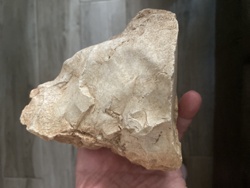
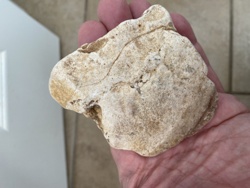
Submitted item photo
Submitted photo · May 19, 2026

User's notes

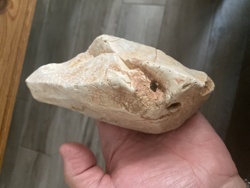
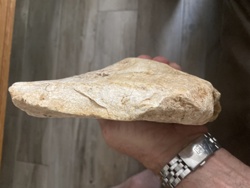
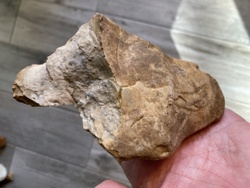
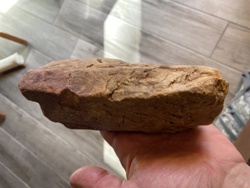
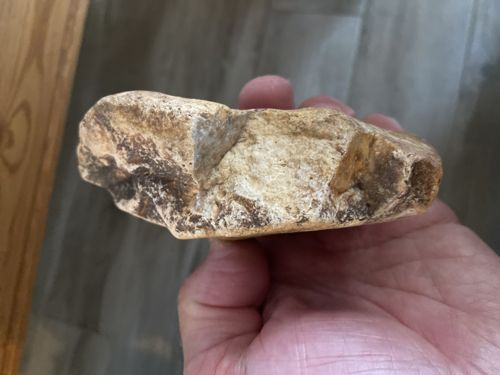
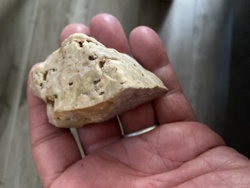
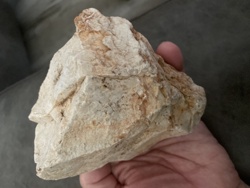
Lower Paleolithic Acheulean bi face chert scraper hand axe tool/ portable rock art face effigy found in Guthrie OK measurements are 4.5" x 3.25"

AI analysis below

AI appraisal

AI analysis & estimate

AI-Generated · Verify before acting

Everything below is generated by AI for informational purposes only. AI can make mistakes — the AI may misidentify items or misattribute them (artist, maker, brand, designer, origin, era). This is not an official valuation and should not be used for insurance, sale, tax, estate, legal, or lending purposes — or any decision requiring a certified appraisal. It is not an authoritative claim about any person, brand, or rights holder — do not share or rely on it as a factual statement about a third party. Always consult qualified professionals before making financial decisions.

Note

This analysis also relies on unverified notes provided by the user, which may be incomplete or inaccurate and could affect the result.

Read the full disclaimer

AI Identification

·Not independently authenticated·Verify before acting

Acheulean-Style Chert Biface / Lithic Core

Prehistoric Lithic Artifacts

AI Estimated Value

·Not an official valuation·Verify before acting

$45.00 - $85.00

As of May 19, 2026

AI Item Analysis

·AI can make mistakes·Verify before acting
This item is a lithic specimen measuring approximately 4.5 inches by 3.25 inches, exhibiting characteristics of a bifacially worked tool. It is composed of chert, displaying a variegated palette of tan, cream, and ochre with dark brown mineral staining or manganese dendrites across the surface. The construction features crude percussion flaking, creating a somewhat wedge-shaped profile with irregular edges. Notable features include large flake scars and a prominent central ridge, though it lacks the fine pressure flaking typically associated with more advanced tool types. The condition is weathered, showing significant surface patina and rounded edges consistent with long-term environmental exposure or water rolling. While the provided context suggests it may be interpreted as 'portable rock art' or a 'face effigy,' from a formal archaeological standpoint, such features are often attributed to pareidolia—natural weathering patterns or random flake scars that coincidentally resemble anatomical features. These markings do not show clear evidence of intentional artistic engraving. The piece represents a heavy-duty stone tool or a discarded core from which smaller flakes were struck, typical of Lower Paleolithic lithic technology.
AI Appraisal Report

·AI can make mistakes·Verify before acting
I have virtually examined this lithic specimen, a chert biface measuring 4.5" x 3.25" reported from Guthrie, Oklahoma. The item displays diagnostic features of a percussion-flaked core or crude hand axe. The heavy mineral staining, manganese dendrites, and weathered patina suggest significant age; however, the 'Acheulean' classification is problematic as that technology is characteristic of Africa and Eurasia. In a North American context, this is more accurately identified as a Middle-to-Late Archaic quarry blank or bifacial core. While the owner identifies 'face effigy' features, my professional assessment attributes these to pareidolia—the result of random flake scars and natural weathering rather than intentional sculptural modification. Market value for North American lithics is driven by formal typology and provenance. Because this piece lacks 'fine' workmanship (pressure flaking) and the 'rock art' claims are not supported by observable tool marks, it appeals primarily to entry-level collectors of lithic debitage. Comparable artifacts of this size and material typically sell at the lower end of the utility tool market. Value is significantly limited by the lack of clear archaeological context. For a definitive authentication, an in-person microscopic analysis (lithic use-wear analysis) is required to determine if the edges show intentional retouch or use-striations. Furthermore, a formal provenance chain and stratigraphic data from the find site would be necessary to elevate its status from a 'surface find' to an archaeological specimen. Without these, the value remains tied to its aesthetic appeal as a primitive tool.

Get your items appraised

Instant estimates of your treasures with AI-powered appraisals

Browse More Appraisals