AI estimate as of August 16, 2025 · verify with a professional before acting
AI-Generated · Verify before acting
Everything on this page is generated by AI for informational purposes only. AI can make mistakes — the AI may misidentify items or misattribute them (artist, maker, brand, designer, origin, era). This is not an official valuation and should not be used for insurance, sale, tax, estate, legal, or lending purposes — or any decision requiring a certified appraisal. It is not an authoritative claim about any person, brand, or rights holder — do not share or rely on it as a factual statement about a third party. Always consult qualified professionals before making financial decisions.
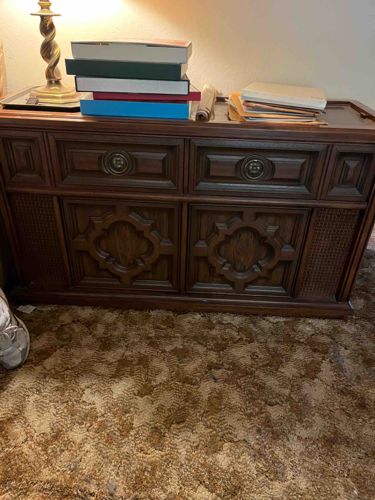
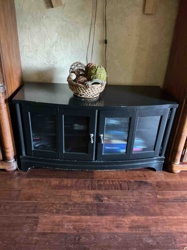
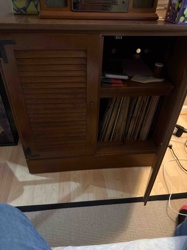
This item is a vintage wooden entertainment console, likely a radio-phonograph or stereo console, characteristic of the mid to late 20th century, possibly 1960s or 1970s. The console is made of dark-stained wood, possibly walnut or a similar hardwood, with a rich, deep brown finish. It features a rectangular top surface, which appears to have a slight raised edge on three sides, creating a shallow tray-like area. The front facade is highly decorative, showcasing a symmetrical design.
Physically, it is a substantial piece of furniture, appearing to be approximately 4-5 feet in length and about 2-3 feet in height. The construction exhibits a blend of solid wood framing and decorative paneling. The top section consists of two central drawers, each adorned with a circular, possibly brass or aged metal, pull ring with a decorative escutcheon. Below these drawers, the console features three distinct panels. The outer two panels on the left and right sides exhibit a cane or wicker-like weave, suggesting the presence of speaker grilles behind them. The two central panels are highly stylized, featuring raised, carved wooden overlay designs in a quatrefoil or similar ornamental pattern, adding a distinctive decorative element to the piece. The overall condition appears to be good for its age, though minor wear and tear, such as surface scratches or rubs consistent with regular use, may be present. The finish shows a consistent patina, indicating its age rather than recent restoration. There are no obvious signs of major damage, repairs, or missing components visible in the image. The craftsmanship suggests a mass-produced, but quality, piece of furniture from its era, with attention paid to decorative details.
AI Appraisal Report
Upon visual examination of the provided image, I assess this vintage wooden entertainment console, likely from the 1960s or 1970s, to be in good overall condition for its age. The dark-stained wood, possibly walnut, displays a consistent patina, suggesting authenticity and age rather than recent significant restoration. There are no immediate signs of major damage, repairs, or missing components; however, typical surface wear like scratches or rubs should be expected. The design, featuring cane speaker grilles and distinctive carved central panels, aligns with mass-produced but quality furniture of the era.
Market conditions for vintage entertainment consoles are moderate. While there's a niche market for mid-century modern pieces, the demand for these larger, integrated units can be limited by size and the outdated technology within (radio/phonograph components). Comparables would include similar consoles from brands like Zenith, Magnavox, or RCA from the same period. Rarity is low as many such consoles were produced.
Factors significantly impacting value include the functional status of the internal electronics (undeterminable from images), cosmetic condition (minor flaws expected), and regional market demand. The decorative aspects add appeal, but functional defects would significantly reduce value.
My assessment of authenticity is based solely on visual cues. Full authentication would require in-person examination to verify wood species, construction methods, and the condition/brand of the internal components. Provenance documentation, such as original sales receipts, could further confirm its history. Scientific testing, like wood dating, is generally not warranted for items of this commonality and value, but could confirm age if doubts arose about its vintage status.