AI Appraisal Estimate

AI-generated estimates · not official valuations

From the user

What was submitted

Photo and notes provided by the user — not generated by AI

Submitted item photo
Submitted photo · July 13, 2026

User's notes

No additional notes provided.

AI analysis below

AI appraisal

AI analysis & estimate

AI-Generated · Verify before acting

Everything below is generated by AI for informational purposes only. AI can make mistakes — the AI may misidentify items or misattribute them (artist, maker, brand, designer, origin, era). This is not an official valuation and should not be used for insurance, sale, tax, estate, legal, or lending purposes — or any decision requiring a certified appraisal. It is not an authoritative claim about any person, brand, or rights holder — do not share or rely on it as a factual statement about a third party. Always consult qualified professionals before making financial decisions.

Read the full disclaimer

AI Identification

·Not independently authenticated·Verify before acting

Landscape painting in the Dutch Golden Age style

Fine Art

AI Estimated Value

·Not an official valuation·Verify before acting

$400 - $800

As of July 13, 2026

AI Item Analysis

·AI can make mistakes·Verify before acting
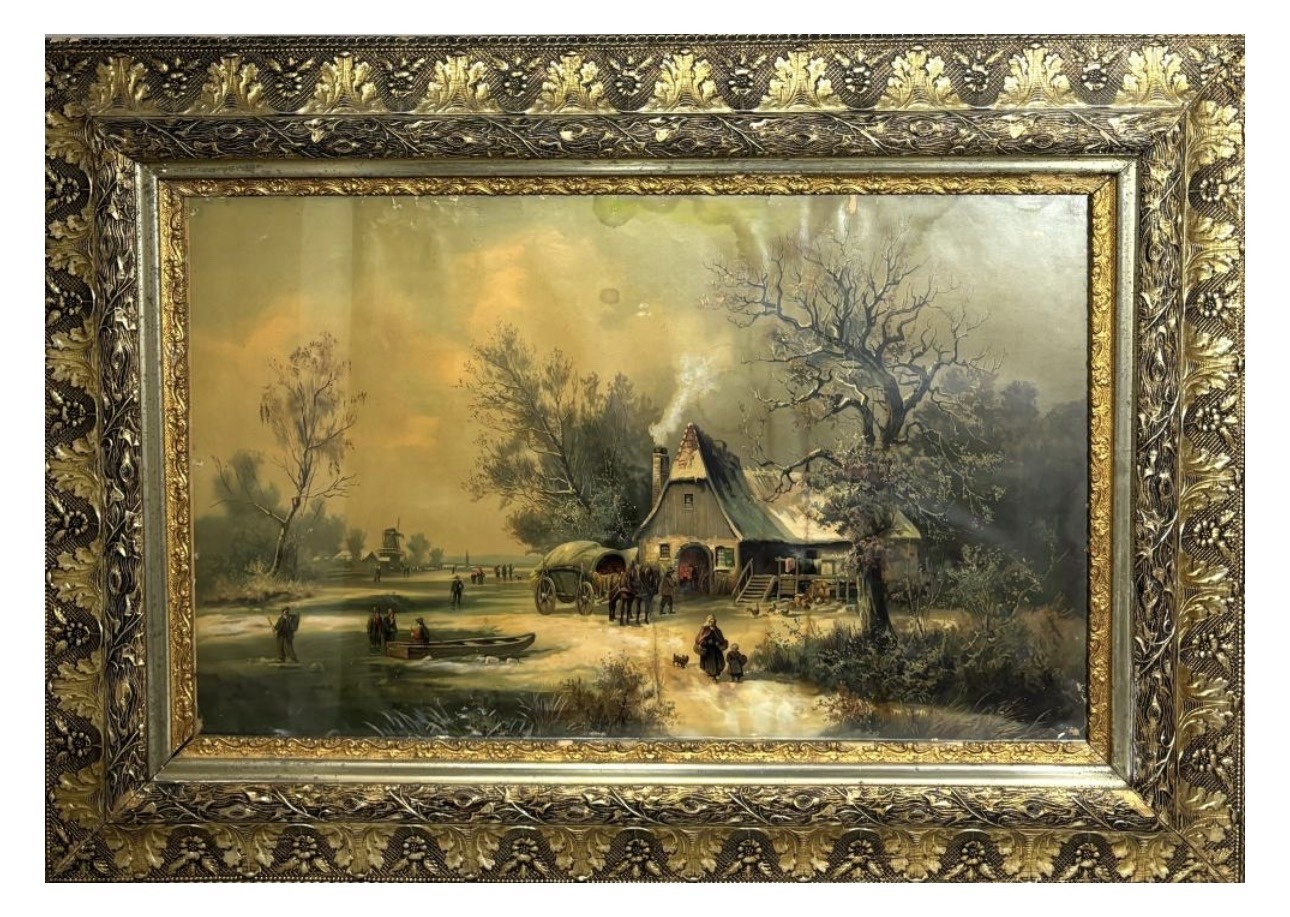
This rectangular landscape painting depicts a pastoral winter scene, rendered in a palette dominated by earthy ochres, muted greens, and cool greys. The composition features a tavern or cottage with a thatched-style roof and smoking chimney, situated near a body of water where various figures appear to be engaged in daily activities. A horse-drawn wagon is positioned outside the building, and a windmill is visible in the far background, motifs that are stylistically consistent with 17th-century Dutch or Flemish landscape traditions. The work is held in an ornate, gilded frame featuring high-relief foliate and acorn patterns, which appears to be in the Rococo or Victorian revival style. The condition of the artwork shows notable signs of age, including significant discoloration or possible water staining in the upper sky area, visible cracking (craquelure) throughout the paint surface, and some loss of detail due to surface grime. There are also visible abrasions near the bottom edge. Because no signature or maker's mark is clearly legible in the image, this attribution is based solely on stylistic features and subject matter; an in-person inspection would be required to determine the exact medium (oil or print) and origin.

AI Appraisal Report

·AI can make mistakes·Verify before acting
I have examined the digital image of this winter landscape painting. Based on what I can see, the work reflects stylistic traits of the 17th-century Dutch Golden Age, specifically in its use of a monochromatic palette, thatched architecture, and windmill motifs. However, I cannot verify from a photo whether this is an oil painting on panel or canvas, or a later period reproduction such as an oleograph or print. The presence of significant craquelure and possible water staining suggests age, but these characteristics can also be present in 19th-century 'in the style of' revival works. The ornate gilded frame is in a Victorian or Rococo revival style, which is often seen on decorative works from the late 1800s. My valuation range of $400 - $800 assumes the work is a 19th-century period piece by an unattributed follower of the Dutch school. The market for such atmospheric pastoral scenes remains steady among decorative collectors, though current demand is tempered by the visible condition issues including surface grime and abrasions. To provide a more precise valuation, an in-person inspection is required to determine the medium and check for a signature under UV light. If physical examination were to identify this as a genuine 17th-century work with verifiable provenance, the value would increase significantly into the thousands. Conversely, if it is determined to be a modern mechanical reproduction on a textured surface, the value would drop to $50 - $100 for its decorative or framing value only. Authenticity depends on scientific testing of pigments and a study of the support material which cannot be performed via image alone.

Get your items appraised

Instant estimates of your treasures with AI-powered appraisals

Browse More Appraisals