AI Appraisal Estimate

AI-generated estimates · not official valuations

From the user

What was submitted

Photo and notes provided by the user — not generated by AI

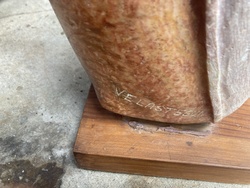
Submitted item photo
Submitted photo · June 1, 2026

User's notes

No additional notes provided.

AI analysis below

AI appraisal

AI analysis & estimate

AI-Generated · Verify before acting

Everything below is generated by AI for informational purposes only. AI can make mistakes — the AI may misidentify items or misattribute them (artist, maker, brand, designer, origin, era). This is not an official valuation and should not be used for insurance, sale, tax, estate, legal, or lending purposes — or any decision requiring a certified appraisal. It is not an authoritative claim about any person, brand, or rights holder — do not share or rely on it as a factual statement about a third party. Always consult qualified professionals before making financial decisions.

Read the full disclaimer

AI Identification

·Not independently authenticated·Verify before acting

French Art Nouveau Patinated Spelter Allegorical Figural Sculpture

Fine Art - Sculpture

AI Estimated Value

·Not an official valuation·Verify before acting

$350 - $550

As of June 1, 2026

AI Item Analysis

·AI can make mistakes·Verify before acting
This is a late 19th to early 20th-century allegorical figure, likely French in origin, cast in spelter (white metal) with a dark bronze patina finish. The sculpture depicts a dynamic female figure in a classical, flowing gown, standing atop a base modeled with organic, swirling cloud or wave motifs characteristic of the Art Nouveau period. She is depicted in mid-stride with one arm raised high holding a torch or spray of flowers, and the other holding a small wreath, symbolizing Victory, Peace, or a Season. The casting displays intricate detail in the drapery of the fabric and the texture of the hair. The sculpture is mounted on a circular dark green marble plinth. Physically, the piece shows significant signs of age and exposure; there is a noticeable greenish-white oxidation (verdigris) in the crevices and on the lower portions of the drapery, suggesting it may have been kept in a humid environment. The dark patina has worn away in several high-relief areas, particularly on the leading leg and torso, revealing the lighter metal beneath. There appears to be a potential structural repair or fracture near the base of the left arm. While no specific maker's mark is visible in the image, the style is highly reminiscent of the school of Auguste Moreau or similar French commercial foundries of the Belle Époque era. The craftsmanship is of good decorative quality, typical of mass-produced fine art figures from this period intended for domestic mantels.


AI Appraisal Report

·AI can make mistakes·Verify before acting
Based on my visual examination of this French Art Nouveau allegorical figure, I have identified it as a late 19th-century casting in spelter (regule). While the style is consistent with the prolific Moreau school, the lack of a visible signature suggests it was produced by a commercial foundry for the competitive middle-class decorative market. The use of spelter rather than bronze and its mounting on a marble plinth are hallmarks of high-volume Belle poque production. My assessment of the condition reveals significant conservation concerns: the verdigris oxidation and thinning patina indicate prolonged exposure to humidity, which has compromised the surface integrity. The noted structural instability near the left arm further limits its valuation, as spelter is notoriously brittle and difficult to repair compared to bronze. Market demand for unnamed spelter figures has softened as collectors increasingly favor signed bronze works or pieces in pristine original condition. Comparable auction results for unrestored French spelter allegories of this size typically range from $300 to $600. The current valuation reflects its strong decorative appeal balanced against its condition issues. This appraisal is based solely on digital images; a physical inspection is required to check for hidden lead-fill repairs or internal casting cracks. To fully authenticate the piece as a specific foundry casting, I would need to examine the underside of the base for stamps and review any provenance documentation. Scientific testing, such as X-ray fluorescence (XRF), could confirm the specific alloy composition but is generally cost-prohibitive for spelter of this market tier.

Get your items appraised

Instant estimates of your treasures with AI-powered appraisals

Browse More Appraisals