AI Appraisal Estimate

AI-generated estimates · not official valuations

From the user

What was submitted

Photo and notes provided by the user — not generated by AI

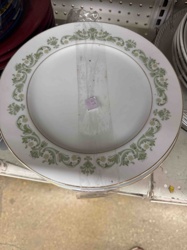
Submitted item photo
Submitted photo · May 31, 2026

User's notes

Glass, says WMF Cromargan on bottom

AI analysis below

AI appraisal

AI analysis & estimate

AI-Generated · Verify before acting

Everything below is generated by AI for informational purposes only. AI can make mistakes — the AI may misidentify items or misattribute them (artist, maker, brand, designer, origin, era). This is not an official valuation and should not be used for insurance, sale, tax, estate, legal, or lending purposes — or any decision requiring a certified appraisal. It is not an authoritative claim about any person, brand, or rights holder — do not share or rely on it as a factual statement about a third party. Always consult qualified professionals before making financial decisions.

Note

This analysis also relies on unverified notes provided by the user, which may be incomplete or inaccurate and could affect the result.

Read the full disclaimer

AI Identification

·Not independently authenticated·Verify before acting

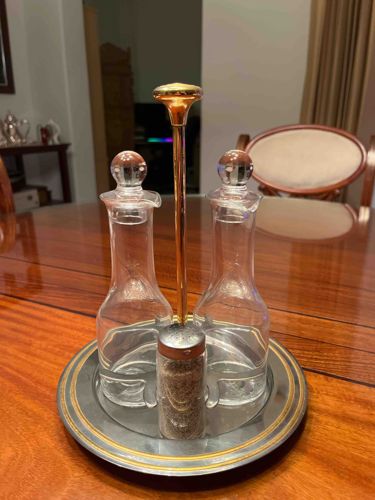
Mid-Century WMF Cromargan Stainless Steel and Glass Menage Cruet Set

Antique and Vintage Kitchenware / Tableware

AI Estimated Value

·Not an official valuation·Verify before acting

$125 - $175

As of May 31, 2026

AI Item Analysis

·AI can make mistakes·Verify before acting
This is a vintage modernist condiment set, or 'menage,' manufactured by the renowned German firm WMF (Württembergische Metallwarenfabrik). The set consists of a circular stainless steel tray base with two concentric gold-toned decorative bands around the rim. Centered on the tray is a tall, slender brass or gold-plated carry handle with a flared knob. The set includes two clear glass cruet carafes for oil and vinegar, featuring sleek necks and spherical glass stoppers. Additionally, there appears to be a smaller glass shaker (likely for salt or pepper) positioned at the center front. The base is marked 'WMF Cromargan' on the underside, indicating the use of their high-quality 18/10 stainless steel alloy. The design is characteristic of the mid-20th century, specifically the 1960s or 1970s, showcasing West German functionalism and minimalist elegance. The glass is clear with no visible chips in the main bodies, and the metal shows light signs of age consistent with careful use, including minor surface patina on the central handle and light scratching on the tray surface. The craftsmanship reflects WMF's industrial reputation for durability and polished aesthetic appeal.
AI Appraisal Report

·AI can make mistakes·Verify before acting
I have carefully examined the images of this WMF Cromargan and glass ménage set. Based on my visual inspection, the item appears to be an authentic example of 1960s West German modernism produced by Württembergische Metallwarenfabrik. The 'Cromargan' stamp on the base is a hallmark of WMF’s proprietary 18/10 stainless steel, and the design language—specifically the juxtaposition of industrial steel with refined glass—aligns perfectly with the era's functionalist aesthetic. The presence of the gold-toned concentric bands and central handle indicates this is a 'luxury' variant of their standard stainless line. The condition appears very good to excellent. Minor patina on the brass elements and light surface scratching on the tray are expected for kitchenware of this age and do not detract significantly from the value. The most critical factor is the completeness of the set; sets often lose their original glass stoppers or the central shaker over time, so having a complete, undamaged assembly is a significant value driver. The market for WMF Cromargan remains robust among collectors of Mid-Century Modern (MCM) design. While not 'rare' in the absolute sense, finding this specific gold-trimmed configuration in pristine condition is increasingly difficult. Comparable sets typically realize between $100 and $200 in boutique vintage markets. Note: This appraisal is based on photographic evidence. A full authentication would require a physical inspection to check for 'flea bite' chips on the stopper necks and to verify the weight/balance of the tray. Provenance documentation or original retail packaging would further solidify the upper range of the valuation. I cannot definitively rule out later-period reproductions without tactile inspection of the metal's gauge and finishing.

Get your items appraised

Instant estimates of your treasures with AI-powered appraisals

Browse More Appraisals