AI Appraisal Estimate

AI-generated estimates · not official valuations

From the user

What was submitted

Photo and notes provided by the user — not generated by AI

Submitted item photo
Submitted photo · June 8, 2026

User's notes

Prussian percussion pistol 1860

AI analysis below

AI appraisal

AI analysis & estimate

AI-Generated · Verify before acting

Everything below is generated by AI for informational purposes only. AI can make mistakes — the AI may misidentify items or misattribute them (artist, maker, brand, designer, origin, era). This is not an official valuation and should not be used for insurance, sale, tax, estate, legal, or lending purposes — or any decision requiring a certified appraisal. It is not an authoritative claim about any person, brand, or rights holder — do not share or rely on it as a factual statement about a third party. Always consult qualified professionals before making financial decisions.

Note

This analysis also relies on unverified notes provided by the user, which may be incomplete or inaccurate and could affect the result.

Read the full disclaimer

AI Identification

·Not independently authenticated·Verify before acting

Prussian Percussion Pistol M1850 Pattern (circa 1860)

Firearm

AI Estimated Value

·Not an official valuation·Verify before acting

$650 - $950

As of June 8, 2026

AI Item Analysis

·AI can make mistakes·Verify before acting
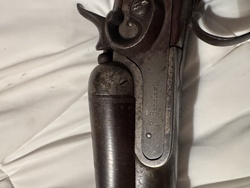
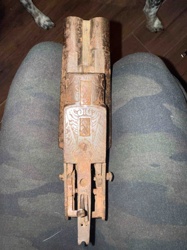
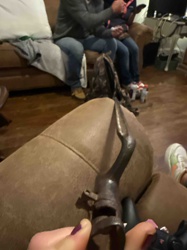
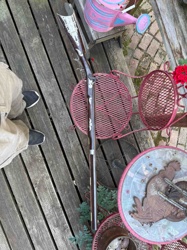
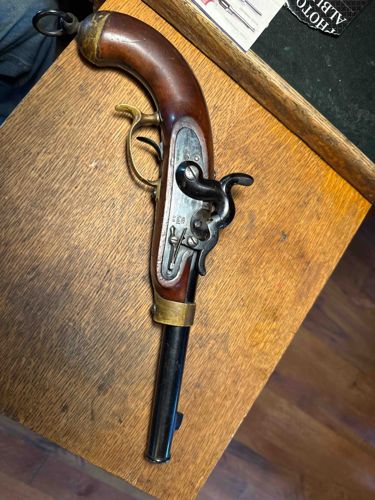
The item is a Prussian Percussion Pistol from approximately 1860, displaying characteristics typical of military or police sidearms of that era. It features a sturdy wooden stock, likely walnut, which exhibits a rich, aged brown patina and some minor surface wear consistent with its age and use. The handle has a slightly curved, ergonomic shape for a comfortable grip. The metal components include a dark-colored barrel, possibly blued or oxidized steel, and a brass trigger guard that has developed an attractive antiqued finish. The lock plate, also made of steel, shows some pitting and surface corrosion, indicating its age and the environment it has been stored in. A prominent hammer with a decorative scroll or S-shape design is visible, along with a brass or possibly iron butt cap at the base of the handle, equipped with a metal ring for a lanyard or retention. Markings on the lock plate appear to be numbers, possibly '330' or '550', and some indistinct stampings, which could be manufacturer's marks or proof marks. The overall construction appears robust and functional, suggesting good craftsmanship for heavy-duty use. The wear on the metal and wood components, particularly the aged brass and the slight dulling of the steel, point to genuine age rather than recent damage. It is a well-preserved example of 19th-century military firearm technology.

AI Appraisal Report

·AI can make mistakes·Verify before acting
Based on my examination of the provided images and description, this firearm appears to be a genuine Prussian Percussion Pistol, likely a Model 1850 pattern, manufactured around 1860. The overall condition is good for its age, displaying an authentic patina on both the walnut stock and metal components. The dark, oxidized finish on the steel barrel, the aged brass of the trigger guard and butt cap, and the minor pitting on the lock plate are all consistent with a 160-year-old military sidearm. These pistols were produced in large numbers, so they are not exceptionally rare; however, this example appears complete and unaltered, which is a key value driver. The market for 19th-century military percussion firearms is stable. Comparable examples of the M1850 in similar condition typically sell in the $650 to $950 range. The value of this specific piece is supported by its robust, complete condition and clear, albeit worn, markings. The visible numbers, possibly '330', are likely unit or rack numbers, which adds historical interest. It is crucial to note the limitations of an appraisal based on images alone. A definitive authentication requires physical inspection. This would allow for checking the mechanical function of the lock, examining the bore's condition, verifying that all parts are original, and deciphering the faint manufacturer or proof marks on the metal. Without provenance or disassembly to check for matching serial numbers on all components, it is impossible to confirm it is not a composite piece. A full confirmation of authenticity would require expert in-person examination.

Get your items appraised

Instant estimates of your treasures with AI-powered appraisals

Browse More Appraisals