AI Appraisal Estimate

AI-generated estimates · not official valuations

From the user

What was submitted

Photo and notes provided by the user — not generated by AI

Submitted item photo
Submitted photo · May 27, 2026

User's notes

No additional notes provided.

AI analysis below

AI appraisal

AI analysis & estimate

AI-Generated · Verify before acting

Everything below is generated by AI for informational purposes only. AI can make mistakes — the AI may misidentify items or misattribute them (artist, maker, brand, designer, origin, era). This is not an official valuation and should not be used for insurance, sale, tax, estate, legal, or lending purposes — or any decision requiring a certified appraisal. It is not an authoritative claim about any person, brand, or rights holder — do not share or rely on it as a factual statement about a third party. Always consult qualified professionals before making financial decisions.

Read the full disclaimer

AI Identification

·Not independently authenticated·Verify before acting

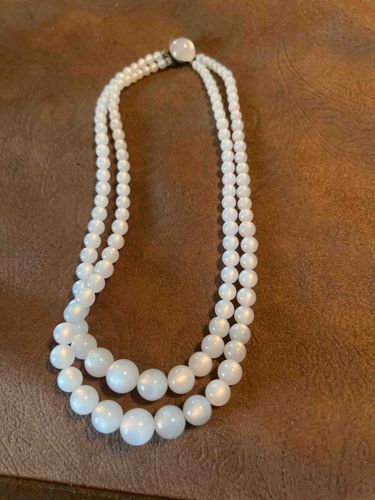
Two-Strand Graduated Faux Pearl Necklace

Jewelry

AI Estimated Value

·Not an official valuation·Verify before acting

$25-45

As of May 27, 2026

AI Item Analysis

·AI can make mistakes·Verify before acting
This item is a two-strand necklace featuring a graduated design of faux pearls. The beads transition from smaller sizes near the clasp to larger sizes at the center front of the necklace. The faux pearls are uniformly white or off-white in color, exhibiting a subtle iridescent luster that mimics natural pearls. The surface of these beads appears smooth and polished, typical of glass or plastic pearl imitations. The necklace is constructed with two individual strands of beads, which are joined at a central circular clasp at the back. The clasp itself appears to be a button or disk-shaped piece, possibly made of a similar pearlescent material or a matching white plastic/resin, with a metal finding mechanism visible. The metal components, likely part of the clasp's hinge or catch, show a darkened patina, suggesting they might be an aged base metal or tarnished silver-tone material. The stringing method is not clearly visible but appears to be either standard cord or wire. There are no overt signs of damage such as chips, cracks, or significant scuffing on the beads, although the overall condition suggests some wear consistent with age and use. The graduated size of the pearls adds an element of classic elegance to the piece. This style of necklace frequently dates to the mid-20th century, particularly the 1950s and 1960s, reflecting a popular aesthetic of that era. The craftsmanship appears to be standard for mass-produced costume jewelry of the period.
AI Appraisal Report

·AI can make mistakes·Verify before acting
Upon visual examination of the provided images, I have assessed this two-strand graduated faux pearl necklace. The piece presents in what appears to be good vintage condition, with the faux pearl beads showing a uniform luster and no significant chips or cracks. The graduated design, transitioning from smaller to larger beads, is a classic style popular in the mid-20th century, particularly the 1950s and 1960s. The clasp, which shows a darkened patina on its metal components, is consistent with age and typical of costume jewelry from that era. The value of this item is primarily determined by its status as vintage costume jewelry. The market for such pieces is active but generally modest. Comparables would include similar mass-produced faux pearl necklaces from makers like Napier, Trifari, or unmarked pieces from the same period. Demand is steady among collectors of vintage fashion and those seeking affordable, classic accessories. The primary factor limiting the value is the material; the beads are faux pearls, likely glass or plastic, and the metal is a common base metal. There is nothing to suggest this is a rare or high-end designer piece. The value lies in its aesthetic and historical context as a representative example of mid-century costume jewelry. It is crucial to note the limitations of an appraisal based solely on images. Without physical inspection, I cannot definitively determine the composition of the beads (glass vs. plastic), the specific base metal of the clasp, or verify any maker's marks that may be present but not visible. Full authentication would require in-person examination to test materials and identify any hidden signatures or hallmarks.

Get your items appraised

Instant estimates of your treasures with AI-powered appraisals

Browse More Appraisals