AI Appraisal Estimate

AI-generated estimates · not official valuations

From the user

What was submitted

Photo and notes provided by the user — not generated by AI

Submitted item photo
Submitted photo · May 19, 2026

User's notes

No additional notes provided.

AI analysis below

AI appraisal

AI analysis & estimate

AI-Generated · Verify before acting

Everything below is generated by AI for informational purposes only. AI can make mistakes — the AI may misidentify items or misattribute them (artist, maker, brand, designer, origin, era). This is not an official valuation and should not be used for insurance, sale, tax, estate, legal, or lending purposes — or any decision requiring a certified appraisal. It is not an authoritative claim about any person, brand, or rights holder — do not share or rely on it as a factual statement about a third party. Always consult qualified professionals before making financial decisions.

Read the full disclaimer

AI Identification

·Not independently authenticated·Verify before acting

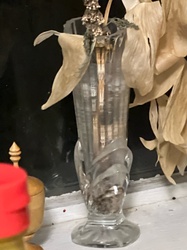
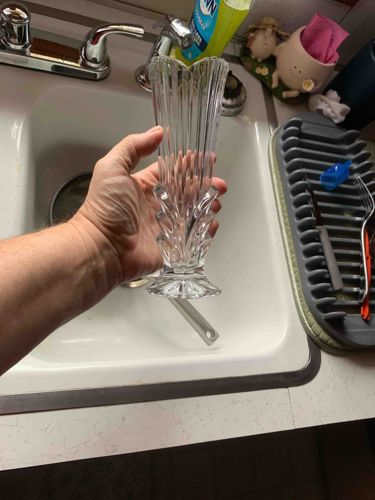
Pressed Glass Bud Vase with Scalloped Rim

Decorative Glassware / Vases

AI Estimated Value

·Not an official valuation·Verify before acting

$10 - $20

As of May 19, 2026

AI Item Analysis

·AI can make mistakes·Verify before acting
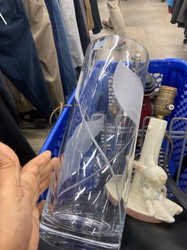
This is a vintage pressed glass bud vase, approximately 8 to 10 inches in height, featuring a clear, colorless glass construction. The design is characterized by a flared, scalloped rim that transitions into a long, vertical-ribbed neck. The mid-section down to the base features a more complex pattern of layered, chevron-style or 'wheat-ear' textures that create a geometric, tiered effect. The piece sits on a circular pedestal base adorned with radial starburst or sunburst cuts on the underside. The construction suggests it was made using a mold, as evidenced by the consistent patterns and likely presence of faint mold seams. The glass exhibits good clarity, suggesting it is a late 20th-century mass-manufactured decorative piece, possibly in the style of manufacturers like Anchor Hocking or Indiana Glass. The condition appears excellent with no visible chips, cracks, or significant clouding ('sick glass') from hard water deposits. Its slender silhouette is specifically designed to hold one or two flower stems, commonly referred to as a bud vase. The overall style is reminiscent of mid-to-late 20th-century Americana glassware, blending Art Deco geometric influences with traditional floral display functionality. No distinct maker's marks are immediately visible in the provided image, which is common for this type of utilitarian glassware.
AI Appraisal Report

·AI can make mistakes·Verify before acting
Based on my visual examination of the pressed glass bud vase, I have determined it to be a mass-produced decorative piece, likely manufactured in the mid-to-late 20th century. The colorless glass displays high clarity, and the 'wheat-ear' chevron textures combined with the scalloped rim are characteristic of American companies like Indiana Glass or Anchor Hocking. The condition appears to be 'Excellent' with no evidence of 'sick glass' or mechanical damage. This item is typical of utilitarian glassware produced during the Depression-glass revival era, intended for the middle-market consumer. The current market for 20th-century pressed glass is saturated, with high supply and steady but low demand. Similar pieces frequently appear at estate sales and thrift markets, usually priced within the $5 to $15 range. Its value is driven primarily by its functional utility as a decorative object rather than rarity or investment potential. Factors such as the absence of a maker's mark and the visible mold seams confirm its status as machine-made rather than hand-blown art glass. Limitations of this appraisal include the inability to physically inspect for micro-flea bites or internal stress fractures. A definitive identification of the manufacturer would require a physical search for an acid-etched mark, often found on the base, or a comparison against original trade catalogs. For full authentication, an in-person tactile inspection would be necessary to assess the glass's weight and reaction to UV light, which could help differentiate between original period glass and modern reproductions. No scientific testing is recommended given the item's established market ceiling.

Get your items appraised

Instant estimates of your treasures with AI-powered appraisals

Browse More Appraisals