AI Appraisal Estimate

AI-generated estimates · not official valuations

From the user

What was submitted

Photo and notes provided by the user — not generated by AI

Submitted item photo
Submitted photo · June 4, 2026

User's notes

Marble top

AI analysis below

AI appraisal

AI analysis & estimate

AI-Generated · Verify before acting

Everything below is generated by AI for informational purposes only. AI can make mistakes — the AI may misidentify items or misattribute them (artist, maker, brand, designer, origin, era). This is not an official valuation and should not be used for insurance, sale, tax, estate, legal, or lending purposes — or any decision requiring a certified appraisal. It is not an authoritative claim about any person, brand, or rights holder — do not share or rely on it as a factual statement about a third party. Always consult qualified professionals before making financial decisions.

Note

This analysis also relies on unverified notes provided by the user, which may be incomplete or inaccurate and could affect the result.

Read the full disclaimer

AI Identification

·Not independently authenticated·Verify before acting

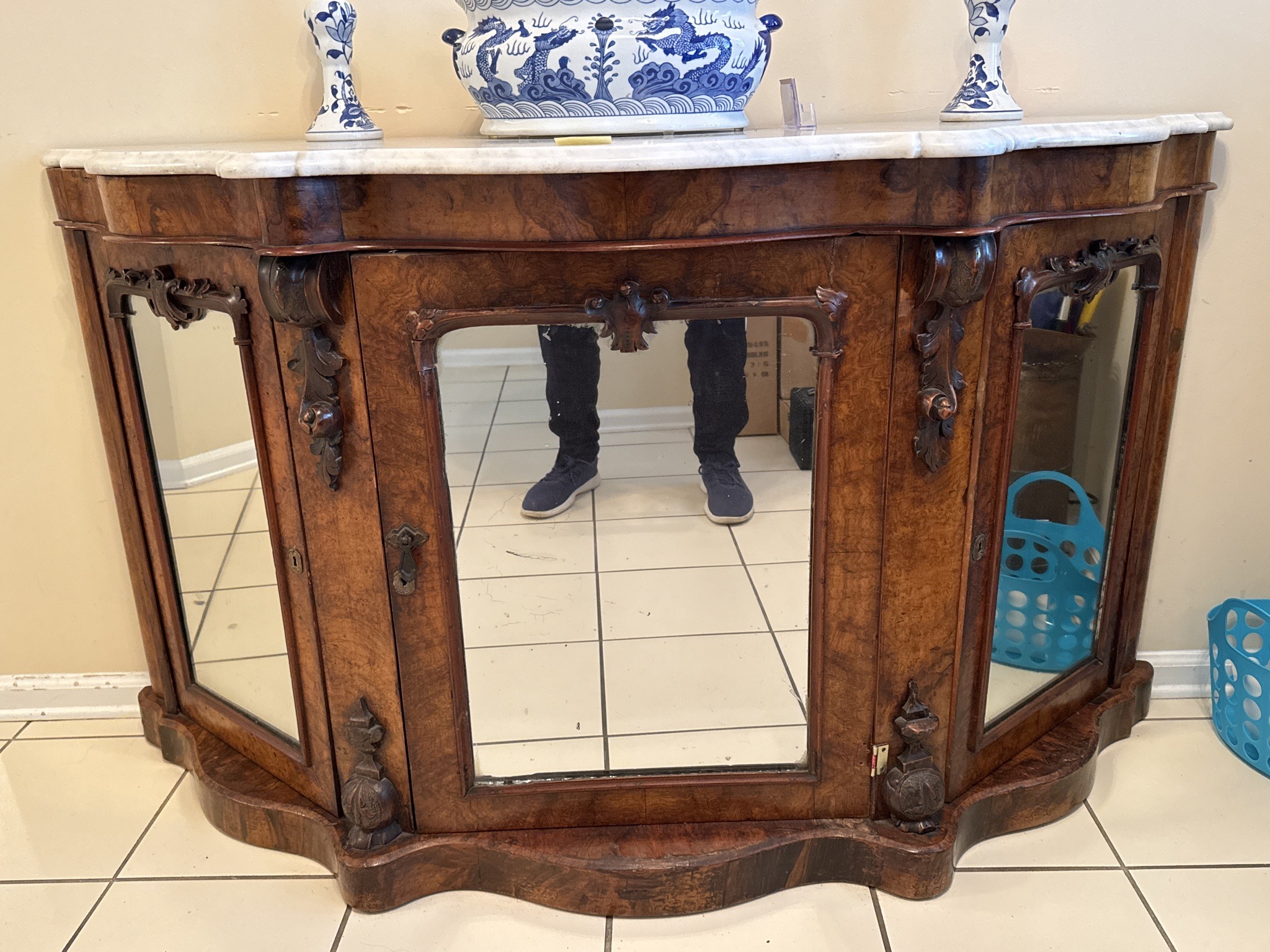
Victorian Walnut Burl Mirrored Credenza with Marble Top

Antique Furniture

AI Estimated Value

·Not an official valuation·Verify before acting

$1,200 - $1,800

As of June 4, 2026

AI Item Analysis

·AI can make mistakes·Verify before acting
This is a mid-to-late 19th-century Victorian credenza, notably characterized by its three-door mirrored front and shaped Carrara-style white marble top. The piece is constructed with rich walnut and features high-quality burl wood veneers across the frieze and vertical stiles, exhibiting a complex, swirling grain pattern. The central door is flanked by two angled side cabinets, creating a serpentine or breakfront silhouette that sits atop a molded plinth base. Elaborate hand-carved corbels and appliques in the Rococo Revival style adorn the frame, including acanthus leaf motifs and scrolling floral details. Each cabinet door contains a rectangular inset mirror framed with carved molding and a decorative crest at the top center. The primary door retains an original decorative metal escutcheon and keyhole. Regarding condition, the piece shows significant signs of age and wear; there is a visible crack or structural separation in the center of the wooden frieze beneath the marble top, along with scattered scuffs, finish loss, and minor chips along the base. The marble top appears largely intact with minor surface staining, and the mirrors show slight silvering degradation consistent with antique pieces. This credenza reflects the ornate craftsmanship and heavy scale typical of high-end parlor furniture from the 1870s-1880s.
AI Appraisal Report

·AI can make mistakes·Verify before acting
Based on my examination of the provided documentation and imagery, this piece is a high-quality example of American Rococo Revival parlor furniture, likely dating from 1870–1880. The use of premium walnut burl veneers and a shaped Carrara marble top indicates this was an expensive commission in its day. The mirrored doors and serpentine profile are highly desirable features of the period. However, the condition significantly impacts the valuation; the structural separation in the frieze suggests environmental stress or failing hide glue, and the base losses require professional stabilization. The silvering degradation on the mirrors, while confirming age, may necessitate replacement for some modern collectors, though purists value the original 'ox-eye' patina. Current market demand for Victorian furniture has softened compared to mid-century modern trends, but specialized collectors still seek out 'statement' pieces with original marble. Comparables for restored pieces reach $2,500, but in this 'as-found' condition, the estimate reflects the necessary conservation costs. Limitations: This evaluation is based on a visual inspection of photographs. To fully authenticate the piece and assess its value, an in-person examination is required to inspect the joinery (specifically dovetailing and secondary woods like poplar or pine), the rear chamfering of the mirrors, and the undersides of the marble. Provenance records or a discovery of a maker's mark (such as Mitchell & Rammelsberg or Herter Brothers) would necessitate a significant upward revision of this appraisal.

Get your items appraised

Instant estimates of your treasures with AI-powered appraisals

Browse More Appraisals