AI Appraisal Estimate

AI-generated estimates · not official valuations

From the user

What was submitted

Photo and notes provided by the user — not generated by AI

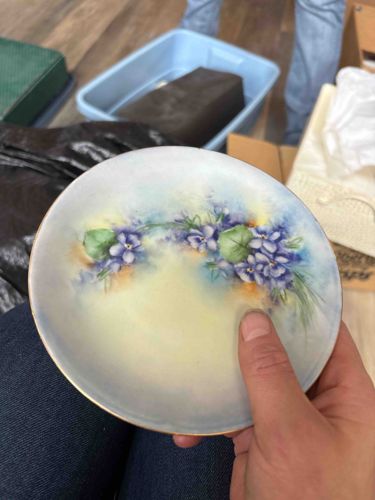
Submitted item photo
Submitted photo · June 6, 2026

User's notes

Made in Japan

AI analysis below

AI appraisal

AI analysis & estimate

AI-Generated · Verify before acting

Everything below is generated by AI for informational purposes only. AI can make mistakes — the AI may misidentify items or misattribute them (artist, maker, brand, designer, origin, era). This is not an official valuation and should not be used for insurance, sale, tax, estate, legal, or lending purposes — or any decision requiring a certified appraisal. It is not an authoritative claim about any person, brand, or rights holder — do not share or rely on it as a factual statement about a third party. Always consult qualified professionals before making financial decisions.

Note

This analysis also relies on unverified notes provided by the user, which may be incomplete or inaccurate and could affect the result.

Read the full disclaimer

AI Identification

·Not independently authenticated·Verify before acting

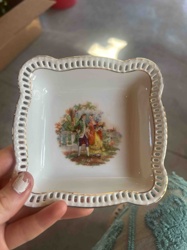
Hand-Painted Porcelain Floral Plate

Decorative Arts

AI Estimated Value

·Not an official valuation·Verify before acting

$20-35

As of June 6, 2026

AI Item Analysis

·AI can make mistakes·Verify before acting
This is a small, round porcelain plate with a delicate hand-painted floral design. The primary colors of the design are shades of lavender and purple for the flowers, complemented by vibrant green leaves. The background features a soft, ethereal gradient, transitioning from a warm, creamy yellow at the center to gentle sky blue hues towards the rim, creating a dreamlike, almost 'airbrushed' effect often associated with Nippon ware or early 20th-century Japanese porcelain. The plate's rim is edged with a thin band of gilt, which shows minor wear consistent with its age, possibly indicating rubbing from handling or display. The craftsmanship appears to be of good quality, with fine brushstrokes visible in the floral details, suggesting hand-painting rather than decal application. The size is typical of a dessert or cabinet plate, designed more for display than heavy utility. There are no obvious chips, cracks, or significant damage visible in the provided image; however, closer inspection would be required to ascertain any crazing or minor surface abrasions. The overall aesthetic points to an early 20th-century Japanese origin, likely produced for export, given the 'Made in Japan' context. The soft pastel palette and naturalistic floral motif are characteristic of the Late Meiji or Taishō period (circa 1900-1920s) Japanese decorative arts market.
AI Appraisal Report

·AI can make mistakes·Verify before acting
Upon examining the images of this hand-painted porcelain plate, I assess it to be a Japanese export item, likely dating from the Taishō period (circa 1912-1926). The 'Made in Japan' mark, common for this era, supports this attribution. The plate's aesthetic, featuring a soft pastel gradient background and delicate floral motif, is characteristic of decorative wares produced for the Western market at that time. The hand-painted quality, evident in the fine brushwork, elevates it above mass-produced transferware. The condition appears to be very good, with no visible chips or cracks. The minor wear to the gilt rim is consistent with its age and does not significantly detract from its value. The market for Japanese export porcelain of this type is stable but generally modest. Similar single, unmarked (by a specific maker) decorative plates from this period typically sell in the lower range. Demand is driven by collectors of Japanese porcelain and decorators seeking period accent pieces. While charming, it is not considered exceptionally rare. The primary factor limiting its value is the lack of a prominent maker's mark (e.g., Noritake, Morimura Bros.), which would attract more specific collectors and command a higher price. Without a physical inspection, I cannot confirm the absence of fine crazing or maker's marks, nor can I definitively rule out a high-quality reproduction. A complete authentication would require in-person examination under magnification to verify the painting technique and inspect for any hidden marks.

Get your items appraised

Instant estimates of your treasures with AI-powered appraisals

Browse More Appraisals