AI Appraisal Estimate

AI-generated estimates · not official valuations

From the user

What was submitted

Photo and notes provided by the user — not generated by AI

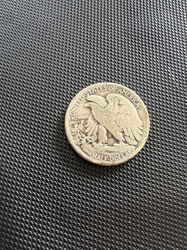
Submitted item photo
Submitted photo · June 27, 2026

User's notes

1952

AI analysis below

AI appraisal

AI analysis & estimate

AI-Generated · Verify before acting

Everything below is generated by AI for informational purposes only. AI can make mistakes — the AI may misidentify items or misattribute them (artist, maker, brand, designer, origin, era). This is not an official valuation and should not be used for insurance, sale, tax, estate, legal, or lending purposes — or any decision requiring a certified appraisal. It is not an authoritative claim about any person, brand, or rights holder — do not share or rely on it as a factual statement about a third party. Always consult qualified professionals before making financial decisions.

Note

This analysis also relies on unverified notes provided by the user, which may be incomplete or inaccurate and could affect the result.

Read the full disclaimer

AI Identification

·Not independently authenticated·Verify before acting

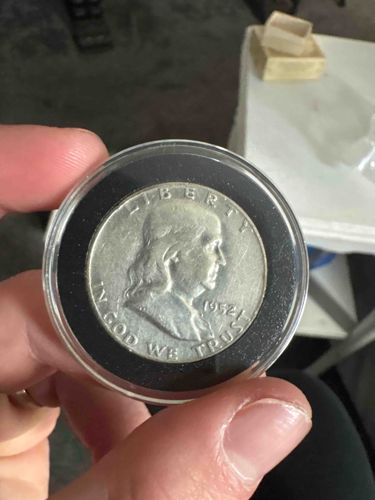
1952 Benjamin Franklin Silver Half Dollar

Numismatics / US Coins

AI Estimated Value

·Not an official valuation·Verify before acting

$15.00-$25.00

As of June 27, 2026

AI Item Analysis

·AI can make mistakes·Verify before acting
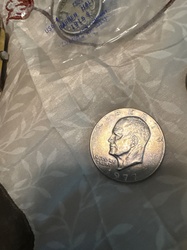
This numismatic specimen is a United States Franklin Half Dollar, dated 1952. The coin features the profile of Benjamin Franklin on the obverse, designed by John R. Sinnock. Struck in 90% silver and 10% copper, this type of currency has a diameter of approximately 30.6 millimeters. The obverse displays the word 'LIBERTY' across the top rim, the national motto 'IN GOD WE TRUST' along the bottom curve, and the production date of '1952' positioned to the right of Franklin's bust. The coin is currently housed in a protective circular clear plastic airtight capsule with a black foam ring insert, which has likely prevented significant environmental oxidation or heavy surface scratches. Based on the visual evidence, the coin appears to be in a circulated condition with moderate wear on the high points of Franklin's hair and shoulder. There is a noticeable light gray patina across the fields, consistent with silver of this age. Some minor contact marks and 'bag marks' are visible, but there are no signs of major structural damage, cleaning, or harsh abrasions. The strike appears standard for the Philadelphia or Denver mints, though the reverse is not visible to confirm a specific mint mark. This piece represents a mid-century American silver coin from the early post-war era, valued by collectors both for its silver content and historical design.
AI Appraisal Report

·AI can make mistakes·Verify before acting
I have examined the 1952 Benjamin Franklin Silver Half Dollar via the provided documentation and imagery. The specimen is a standard circulation strike composed of 90% silver. My visual assessment identifies the coin to be in 'Very Fine' to 'Extra Fine' condition. There is clear evidence of circulation, specifically visible wear on the high points of Franklin’s hair and the shoulder lines, which prevents it from reaching 'Uncirculated' (Mint State) grades. The light gray patina is consistent with natural silver aging, and the lack of harsh hairlines suggests the coin has not been cleaned, which is a positive factor for numismatic value. Current market conditions for Franklin Half Dollars in circulated grades are largely driven by the 'melt value' (spot price of silver) plus a small numismatic premium. While 1952 is not a rare 'key date' for this series, it remains a popular target for collectors of mid-century Americana. Because the reverse is not visible, I cannot confirm the presence of a 'D' (Denver) or 'S' (San Francisco) mint mark; however, value parity between these mints in circulated condition is relatively tight. Factors and Limitations: This appraisal is based on digital observation. Without a physical inspection, I cannot verify the exact weight (12.5g standard) or use a loupe to check for microscopic evidence of surface alterations or artificial toning. A full authentication would require in-person examination of the rim and a 'ring test' or metallurgical analysis to confirm metal composition. Professional grading by PCGS or NGC would be required to lock in a specific numeric grade, though for a circulated 1952 specimen, the cost of grading may exceed the coin's intrinsic value increase.

Get your items appraised

Instant estimates of your treasures with AI-powered appraisals

Browse More Appraisals