Fossilized Mammal Molar
Paleontological Specimens / Fossils

Fossilized Mammal Molar

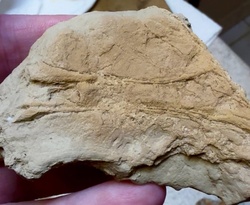
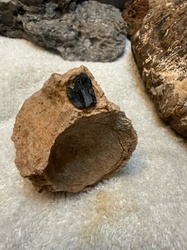
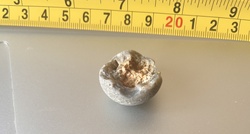
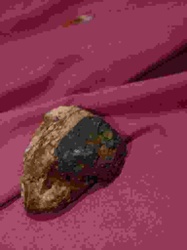
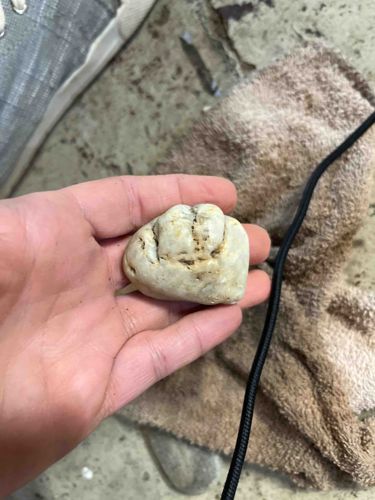
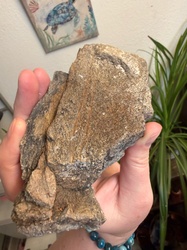
This specimen is a fossilized molar tooth, likely originating from a large prehistoric mammal such as an Ice Age mastodon or similar megafauna. The item measures approximately two to three inches across, featuring a robust, bulbous crown structure with distinct ridges and cusps characteristic of herbivorous grinding teeth. The coloration is primarily an off-white to creamy beige, showing heavy mineralization and calcification consistent with long-term burial. The surface texture is uneven with pit marks and deep fissures between the cusps, which are filled with dark sediment and mineral deposits. There is evidence of significant natural wear on the chewing surface, indicating the animal used the tooth extensively during its lifetime. The overall condition is remarkably intact for a fossil of this type, showing no major structural fractures, although the surface exhibits a natural patina of age. There are no man-made markings or signatures, as it is a biological remain. The preservation suggests it may date from the Pleistocene epoch, exhibiting high quality in terms of density and fossilization detail.
Estimated Value

$450 - $650

Basic Information

Category

Paleontological Specimens / Fossils

Appraised On

April 7, 2026

Estimated Value

$450 - $650

Item Description

This specimen is a fossilized molar tooth, likely originating from a large prehistoric mammal such as an Ice Age mastodon or similar megafauna. The item measures approximately two to three inches across, featuring a robust, bulbous crown structure with distinct ridges and cusps characteristic of herbivorous grinding teeth. The coloration is primarily an off-white to creamy beige, showing heavy mineralization and calcification consistent with long-term burial. The surface texture is uneven with pit marks and deep fissures between the cusps, which are filled with dark sediment and mineral deposits. There is evidence of significant natural wear on the chewing surface, indicating the animal used the tooth extensively during its lifetime. The overall condition is remarkably intact for a fossil of this type, showing no major structural fractures, although the surface exhibits a natural patina of age. There are no man-made markings or signatures, as it is a biological remain. The preservation suggests it may date from the Pleistocene epoch, exhibiting high quality in terms of density and fossilization detail.
Get Your Items Appraised

Instant estimates of your treasures with AI-powered instant appraisals

Browse More Appraisals