AI Appraisal Estimate

AI-generated estimates · not official valuations

From the user

What was submitted

Photo and notes provided by the user — not generated by AI

Submitted item photo
Submitted photo · June 6, 2026

User's notes

Mid century

AI analysis below

AI appraisal

AI analysis & estimate

AI-Generated · Verify before acting

Everything below is generated by AI for informational purposes only. AI can make mistakes — the AI may misidentify items or misattribute them (artist, maker, brand, designer, origin, era). This is not an official valuation and should not be used for insurance, sale, tax, estate, legal, or lending purposes — or any decision requiring a certified appraisal. It is not an authoritative claim about any person, brand, or rights holder — do not share or rely on it as a factual statement about a third party. Always consult qualified professionals before making financial decisions.

Note

This analysis also relies on unverified notes provided by the user, which may be incomplete or inaccurate and could affect the result.

Read the full disclaimer

AI Identification

·Not independently authenticated·Verify before acting

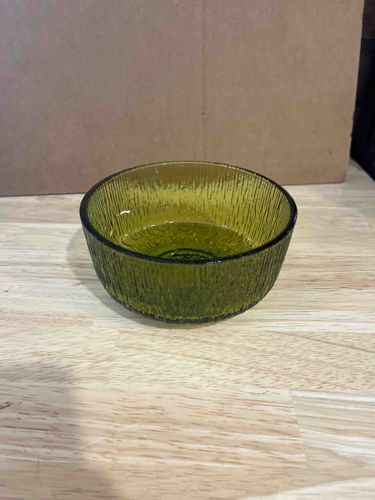
Mid-Century Modern Green 'Ice Glass' Bowl

Dishware/Glassware

AI Estimated Value

·Not an official valuation·Verify before acting

$25-45

As of June 6, 2026

AI Item Analysis

·AI can make mistakes·Verify before acting
This item is a small, round bowl made of a translucent, dark olive green glass. Its most prominent feature is the textured exterior, which appears to mimic the rough bark of a tree or an ice-like, organic pattern often referred to as 'ice glass' or 'bark glass.' This texture covers the entire outer surface of the bowl, extending from the rim down to the base. The interior of the bowl is smooth and glossy, providing a contrast to the rugged exterior and facilitating easy cleaning. The rim is clearly defined and appears slightly thicker than the rest of the body for structural integrity. The base of the bowl is flat, ensuring stability when placed on a surface. There are no visible chips, cracks, or significant abrasions, suggesting it is in good overall condition. The uniform color and consistent texture indicate good quality craftsmanship. Based on the style, particularly the 'ice glass' or bark texture and the specific shade of green, this bowl is characteristic of Mid-Century modern glassware, likely produced between the 1960s and 1970s. It could be part of a larger set of dishes or serve as an individual small serving bowl for condiments, nuts, or snacks. No explicit maker's marks or signatures are discernible from the provided image.

AI Appraisal Report

·AI can make mistakes·Verify before acting
Upon examining the provided images and description, I have assessed this Mid-Century Modern green glass bowl. The piece presents as a characteristic example of the 'ice glass' or 'bark glass' style popular from the 1960s to the 1970s. The dark olive green color is also typical of this era. Visually, the bowl appears to be in excellent condition, with no discernible chips, cracks, or major damage, which is a positive factor for its value. The texture is consistent, suggesting good manufacturing quality for its type. The market for Mid-Century glassware is generally strong, though it varies significantly by designer and manufacturer. Unmarked pieces like this are common and are typically valued as decorative items rather than high-end collectibles. Comparable unsigned 'ice glass' bowls of this size and condition frequently sell in online marketplaces and at vintage shops. Current market conditions place similar items in a modest, accessible price range. The primary factor limiting the value is the absence of a maker's mark. Without attribution to a known designer or manufacturer, such as Holmegaard, Iittala, or a specific Murano maker, its value remains decorative. While attractive, it is not considered rare. For full authentication, an in-person examination would be necessary to inspect the base for any faint marks, pontil scars, or other manufacturing tells. A definitive attribution would require comparing it against known design catalogs or, in rare cases, expert consultation to identify subtle design cues pointing to a specific origin. However, based on the visual evidence, it is a well-preserved decorative piece from the period.

Get your items appraised

Instant estimates of your treasures with AI-powered appraisals

Browse More Appraisals