These notes were written by the person who submitted this item. Appraiser.AI has not verified them, and the AI's identification and estimate may rely on them.
AI Estimated Value
Not an official valuation
$1,500 - $2,500
AI estimate as of July 7, 2025 · verify with a professional before acting
AI-Generated · Verify before acting
Everything on this page is generated by AI for informational purposes only. AI can make mistakes — the AI may misidentify items or misattribute them (artist, maker, brand, designer, origin, era). This is not an official valuation and should not be used for insurance, sale, tax, estate, legal, or lending purposes — or any decision requiring a certified appraisal. It is not an authoritative claim about any person, brand, or rights holder — do not share or rely on it as a factual statement about a third party. Always consult qualified professionals before making financial decisions.
This analysis also relies on unverified notes provided by the user, which may be incomplete or inaccurate and could affect the result.
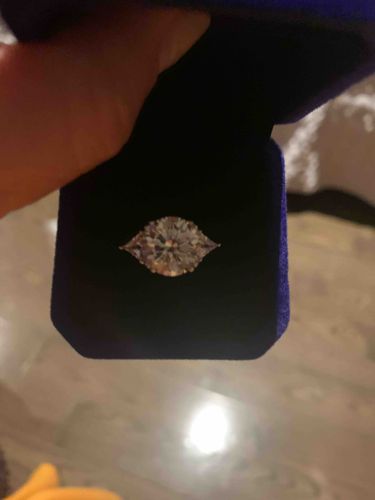
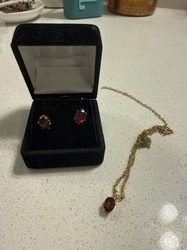
The item is a sparkling ring, likely made of a precious metal such as white gold or platinum, judging by its silvery hue reflecting light in the image. The central feature is a large, brilliant round cut stone, approximately 8-10mm in diameter, exhibiting significant fire and brilliance, characteristic of moissanite, as suggested by the additional context. This central stone is flanked on either side by a crescent-shaped cluster or pave setting of smaller stones, giving the ring a distinctive and elegant three-stone or bombe-style appearance. These side settings appear to be well-integrated into the main design, creating a fluid and symmetrical aesthetic. The stones are exceptionally clean and free from visible inclusions or scratches, and their faceting is precise, indicating good quality cutting. The setting itself, while not fully discernible, appears to be supportive and well-crafted, holding the stones securely. No obvious wear, damage, or repairs are apparent from the image. The ring is presented in a dark blue, velvet-lined jewelry box, which suggests it is either new, recently purchased, or exceptionally well-maintained. The craftsmanship appears to be of high quality, suggesting careful attention to detail in the stone setting and metalwork. The contemporary design hints at a modern style period, likely from the late 20th to early 21st century.
AI Appraisal Report
Upon visual examination of the provided image, I observe a Moissanite engagement ring exhibiting a brilliant, round-cut central stone, approximately 8-10mm in diameter, flanked by crescent-shaped clusters of smaller stones. The overall appearance suggests a modern design, likely from the late 20th to early 21st century. The stones display excellent fire and brilliance characteristic of moissanite, and appear exceptionally clean with precise faceting, indicating good quality cutting. The setting, though not fully discernible, appears well-crafted and supportive. The ring's condition appears excellent, with no visible wear, damage, or repairs, consistent with its presentation in a velvet-lined jewelry box. This suggests a well-maintained or new item.
In assessing the value, current market conditions for new moissanite rings of this size and design, particularly those set in what appears to be a precious metal (white gold or platinum), are generally strong. Comparable rings from reputable online retailers and jewelers often fall within a specific range, considering the carat equivalent of the center stone, the accent stones, and the metal type. Moissanite's popularity as a diamond alternative contributes to its consistent demand. The primary factors impacting this item's value are the size and quality of the central moissanite stone, the assumed precious metal content of the band, and the workmanship.
It is crucial to note the limitations of an appraisal based solely on images. While the visual characteristics strongly suggest moissanite, definitive authentication requires in-person examination, including testing for material composition (e.g., thermal conductivity or refractive index), precise measurement of stone dimensions and weight, and verification of metal purity (e.g., hallmarks or acid testing). Provenance documentation would also provide valuable context regarding its acquisition and history. Without these physical checks, assumptions regarding the exact carat equivalent, metal type, and precise stone grading are based purely on visual estimation.