AI estimate as of August 5, 2026 · verify with a professional before acting
AI-Generated · Verify before acting
Everything on this page is generated by AI for informational purposes only. AI can make mistakes — the AI may misidentify items or misattribute them (artist, maker, brand, designer, origin, era). This is not an official valuation and should not be used for insurance, sale, tax, estate, legal, or lending purposes — or any decision requiring a certified appraisal. It is not an authoritative claim about any person, brand, or rights holder — do not share or rely on it as a factual statement about a third party. Always consult qualified professionals before making financial decisions.
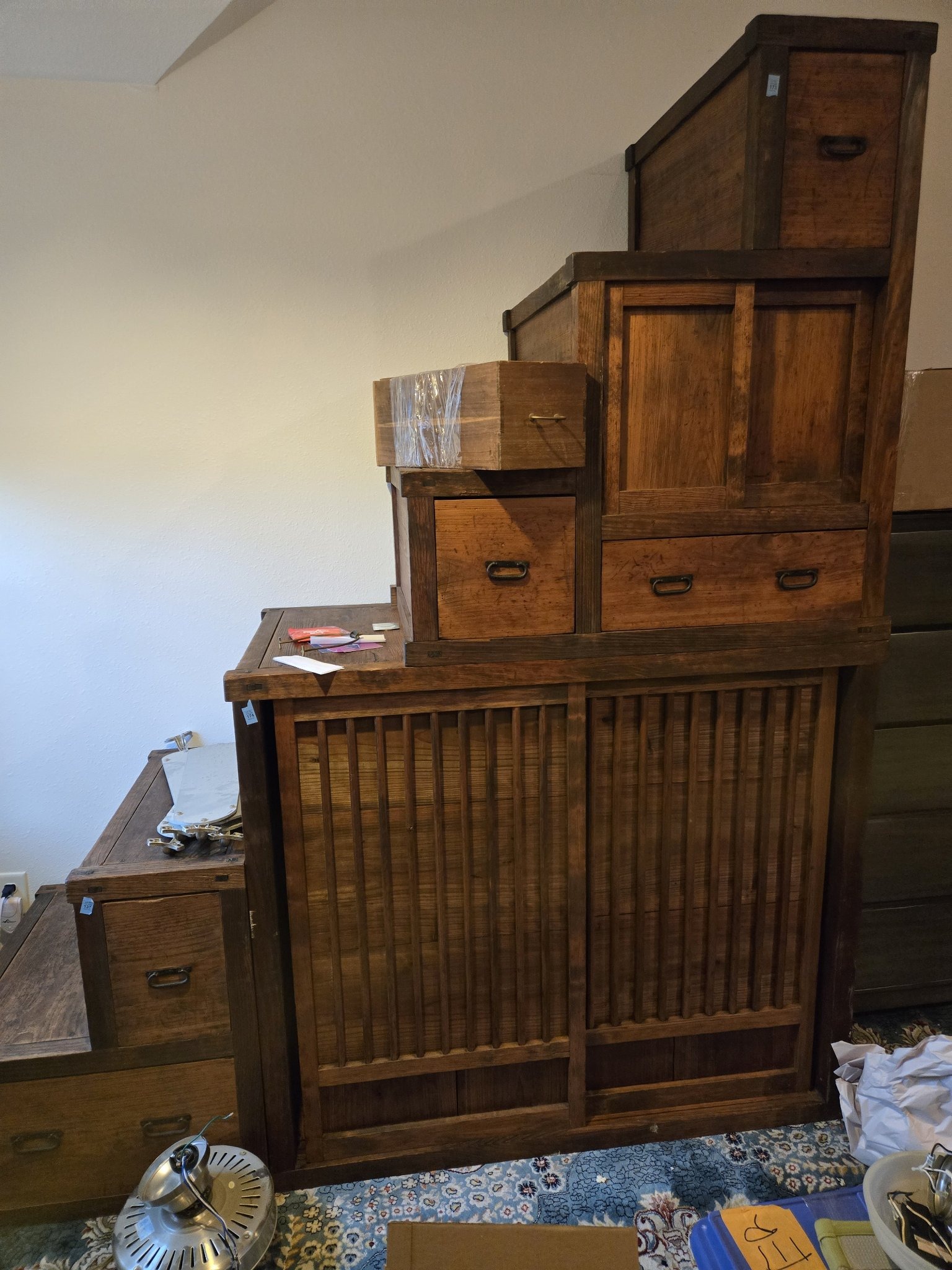
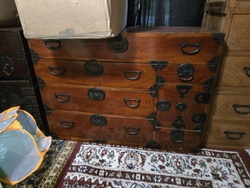
This is a large, multi-tiered wooden chest of drawers, visually consistent with traditional Japanese step tansu (kaidan-tansu) forms traditionally used for storage and as stairs in traditional Japanese architecture. The piece is constructed from wood with a dark brown finish, showcasing natural wood grain. It features an interlocking stepped configuration composed of several modular sections. The piece includes various storage compartments, such as sliding slat-panel doors (shoji-style), single and double drawer banks, and cabinet doors. Metal hardware, including simple bail handles and drawer pulls, is fitted across the drawers. One upper drawer is partially extended and wrapped in protective clear plastic. The piece shows general signs of age, handling, and storage, with minor surface wear, scuffs, and patina consistent with vintage or antique modular furniture. There are small paper inventory or auction tags adhered to the exterior surfaces. No maker's marks or stamps are directly visible in the image. The identification is based strictly on the distinctive architectural stepped form and traditional Japanese cabinetry design, and the piece remains unauthenticated.
AI Appraisal Report
Based on the visual evidence provided, this piece is consistent with a traditional Japanese step tansu (kaidan-tansu), featuring a modular interlocking configuration, dark brown finish, sliding slat-panel doors, and various storage compartments with metal hardware. Based on what I can see, the architectural stepped form and cabinetry design align with vintage or antique modular furniture of this type. However, I can't verify from a photo whether the materials, joinery, or age are genuinely antique, and I would need physical inspection to confirm its construction details, wood species, and period. Small paper inventory or auction tags are visible, but no maker's marks or stamps can be directly observed to establish a specific workshop or exact age. The estimated value range of $1,500 to $2,500 reflects the typical market behavior for items of this type, assuming the attribution to a traditional mid-to-late period Japanese step tansu is correct. General market demand for architectural Asian furniture remains steady among interior designers and collectors of Asian arts, though values fluctuate based on condition, finish wear, and structural integrity. To confirm authenticity and exact dating, an in-person examination by a qualified specialist, detailed inspection of the joinery and hardware, and potential provenance research would be necessary. If this piece were to turn out to be a modern reproduction, replica, or made 'in the style of' rather than a period antique, the value would be significantly lower, typically falling into the $400-$800 range for decorative furniture of similar scale and craftsmanship.