These notes were written by the person who submitted this item. Appraiser.AI has not verified them, and the AI's identification and estimate may rely on them.
AI Estimated Value
Not an official valuation
$40-70
AI estimate as of September 2, 2025 · verify with a professional before acting
AI-Generated · Verify before acting
Everything on this page is generated by AI for informational purposes only. AI can make mistakes — the AI may misidentify items or misattribute them (artist, maker, brand, designer, origin, era). This is not an official valuation and should not be used for insurance, sale, tax, estate, legal, or lending purposes — or any decision requiring a certified appraisal. It is not an authoritative claim about any person, brand, or rights holder — do not share or rely on it as a factual statement about a third party. Always consult qualified professionals before making financial decisions.
This analysis also relies on unverified notes provided by the user, which may be incomplete or inaccurate and could affect the result.
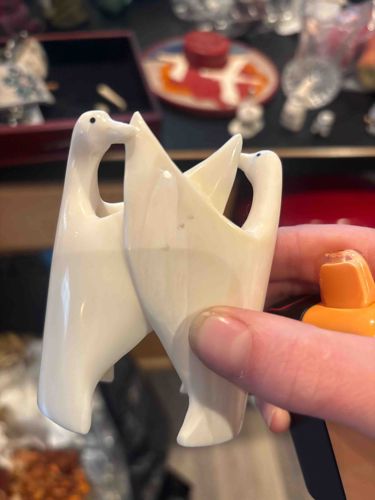
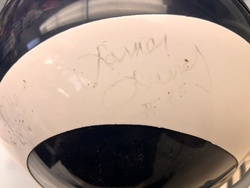
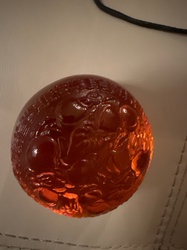
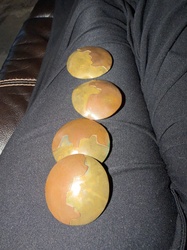
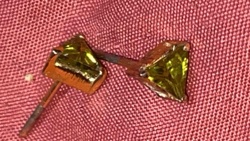
This item is a pair of interdependent decorative objects, likely intended to be salt and pepper shakers, crafted from a smooth, off-white material that appears to be ceramic, porcelain, or bone china. The two pieces are designed to fit together, forming a unified sculpture depicting two stylized birds, possibly doves or swans, with their necks gracefully curved to meet. Each bird is slender and elongated, with minimalist features. The 'head' of each bird is formed by a narrow, curved extension with a small, circular 'eye' rendered in black. The bodies are largely hollowed out to create a cavity within each piece, indicated by the visible open top section, suggesting their functional purpose. The base of each bird tapers down to a small, stable foot. The material has a consistent, glossy finish, indicative of a well-fired and glazed ceramic or polished natural material. There are no obvious chips or cracks visible, suggesting good overall condition, though there might be minor surface wear consistent with handling or age. The construction displays a degree of craftsmanship, with delicate curves and a clean, modern aesthetic. The absence of discernible maker's marks or signatures makes it difficult to ascertain precise manufacturing details or a specific artisan, but the clean lines suggest a mid-20th-century to contemporary design period. The pieces are designed to be freestanding when separate, but aesthetically complete when joined, highlighting a clever interactive design.
AI Appraisal Report
Based on my visual examination of the provided image, these Interlocking Ceramic Bird Salt and Pepper Shakers, owned by Koguk, appear to be in very good condition. The smooth, off-white material, likely ceramic or porcelain, shows no obvious chips, cracks, or significant surface wear, retaining its glossy finish. This suggests careful handling or relative newness. The clean, modern aesthetic and interdependent design are hallmarks of mid-to-late 20th-century decorative tableware.
From a market perspective, these shakers fall into a broad category of vintage or contemporary decorative housewares. Similar interlocking animal-themed shakers, often made by various manufacturers, are not particularly rare. Demand tends to be moderate, driven by collectors of unique S&P shakers or individuals seeking stylish, functional decorative accents. Factors impacting value include the lack of a discernible maker's mark, which prevents attribution to a notable designer or manufacturer that could significantly elevate the price. Without a known provenance or design lineage, these are valued more as attractive decorative objects rather than collectible art pieces.
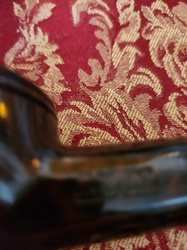
My assessment of authenticity is limited to visual cues. Without a physical inspection, I cannot confirm the exact material (e.g., differentiating ceramic from fine porcelain or bone china), assess the internal condition, or detect hairline cracks or repairs that may not be visible in the image. For full authentication, I would need to physically examine the pieces for maker's marks, assess the weight and tactile quality of the material, and potentially conduct UV light testing for repairs. Given the current information, the value is primarily based on their decorative appeal and good condition.