AI estimate as of October 2, 2025 · verify with a professional before acting
AI-Generated · Verify before acting
Everything on this page is generated by AI for informational purposes only. AI can make mistakes — the AI may misidentify items or misattribute them (artist, maker, brand, designer, origin, era). This is not an official valuation and should not be used for insurance, sale, tax, estate, legal, or lending purposes — or any decision requiring a certified appraisal. It is not an authoritative claim about any person, brand, or rights holder — do not share or rely on it as a factual statement about a third party. Always consult qualified professionals before making financial decisions.
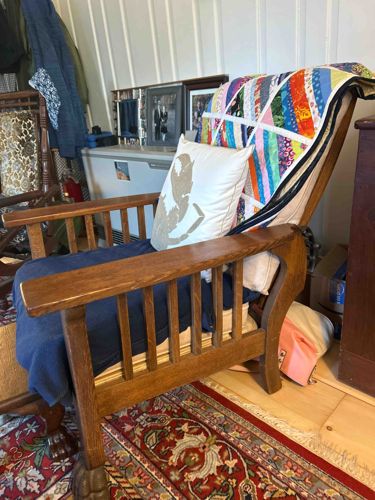
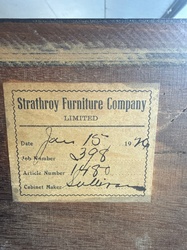
This is a lounge chair, likely dating from the early 20th century, consistent with the Arts and Crafts movement. The chair is constructed primarily from solid oak, evident by its visible grain and warm, medium-brown finish, which appears to have a slight sheen, possibly from a shellac or lacquer. Its design features strong, clean lines with a sturdy, somewhat rectilinear frame. The arms are broad and flat, gently curving downwards at the front, offering a comfortable resting place. Vertical, evenly spaced slats form the sides beneath the arms, providing structural support and visual appeal. The back of the chair has a slight recline, suggesting it's designed for comfort rather than upright dining. Although the original upholstery is not visible, the chair currently has a soft blue blanket draped over the seat and back, suggesting it may require new cushions, or the existing ones are worn. A decorative throw pillow with a light-colored silhouette of a figure (possibly a crab or similar creature) rests against the back. The base of the chair is not fully visible, but one leg shows a significant, rounded, turned detail where it meets the floor, contrasting slightly with the otherwise straight lines, hinting at a transitional style or maker's specific flourish. No obvious maker's marks or signatures are discernable from the image. The wood appears to be in good condition, showing a natural patina consistent with age and use, with no immediate signs of significant damage like cracks or major scratches. The craftsmanship appears solid, with well-joined components indicative of quality furniture manufacturing from its estimated period. The chair rests on a patterned rug, highlighting its presence within a home setting.
AI Appraisal Report
Upon visual examination of this Arts and Crafts style lounge chair, I assess its condition as good, retaining a natural patina consistent with its likely early 20th-century origin. The solid oak construction, warm finish, and sturdy, rectilinear frame are characteristic of the movement. The broad, flat arms and vertical slat details are well-executed. The obscured original upholstery and the presence of a blanket suggest the need for new cushions, which would be an additional expense for a prospective buyer. The unusual rounded, turned leg detail is an interesting feature, potentially hinting at a specific maker or regional style, though no marks are visible. Authenticity, based solely on this image, strongly suggests it is a genuine Arts and Crafts piece due to its design language and apparent construction. However, without a physical inspection, I cannot definitively rule out a high-quality reproduction.
The market for genuine Arts and Crafts furniture remains steady, driven by collectors and enthusiasts appreciating its craftsmanship and historical significance. Comparable period lounge chairs by unrenowned makers typically fetch in the $600-$1,200 range, depending heavily on condition, wood species, and originality of upholstery. This chair's robust design contributes to its demand. Rarity cannot be fully assessed without maker's marks, but similar uncatalogued pieces are not exceedingly rare.
Factors impacting value include the excellent condition of the wood, the classic Arts and Crafts aesthetic, and the need for new upholstery. To fully authenticate this chair and maximize valuation, an in-person examination is crucial to inspect joinery, confirm wood species, and search for hidden maker's marks. Microscopic analysis of the finish could also provide age confirmation. Documentation of provenance, if available, would further enhance its value and confirm authenticity.