AI Appraisal Estimate

AI-generated estimates · not official valuations

From the user

What was submitted

Photo and notes provided by the user — not generated by AI

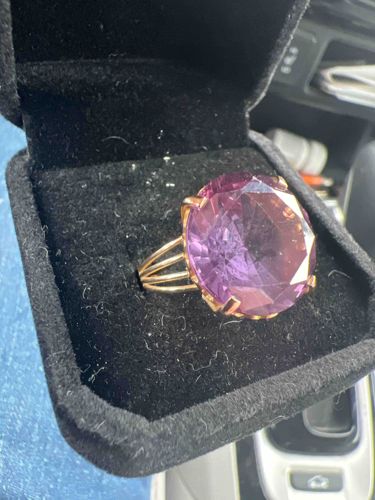
Submitted item photo
Submitted photo · May 25, 2026

User's notes

No additional notes provided.

AI analysis below

AI appraisal

AI analysis & estimate

AI-Generated · Verify before acting

Everything below is generated by AI for informational purposes only. AI can make mistakes — the AI may misidentify items or misattribute them (artist, maker, brand, designer, origin, era). This is not an official valuation and should not be used for insurance, sale, tax, estate, legal, or lending purposes — or any decision requiring a certified appraisal. It is not an authoritative claim about any person, brand, or rights holder — do not share or rely on it as a factual statement about a third party. Always consult qualified professionals before making financial decisions.

Read the full disclaimer

AI Identification

·Not independently authenticated·Verify before acting

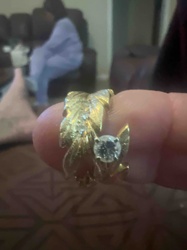
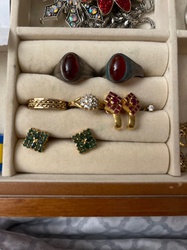
Large Round Faceted Amethyst or Alexandrite Cocktail Ring in Yellow Gold

Fine Jewelry / Estate Jewelry

AI Estimated Value

·Not an official valuation·Verify before acting

$450 - $700

As of May 25, 2026

AI Item Analysis

·AI can make mistakes·Verify before acting
This is a statement cocktail ring featuring a very large, round brilliant-cut gemstone. The stone exhibits a deep purple to pinkish-lavender hue, characteristic of amethyst or synthetic color-change alexandrite, which was common in mid-20th-century jewelry. The gemstone is held in an open-back yellow gold setting with eight substantial prongs securing the girdle. The band (shank) features a distinctive split or triple-wire design that tapers as it moves away from the head of the ring, a style often associated with Retro or mid-century modern eras (circa 1940s-1960s). The craftsmanship appears sturdy but utilitarian, typical of commercial fine jewelry from the mid-century period. Regarding condition, the metal shows minor surface scratches consistent with age and light wear. There is visible lint and dust on the stone and settling in the black velvet display box, which suggests the piece has been stored for some time. No significant chips or fractures are immediately visible on the crown facets, though a professional cleaning and loupe inspection would be required to confirm the integrity of the facet junctions and the girdle. There are no visible maker's marks or hallmarks from this angle, though they likely reside on the inner shank.
AI Appraisal Report

·AI can make mistakes·Verify before acting
Upon visual examination of the Large Round Faceted Vintage Cocktail Ring, I have assessed the piece as a characteristic example of mid-20th-century 'Retro' style jewelry, likely dating from the 1940s to 1960s. The mount is a 14K or 18K yellow gold multi-wire split-shank design, which provides structural integrity for the substantial center stone. The primary gemstone exhibits a deep violet-to-pinkish saturation. Given the era and visual characteristics, this is likely either a natural Amethyst of significant carats or a synthetic Color-Change Sapphire/Alexandrite, both of which were popular in this specific architectural setting during the period. The item is in 'Good' vintage condition, showing expected surface oxidation and micro-abrasions on the gold. The market for mid-century cocktail jewelry remains steady, though value is currently driven more by the gold weight and the 'statement' aesthetic rather than gemstone rarity, as synthetic center stones were common. Comparables for synthetic alexandrite or amethyst rings of this scale typically realize between $400 and $850 at estate auctions. Limitations: This appraisal is based solely on digital imagery. A definitive valuation is contingent upon several factors that cannot be determined remotely: 1) Metal fineness verification via acid or XRF testing; 2) Gemological identification using a refractometer and polariscope to distinguish between natural amethyst, synthetic sapphire, or glass; and 3) A weight measurement in grams. Full authentication would require an in-person loupe inspection to check for facet wear and internal inclusions and a search for maker’s marks on the inner shank which could significantly increase value if attributed to a known designer.

Get your items appraised

Instant estimates of your treasures with AI-powered appraisals

Browse More Appraisals