AI Appraisal Estimate

AI-generated estimates · not official valuations

From the user

What was submitted

Photo and notes provided by the user — not generated by AI

Submitted item photo
Submitted photo · May 20, 2026

User's notes

First impression 1913, signed by author Eleanor h. Porter in March 2013

AI analysis below

AI appraisal

AI analysis & estimate

AI-Generated · Verify before acting

Everything below is generated by AI for informational purposes only. AI can make mistakes — the AI may misidentify items or misattribute them (artist, maker, brand, designer, origin, era). This is not an official valuation and should not be used for insurance, sale, tax, estate, legal, or lending purposes — or any decision requiring a certified appraisal. It is not an authoritative claim about any person, brand, or rights holder — do not share or rely on it as a factual statement about a third party. Always consult qualified professionals before making financial decisions.

Note

This analysis also relies on unverified notes provided by the user, which may be incomplete or inaccurate and could affect the result.

Read the full disclaimer

AI Identification

·Not independently authenticated·Verify before acting

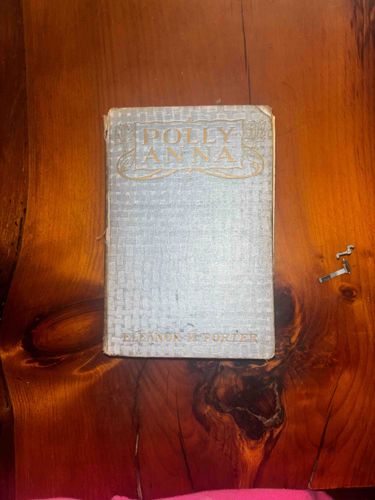
Signed First Impression Copy of Pollyanna by Eleanor H. Porter (1913)

Antique Books and Manuscripts

AI Estimated Value

·Not an official valuation·Verify before acting

$4,500 - $6,000

As of May 20, 2026

AI Item Analysis

·AI can make mistakes·Verify before acting
This is a first impression copy of the classic 1913 children's novel 'Pollyanna', authored by Eleanor H. Porter and published by L.C. Page & Company. The book features its original grey-blue cloth covered boards with a distinctive textured, basket-weave pattern. The front cover displays the title 'POLLYANNA' in a decorative gilt cartouche with Art Nouveau-inspired flourishes, and the author's name is embossed in gold at the bottom. Physically, the book shows significant signs of age and wear consistent with its century-old status; the cloth is frayed at the spine head and corners, and there is visible fading and darkening of the cover material. The gilt lettering remains legible though slightly dulled. A critical value-adding feature is the author's signature, Eleanor H. Porter, dated March 1913, which aligns with the initial release period of the first edition. The construction is a standard hardcover binding of the early 20th century. The interior pages likely show the expected foxing and toning associated with the paper quality of that era. This specific edition is highly collectible as it represents the first appearance of one of the most famous characters in children's literature, with the added rarity of a contemporaneous authorial signature.
AI Appraisal Report

·AI can make mistakes·Verify before acting
Based on my examination of this first impression copy of Eleanor H. Porter’s 'Pollyanna' (1913), I find it to be a significant specimen of early 20th-century children's literature. The presence of a contemporaneously dated signature from March 1913—the very month of the book's initial release—elevates this from a standard first edition to a high-tier collector’s item. The grey-blue basket-weave boards and gilt cartouche are definitive of the L.C. Page & Company first printing. Condition-wise, the book shows expected 'honest wear.' The fraying at the spine and corner softening are typical for this era's cloth. While the darkening of the cloth and dulling of the gilt affect the aesthetic appeal, they do not negate the historical value provided by the rare inscription. Market demand for cornerstone children’s classics remains robust; unsigned first impressions typically fetch $800–$1,200, but a verified signature from Porter, who is a scarce signer, commands a significant premium. Limitations: My assessment is based on photographic evidence. I cannot definitively verify the ink depth, paper fibers, or chemical composition of the signature without a physical loupe and UV light examination to ensure it is not a stamped facsimile or a later forgery. Full authentication would require a professional handwriting analysis compared against known Porter manuscripts and a physical inspection of the binding to ensure it has not been 'married' to a signed page from another volume. Provenance documentation, such as a bill of sale or family records tracing the book back to 1913, would further solidify this valuation.

Get your items appraised

Instant estimates of your treasures with AI-powered appraisals

Browse More Appraisals