AI Appraisal Estimate

AI-generated estimates · not official valuations

From the user

What was submitted

Photo and notes provided by the user — not generated by AI

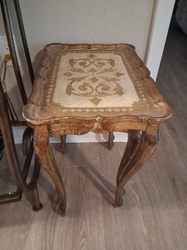
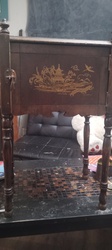
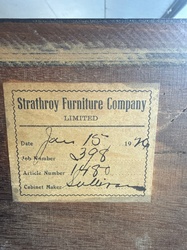
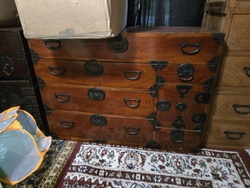
Submitted item photo
Submitted photo · May 28, 2026

User's notes

No additional notes provided.

AI analysis below

AI appraisal

AI analysis & estimate

AI-Generated · Verify before acting

Everything below is generated by AI for informational purposes only. AI can make mistakes — the AI may misidentify items or misattribute them (artist, maker, brand, designer, origin, era). This is not an official valuation and should not be used for insurance, sale, tax, estate, legal, or lending purposes — or any decision requiring a certified appraisal. It is not an authoritative claim about any person, brand, or rights holder — do not share or rely on it as a factual statement about a third party. Always consult qualified professionals before making financial decisions.

Read the full disclaimer

AI Identification

·Not independently authenticated·Verify before acting

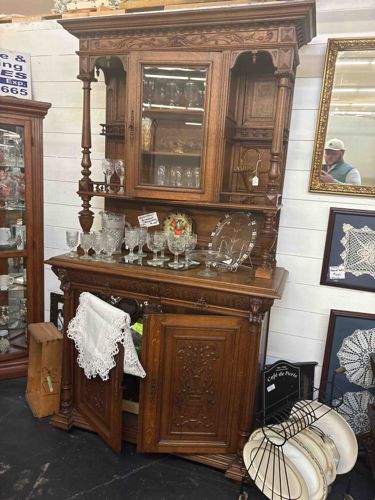
Late 19th Century Renaissance Revival Carved Oak Buffet à Deux Corps

Antique Furniture

AI Estimated Value

·Not an official valuation·Verify before acting

$4,500 - $6,500

As of May 28, 2026

AI Item Analysis

·AI can make mistakes·Verify before acting
This is a substantial late 19th-century 'buffet à deux corps' or sideboard hutch crafted in the Renaissance Revival style, prominently featuring heavy oak construction with a rich, dark golden-brown patina. The upper section is architectural in nature, featuring a central glazed cabinet door flanked by open stepped shelving and supported by intricately turned spindle columns. The heavy overhanging cornice is adorned with deep relief frieze carvings of foliate patterns and heraldic motifs. The lower sideboard base features two drawers over a pair of cabinet doors, each intricately decorated with bas-relief carvings of urns and floral swags nestled within recessed panels. Detailed lion head carvings serve as corbels at the corners of the base, adding to the stately, gothic-influenced aesthetic. The unit stands on a sturdy plinth base. Its craftsmanship is indicative of European, likely French or Flemish, production from approximately 1870-1890. The piece appears to be in good vintage condition, showing expected light surface wear, minor nicks to the base, and a well-developed aged finish on the oak grain. The hardware appears original, matching the period's preference for discreet yet functional brass or iron locks.
AI Appraisal Report

·AI can make mistakes·Verify before acting
Based on my visual examination of this late 19th-century Renaissance Revival Buffet à Deux Corps, I find it to be a superior example of French or Flemish craftsmanship from the 1870-1890 period. The oak construction shows a desirable dark golden-brown patina with deep relief frieze carvings and heraldic motifs that remain sharp and well-preserved. The lion head corbels and spindle columns are hallmarks of high-quality cabinetmaking of the era. The condition appears very good, with authentic surface wear consistent with its age, specifically minor nicks to the plinth base and expected oxidation of the hardware. In the current market, large-scale Victorian-era pieces face challenges due to their size, yet the Renaissance Revival style remains highly collectible for its architectural presence. Comparable pieces sold at specialized antique auctions generally range between $4,000 and $7,000, depending on the complexity of the carving. The inclusion of the central glazed door and the intricate urn-and-swag relief work elevates this piece above standard provincial examples. However, there are limitations to an image-based appraisal. A full authentication requires an in-person inspection to verify joinery methods (such as hand-cut dovetails), wood oxidation behind the back panels, and the presence of any internal maker's marks or stamps. I would also need to examine the glass to determine if it is original cylinder glass or a modern replacement. Provenance documentation, such as previous sales records or family history, would further solidify the valuation. Any evidence of structural repairs or insect damage hidden within the plinth would significantly adjust the final estimate.

Get your items appraised

Instant estimates of your treasures with AI-powered appraisals

Browse More Appraisals