Godinger Dublin Crystal Ice Bucket
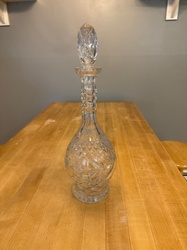
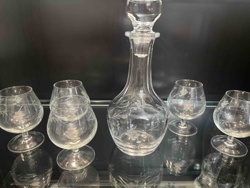
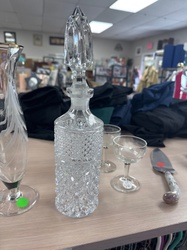
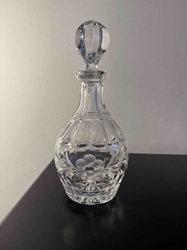
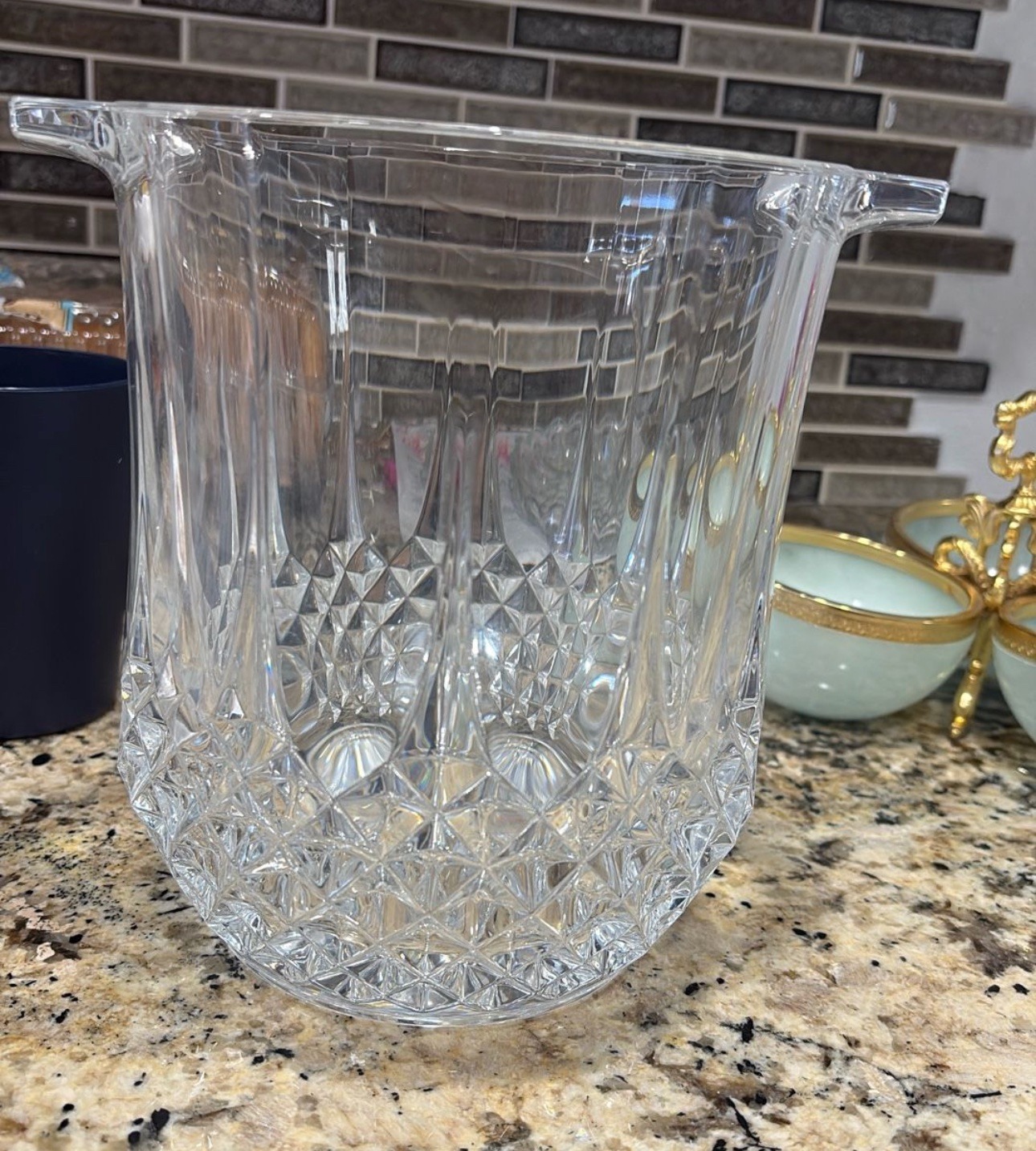
This is a fine lead crystal ice bucket, identified as the 'Dublin' pattern by Godinger Crystal. The item is characterized by its brilliant clarity and significant weight, typical of high-quality glasswork. Physically, the piece features a deep diamond-cut (crisscross) pattern around the lower third of the body, transitioning into long vertical wedge cuts or flutes that extend toward the rim. The rim is thick and polished, featuring two integrated, solid crystal tab handles that extend horizontally for easy lifting. The base is thick and stable with a starburst-type cut often found in this pattern to enhance light refraction. In terms of condition, the crystal appears clear without visible clouding or 'sick glass' syndrome. There are no immediate signs of large chips or cracks, although the base likely shows minor shelf wear consistent with light use. The craftsmanship exhibits sharp, precise cuts that create high luminosity. This piece likely dates from the late 20th to early 21st century and reflects a traditional Irish-style cutting technique, making it a staple piece of formal barware or tabletop decor.
AI-Generated Appraisal Disclaimer
Estimated Value
$40.00 - $65.00
Basic Information
Category
Lead Crystal Barware / Glassware
Appraised On
April 21, 2026
Estimated Value
$40.00 - $65.00
Item Description
This is a fine lead crystal ice bucket, identified as the 'Dublin' pattern by Godinger Crystal. The item is characterized by its brilliant clarity and significant weight, typical of high-quality glasswork. Physically, the piece features a deep diamond-cut (crisscross) pattern around the lower third of the body, transitioning into long vertical wedge cuts or flutes that extend toward the rim. The rim is thick and polished, featuring two integrated, solid crystal tab handles that extend horizontally for easy lifting. The base is thick and stable with a starburst-type cut often found in this pattern to enhance light refraction. In terms of condition, the crystal appears clear without visible clouding or 'sick glass' syndrome. There are no immediate signs of large chips or cracks, although the base likely shows minor shelf wear consistent with light use. The craftsmanship exhibits sharp, precise cuts that create high luminosity. This piece likely dates from the late 20th to early 21st century and reflects a traditional Irish-style cutting technique, making it a staple piece of formal barware or tabletop decor.
Related Tags
Get Your Items Appraised
Instant estimates of your treasures with AI-powered instant appraisals