These notes were written by the person who submitted this item. Appraiser.AI has not verified them, and the AI's identification and estimate may rely on them.
AI Estimated Value
Not an official valuation
$100-200
AI estimate as of August 18, 2025 · verify with a professional before acting
AI-Generated · Verify before acting
Everything on this page is generated by AI for informational purposes only. AI can make mistakes — the AI may misidentify items or misattribute them (artist, maker, brand, designer, origin, era). This is not an official valuation and should not be used for insurance, sale, tax, estate, legal, or lending purposes — or any decision requiring a certified appraisal. It is not an authoritative claim about any person, brand, or rights holder — do not share or rely on it as a factual statement about a third party. Always consult qualified professionals before making financial decisions.
This analysis also relies on unverified notes provided by the user, which may be incomplete or inaccurate and could affect the result.
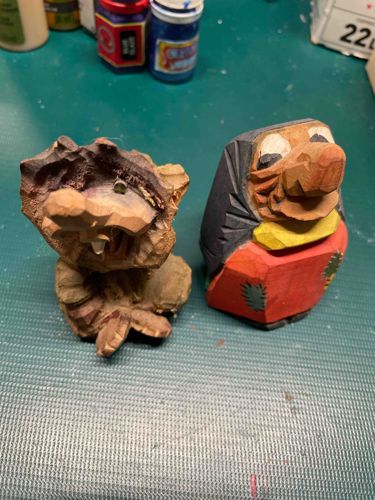
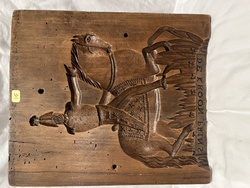
This lot features two small, hand-carved wooden figures, likely representative of 'Alpine house figures' or whimsical characters often found in German or Nordic folk art traditions. The first figure, on the left, appears to be a troll or similar mythical creature. It is carved from light-colored wood, possibly pine or basswood, and exhibits a rough, textured surface, particularly on its 'hair' or upper body, which is stained a dark brown. The face is expressive with deep-set eyes, a prominent nose, and a visible mouth with what might be fangs or teeth, highlighted by the lighter natural wood color. The entire figure maintains the earthy tones of the wood itself, with some darker striations suggesting natural wood grain or intentional staining. There's a small, light-colored bead or pin embedded near the top of its head, indicating a possible past attachment point or a decorative element. The carving displays a rustic, almost primitive style, with visible tool marks contributing to its handcrafted appeal. The base of this figure shows carved feet or a stump-like structure. The second figure, on the right, is a more robust, stylized character, possibly a witch or an elderly woman, embodying a classic 'Alpine' aesthetic. This figure is also wood-carved but is extensively painted. It wears a dark, possibly black or dark grey, pointed hood or shawl that nearly conceals its body. The face is natural wood, showcasing carved features such as a large, rounded nose, deep-set eyes, and a prominent chin. Below the face, the figure is painted in bright, contrasting colors: a large yellow collar or cravat sits atop a vivid red body. Distinctive green and yellow painted patches, resembling stitched repairs or decorative elements, are visible on the red section, adding to its folk art charm. Both figures exhibit a pleasing patina consistent with age and handling, with no obvious signs of significant damage like cracks or chips, only minor wear on the painted surfaces of the second figure. The craftsmanship suggests amateur or semi-professional carving, focused on character and charm rather than precise anatomical realism, typical of regional folk art from the mid-20th century or later.
AI Appraisal Report
Upon examining the images of the Pair of Hand-Carved Folk Art Figures (Troll and Alpine Woman), I can offer the following appraisal. The condition of both figures appears very good, consistent with their age and use. I observe a pleasing patina and only minor wear on the painted surfaces of the second figure, which aligns with the description of no significant damage. The rustic, handcrafted nature, visible tool marks, and expressive carving suggest amateur or semi-professional folk artistry, likely from the mid-20th century or later, fitting the 'Alpine house figures' aesthetic. This distinct style and apparent age contribute positively to their character and perceived authenticity as hand-carved folk art.
From a market perspective, comparable carved folk art figures, particularly those with a European or Nordic aesthetic, typically find a niche market among collectors of regional decorative arts and Americana. While not exceedingly rare, well-preserved examples with strong character like these maintain steady demand. Factors impacting value include the charming, whimsical nature of the carvings and their presentation as a coherent pair. The lack of major damage also enhances their appeal.
It is crucial to note that my authenticity assessment is limited to visual examination of the provided images. While the figures appear period-appropriate and consistent with their description, definitive authentication regarding precise origin, age, and artisan would require an in-person physical inspection. This would allow for tactile evaluation of wood type, paint analysis, closer examination of tool marks, and assessment of internal structural integrity. Additionally, any provenance documentation, such as collection history or maker's marks, would significantly enhance authenticity verification and potential value.