AI Appraisal Estimate

AI-generated estimates · not official valuations

From the user

What was submitted

Photo and notes provided by the user — not generated by AI

Submitted item photo
Submitted photo · May 25, 2026

User's notes

No additional notes provided.

AI analysis below

AI appraisal

AI analysis & estimate

AI-Generated · Verify before acting

Everything below is generated by AI for informational purposes only. AI can make mistakes — the AI may misidentify items or misattribute them (artist, maker, brand, designer, origin, era). This is not an official valuation and should not be used for insurance, sale, tax, estate, legal, or lending purposes — or any decision requiring a certified appraisal. It is not an authoritative claim about any person, brand, or rights holder — do not share or rely on it as a factual statement about a third party. Always consult qualified professionals before making financial decisions.

Read the full disclaimer

AI Identification

·Not independently authenticated·Verify before acting

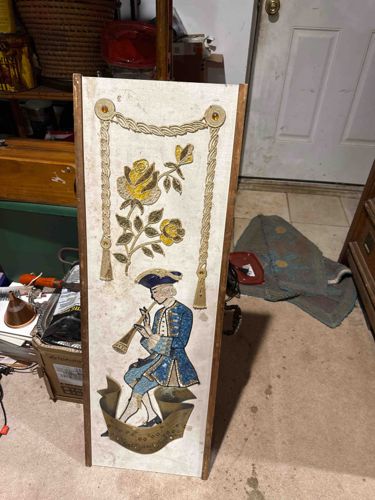
Mid-Century Gravel Art Wall Plaque featuring Colonial Flautist

Vintage Home Decor / Folk Art

AI Estimated Value

·Not an official valuation·Verify before acting

$45-65

As of May 25, 2026

AI Item Analysis

·AI can make mistakes·Verify before acting
This is a vintage vertical wall plaque, a classic example of 'Gravel Art' or 'Pebble Art' popular during the 1960s and 1970s. The piece is constructed on a tall, narrow wooden panel or board, likely finished with a white textured surface to serve as a backdrop for the decorative elements. The central motif depicts a 18th-century style colonial flautist or musician in profile. He is dressed in a blue tricorn hat and matching frock coat with light blue breeches, embellished with intricate gold-toned highlights. Above the figure are two large yellow and brown roses, framed at the top by a gold-colored cord or swag motif with tassels. At the bottom, a stylized gold banner provides a decorative base. The construction involves small colored stones or gravel meticulously glued within raised outlines (possibly wire or thick paint) to create a mosaic effect. The piece is framed by simple vertical wooden side rails. In terms of condition, the white background shows signs of age-related yellowing and some minor dark spotting or foxing. There are visible scuffs on the wood frame and evidence of dust accumulation in the crevices of the gravel. No significant loss of gravel is immediately apparent, though long-term adhesive degradation is a typical concern for this style. This piece represents a DIY craft kit style of decor very common in Mid-Century American households.
AI Appraisal Report

·AI can make mistakes·Verify before acting
I have examined the provided description and image of the Mid-Century gravel art wall plaque. This piece is a quintessential DIY home decor item, likely produced from a 'LeeWards' or 'CraftMaster' kit during the 1960s. The aesthetic—blending 18th-century 'Colonial' motifs with Atomic Age textures—is highly characteristic of the period's eclectic interior trends. Condition-wise, the piece shows expected age-related foxing and substrate yellowing. The 'gravel' appears largely intact, though the adhesive used in these kits often becomes brittle, risking stone loss. The wooden frame rails show minor abrasions consistent with residential use. From a market perspective, gravel art enjoys a niche following among 'Kitsch' and Mid-Century Modern enthusiasts. However, because these were mass-produced kits rather than unique fine art commissions, they are not rare. The Colonial Musician theme is common, generally fetching lower prices than more sought-after 'Space Age' or 'Birds of Paradise' motifs. Authenticity is confirmed as a period original based on the materials and construction techniques styles. However, a visual digital inspection cannot verify the structural integrity of the adhesive or the presence of non-original repairs. A full physical examination would be required to ensure no modern stabilization (like hot glue or spray sealants) has been applied, which can detract from value. Provenance is rarely documented for these items, but finding the original kit instructions or a manufacturer label on the reverse would provide a slight premium. These items are valued primarily for their decorative appeal rather than investment-grade rarity.

Get your items appraised

Instant estimates of your treasures with AI-powered appraisals

Browse More Appraisals