AI estimate as of August 21, 2026 · verify with a professional before acting
AI-Generated · Verify before acting
Everything on this page is generated by AI for informational purposes only. AI can make mistakes — the AI may misidentify items or misattribute them (artist, maker, brand, designer, origin, era). This is not an official valuation and should not be used for insurance, sale, tax, estate, legal, or lending purposes — or any decision requiring a certified appraisal. It is not an authoritative claim about any person, brand, or rights holder — do not share or rely on it as a factual statement about a third party. Always consult qualified professionals before making financial decisions.
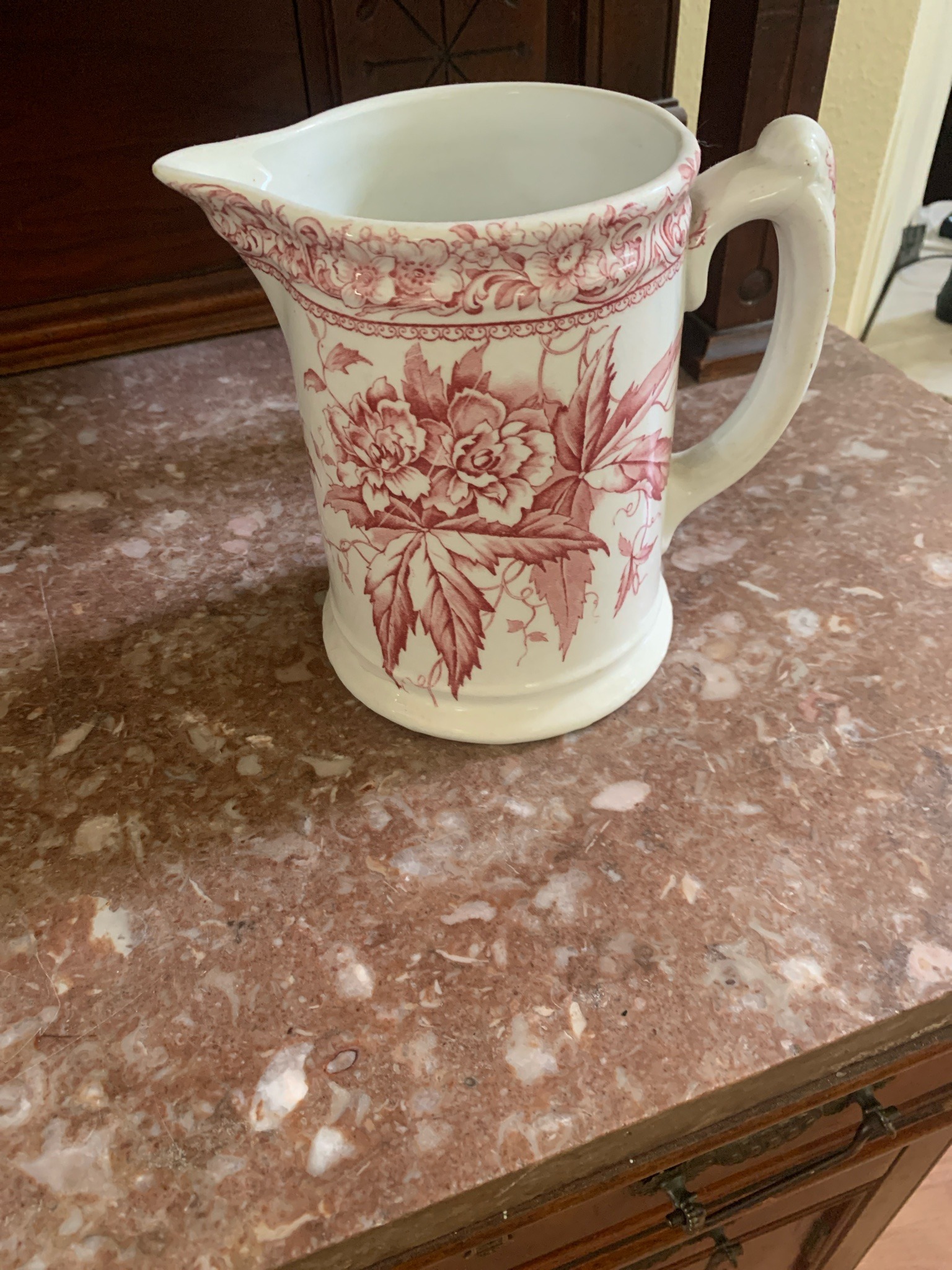
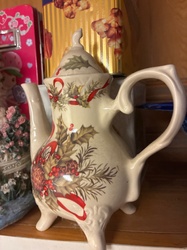
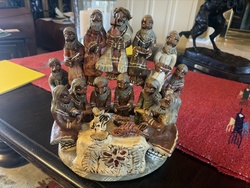
This is a ceramic pitcher featuring a pink or red transferware pattern, commonly associated with nineteenth-century or early twentieth-century earthenware styles. The body of the pitcher is off-white or cream-colored, glazed, with a prominent red transfer-printed design consisting of large stylized floral blossoms and foliage dominating the central front surface. Around the rim and upper shoulder, there is a repeating decorative foliate and scroll border band. The piece has a flared cylindrical shape, an integrated pouring spout, and a sturdy applied C-scroll handle featuring a thumb-rest projection near the top attachment point. The base is slightly stepped and rounded. There are no maker's marks, stamps, or signatures visible from this photographic angle; the identification rests entirely on the stylistic characteristics of the red transfer print and ceramic form. The overall condition appears clean with a glossy glaze, though minor surface wear, crazing, or manufacturing imperfections cannot be ruled out without closer physical inspection. This item is unauthenticated and serves as a representative example of historic transferware ceramic production.
AI Appraisal Report
Based on what I can see in the photograph, this ceramic pitcher presents stylistic features commonly associated with nineteenth-century or early twentieth-century red transferware production, featuring a prominent floral transfer print, an integrated pouring spout, and a C-scroll handle. However, I cannot verify from a photo alone the exact age, maker, or manufacturing origin, as no maker's marks, stamps, or signatures are visible from this viewing angle. The estimated value range of $150 to $300 assumes the hypothesis that the piece possesses the period manufacture and materials typical of historic transferware. General market demand for nineteenth-century transferware pitchers remains steady among collectors of historic ceramics, though values vary widely based on condition, rarity of the pattern, and maker attribution. I would need physical inspection to confirm the presence of crazing, microscopic wear, manufacturing flaws, or hidden markings. Furthermore, this valuation is conditional; if physical examination reveals the piece to be a later reproduction, replica, or decorative copy rather than a period example, the market value would likely decrease substantially to a decorative-only range of $30 to $75. To establish a more precise valuation and test the working attribution, an in-person examination by a qualified ceramic specialist or appraiser, alongside a search for elusive base marks or provenance documentation, would be necessary.