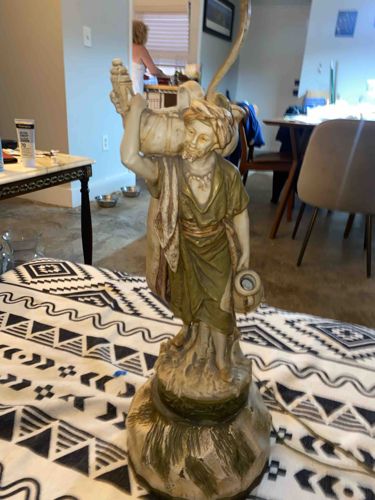
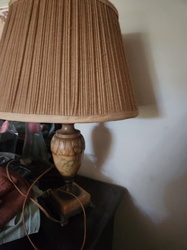
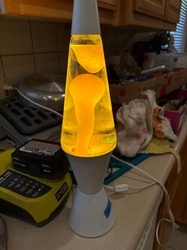
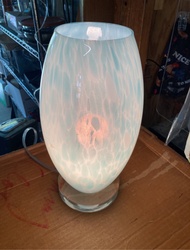
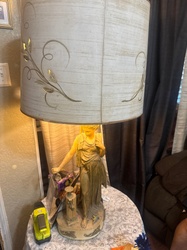
Good condition, lamp statue not sure what it’s made of
These notes were written by the person who submitted this item. Appraiser.AI has not verified them, and the AI's identification and estimate may rely on them.
AI Estimated Value
Not an official valuation
$75-125
AI estimate as of August 14, 2025 · verify with a professional before acting
AI-Generated · Verify before acting
Everything on this page is generated by AI for informational purposes only. AI can make mistakes — the AI may misidentify items or misattribute them (artist, maker, brand, designer, origin, era). This is not an official valuation and should not be used for insurance, sale, tax, estate, legal, or lending purposes — or any decision requiring a certified appraisal. It is not an authoritative claim about any person, brand, or rights holder — do not share or rely on it as a factual statement about a third party. Always consult qualified professionals before making financial decisions.
This analysis also relies on unverified notes provided by the user, which may be incomplete or inaccurate and could affect the result.
This item is a figural table lamp, featuring a statue of a male figure carrying what appears to be a large water vessel or amphora on his left shoulder, with a smaller jug in his right hand. The figure is depicted in flowing robes, rendered in earthy tones of muted green, beige, and cream, suggesting a 'natural' or 'antique' aesthetic. His head is turned slightly to the right, and his facial features, including a beard, are somewhat stylized but discernible. The statue stands on a sculpted base that appears to be integrated into the lamp's structure, transitioning into a wider, heavy-set lamp base. The material appears to be a composite, possibly resin or a cast plaster-like material, designed to mimic aged stone or carved wood, given its matte finish and varied texture. The coloring exhibits intentional distressing or patina, particularly on the robes and base, with darker greens providing contrast against lighter, almost whitewashed areas. The overall condition appears good, with no obvious cracks, chips, or significant wear visible from the provided image. The electrical cord is visible trailing from the base, confirming its function as a lamp. The lamp socket and finial (the decorative top piece that secures the lamp shade) are not fully visible but can be inferred from the overall design. Given its aesthetic, it likely dates from the mid-to-late 20th century, possibly in the 'Mediterranean' or 'Old World' revival styles.
AI Appraisal Report
Upon examining the provided image and information, I assess this figural table lamp to be in good condition. The matte finish and varied texture, along with the intentional distressing and patina, suggest it's likely made of resin or a similar composite material, designed to mimic aged stone. This material choice and aesthetic were popular in the mid-to-late 20th century, aligning with 'Mediterranean' or 'Old World' revival styles.
The market for decorative lamps of this type is generally stable but not experiencing significant appreciation. Comparables typically sell in the range of \"decorative accent pieces\" rather than high-value antiques or art. Demand is moderate, driven by specific interior design needs or those seeking a vintage aesthetic. This particular piece doesn't present as rare; similar figural lamps from the period are fairly common.
Factors impacting value include the good condition and the appealing, albeit mass-produced, aesthetic. The lack of identifiable maker's marks or historical significance limits its collector's appeal.
Limitations in authenticity verification are significant. From images alone, I cannot definitively confirm the exact material composition. A physical examination would allow for tactile assessment of the material (e.g., coldness, weight, resonance) and a closer inspection for manufacturer marks, which are not visible here. Without provenance documentation or a scientific material analysis (if deemed necessary for a higher value item), the 'authenticity' is limited to its period style and decorative intent, rather than a unique art piece. However, for a decorative lamp, this level of scrutiny is often not expected by the market.