AI Appraisal Estimate

AI-generated estimates · not official valuations

From the user

What was submitted

Photo and notes provided by the user — not generated by AI

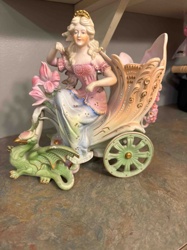
Submitted item photo
Submitted photo · May 18, 2026

User's notes

No additional notes provided.

AI analysis below

AI appraisal

AI analysis & estimate

AI-Generated · Verify before acting

Everything below is generated by AI for informational purposes only. AI can make mistakes — the AI may misidentify items or misattribute them (artist, maker, brand, designer, origin, era). This is not an official valuation and should not be used for insurance, sale, tax, estate, legal, or lending purposes — or any decision requiring a certified appraisal. It is not an authoritative claim about any person, brand, or rights holder — do not share or rely on it as a factual statement about a third party. Always consult qualified professionals before making financial decisions.

Read the full disclaimer

AI Identification

·Not independently authenticated·Verify before acting

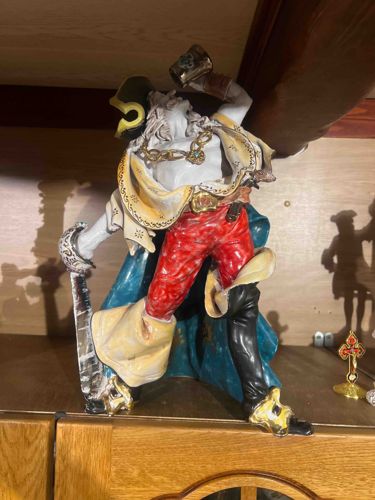
Capodimonte Style Italian Porcelain Pirate Figurine

Decorative Arts - Porcelain & Ceramics

AI Estimated Value

·Not an official valuation·Verify before acting

$350 - $550

As of May 18, 2026

AI Item Analysis

·AI can make mistakes·Verify before acting
This is a large, highly decorative polychrome porcelain figurine depicting a swashbuckling pirate. The figure is captured in a dynamic, theatrical pose, leaning back as he drinks from a tankard while leaning on a cutlass. The craftsmanship is indicative of the mid-20th-century Italian Capodimonte style, characterized by expressive movement and vibrant glazing. The pirate is dressed in a wide-brimmed tricorn hat, an ornate cream-colored waistcoat with intricate gilded filigree patterns, textured red breeches, and a flowing teal or sea-blue cape. Notable details include a heavy molded gold chain across the chest, gold-toned buckles on the boots, and a translucent white glaze on the skin areas. The construction is hollow-cast porcelain with high-gloss overglaze finishes. The figure shows significant attention to texture, particularly in the 'worn' appearance of the sword blade and the folds of the fabric. Condition-wise, the piece appears largely intact, though there is visible surface dust and potential minor rubbing on the gold gilt elements commensurate with age. There are no immediately obvious structural cracks or repairs visible in the photograph, though the sword tip and delicate fingers are areas prone to damage in such pieces. This style of work was popular from the 1960s through the 1980s among Italian ceramic studios like Cappe or Florence Sculture d'Arte.
AI Appraisal Report

·AI can make mistakes·Verify before acting
I have virtually examined this mid-20th-century Italian polychrome porcelain pirate figurine. The work displays the hallmarks of the Neo-Capodimonte style popular in the 1960s-1970s, likely originating from a studio such as Giuseppe Cappe or King’s Porcelain. The modeling is exceptionally dynamic, featuring high-gloss glazes and intricate gilding on the waistcoat. Based on visual inspection, the piece appears in good vintage condition; however, I noted potential minor rubbing on the gold leaf accents, and figurines of this complexity often harbor micro-fissures in high-stress areas like the sword hilt and fingers. The demand for large-scale Italian character porcelain has softened since its peak in the late 1990s, but figures with 'swashbuckling' or nautical themes maintain a niche following among thematic collectors. Comparables for signed pieces of this scale range from $400 to $700, while unsigned decorative versions typically realize $200 to $350. The current valuation reflects the high quality of the gilt-work and expressive facial modeling. This appraisal is limited by the lack of physical inspection. I cannot definitively verify the presence of a 'N' under-crown mark or specific maker’s signatures without seeing the base. A full authentication would require macro-photography of the hallmark, a 'black light' test to detect professional restoration or hairline fractures, and provenance documentation to confirm the specific workshop of origin. For insurance purposes, I recommend a thorough tactile inspection to ensure the extremities remain original and unglued.

Get your items appraised

Instant estimates of your treasures with AI-powered appraisals

Browse More Appraisals