Lower Paleolithic Chert Biface Hand Axe / Scraper Tool
Archaeological Artifacts / Prehistoric Stone Tools

Lower Paleolithic Chert Biface Hand Axe / Scraper Tool

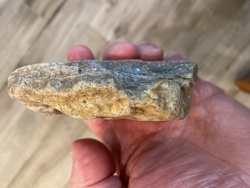
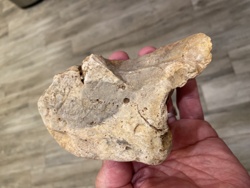
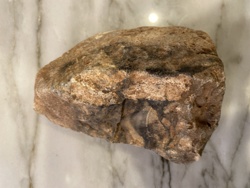
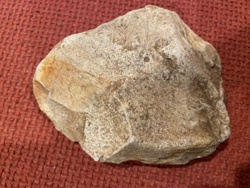
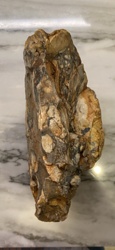
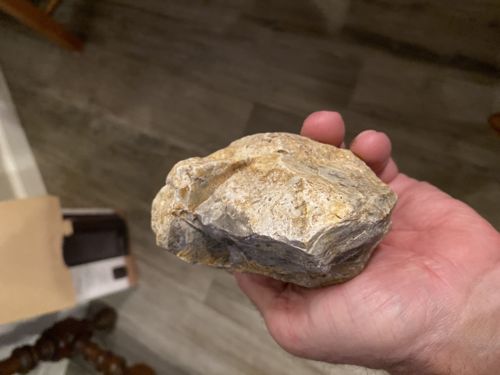
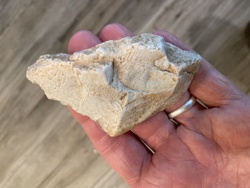
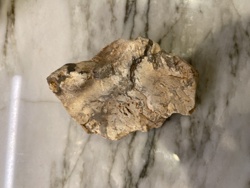
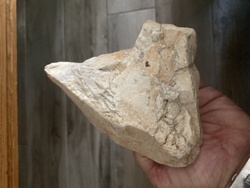
This is a prehistoric lithic tool, specifically a bifacial hand axe and scraper, found in Guthrie, Oklahoma. Measuring approximately 4 inches by 4.75 inches, the artifact is crafted from locally sourced chert. It features a robust, ergonomic design intended for handheld use without a haft. The physical characteristics include a thick central cross-section tapering toward worked edges. The material exhibits a variegated color palette with tan, cream, and greyish-blue tones, likely influenced by local mineral staining and iron oxidation. Notable features include percussion flaking scars across both faces (bifacial working) and a distinct cutting or scraping edge that shows signs of intentional retouching. The condition appears stable, displaying a naturally weathered patina and desert varnish consistent with prolonged environmental exposure. There are minor chips and step fractures along the working edge, which are characteristic of heavy-duty use in tasks such as butchering or hide processing. The craftsmanship represents an early stage of human lithic technology, where utility and durability were paramount. The absence of modern machine marks or metal residue confirms its ancient origin as a diagnostic Lower Paleolithic-style tool, though North American examples are technically categorized within the Paleo-Indian or Archaic periods depending on specific stratigraphic context.
Estimated Value

$150-$250

Basic Information

Category

Archaeological Artifacts / Prehistoric Stone Tools

Appraised On

March 1, 2026

Estimated Value

$150-$250

Additional Details Provided By Owner

User Provided Information

Lower Paleolithic chert bi face hand axe scraper tool found in Guthrie, OK measuring 4" x 4.75

Item Description

This is a prehistoric lithic tool, specifically a bifacial hand axe and scraper, found in Guthrie, Oklahoma. Measuring approximately 4 inches by 4.75 inches, the artifact is crafted from locally sourced chert. It features a robust, ergonomic design intended for handheld use without a haft. The physical characteristics include a thick central cross-section tapering toward worked edges. The material exhibits a variegated color palette with tan, cream, and greyish-blue tones, likely influenced by local mineral staining and iron oxidation. Notable features include percussion flaking scars across both faces (bifacial working) and a distinct cutting or scraping edge that shows signs of intentional retouching. The condition appears stable, displaying a naturally weathered patina and desert varnish consistent with prolonged environmental exposure. There are minor chips and step fractures along the working edge, which are characteristic of heavy-duty use in tasks such as butchering or hide processing. The craftsmanship represents an early stage of human lithic technology, where utility and durability were paramount. The absence of modern machine marks or metal residue confirms its ancient origin as a diagnostic Lower Paleolithic-style tool, though North American examples are technically categorized within the Paleo-Indian or Archaic periods depending on specific stratigraphic context.
Get Your Items Appraised

Instant estimates of your treasures with AI-powered instant appraisals

Browse More Appraisals