Paleolithic Chert Biface Hand Axe / Scraper Tool
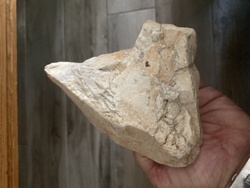
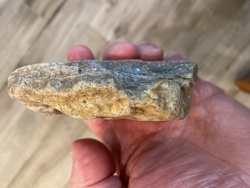
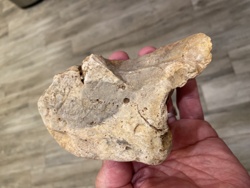
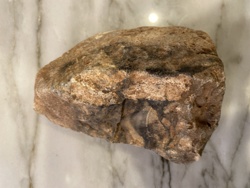
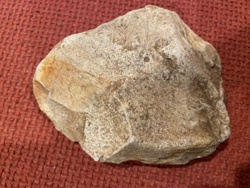
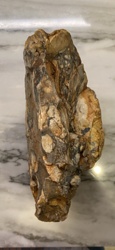
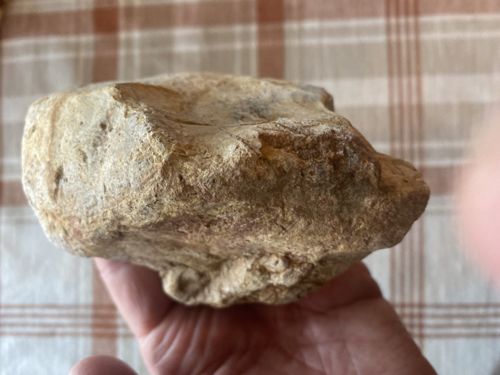
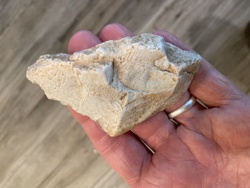
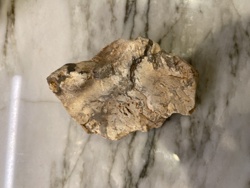
This artifact is a significant example of a bifacial tool, commonly identified as a hand axe or heavy-duty scraper, originating from Guthrie, Oklahoma. Measuring approximately 5 inches by 2.75 inches, the item is expertly knapped from chert, a microcrystalline sedimentary rock valued for its conchoidal fracture properties. The color profile is an earthy palette of tan, buff, and light gray, featuring a heavy, authentic desert varnish or mineralized patina across the entire surface, suggesting long-term environmental exposure. The tool exhibits intentional percussion flaking on both sides (bifacial working) to create a functional, tapered edge suitable for chopping, butchering, or hide scraping. There is visible evidence of hinge fractures and bulbous impact points consistent with ancient lithic reduction techniques. The condition shows heavy weathering and edge rounding typical of Paleo-Indian or early Archaic tools, with no modern rework or fresh scars visible. The piece retains its original stone cortex in various areas, blending naturally into the worked surfaces. The craftsmanship represents a utilitarian but skilled level of production, designed for ergonomic handheld use without the need for hafting. This specimen serves as a robust archaeological representative of prehistoric stone tool technology in the North American Great Plains region.
AI-Generated Appraisal Disclaimer
Estimated Value
$150 - $250
Basic Information
Category
Archaeological Artifacts / Prehistoric Stone Tools
Appraised On
March 2, 2026
Estimated Value
$150 - $250
Additional Details Provided By Owner
User Provided Information
Paleolithic chert bi face hand axe scraper tool found in Guthrie OK measuring 5" x 2.75
Item Description
This artifact is a significant example of a bifacial tool, commonly identified as a hand axe or heavy-duty scraper, originating from Guthrie, Oklahoma. Measuring approximately 5 inches by 2.75 inches, the item is expertly knapped from chert, a microcrystalline sedimentary rock valued for its conchoidal fracture properties. The color profile is an earthy palette of tan, buff, and light gray, featuring a heavy, authentic desert varnish or mineralized patina across the entire surface, suggesting long-term environmental exposure. The tool exhibits intentional percussion flaking on both sides (bifacial working) to create a functional, tapered edge suitable for chopping, butchering, or hide scraping. There is visible evidence of hinge fractures and bulbous impact points consistent with ancient lithic reduction techniques. The condition shows heavy weathering and edge rounding typical of Paleo-Indian or early Archaic tools, with no modern rework or fresh scars visible. The piece retains its original stone cortex in various areas, blending naturally into the worked surfaces. The craftsmanship represents a utilitarian but skilled level of production, designed for ergonomic handheld use without the need for hafting. This specimen serves as a robust archaeological representative of prehistoric stone tool technology in the North American Great Plains region.
Get Your Items Appraised
Instant estimates of your treasures with AI-powered instant appraisals