Vintage Singer Model 66 'Red Eye' Sewing Machine
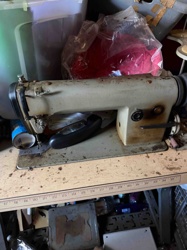
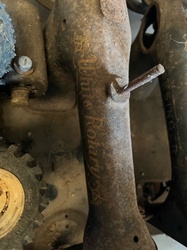
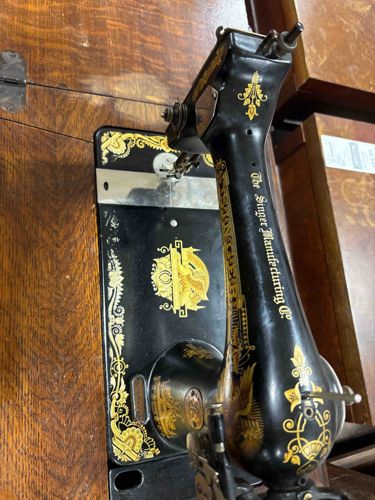
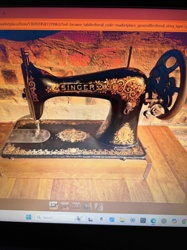
This is a vintage Singer Model 66 sewing machine, identifiable by its iconic 'Red Eye' or 'Egyptian' decal set. The machine features a heavy cast-iron body with a deep black japanned finish, which serves as a canvas for the ornate gold-colored decals that include floral motifs and winged figures. The top of the arm is clearly marked with 'The Singer Manufacturing Co.' in elegant gold script. The machine is set into a wooden grain base, likely an original oak cabinet or carrying case. Notable features include the side-mounted handwheel, the needle bar assembly at the front, and the circular brass Singer Manufacturing Co. seal. Regarding condition, the machine shows signs of age-appropriate wear; there is significant loss and fading to the decals on the flat bed plate where fabric would have been fed through. There is some minor surface dust and grime, but the overall structural integrity appears sound. This specific model was popular in the early 20th century, likely dating between 1910 and 1925. The craftsmanship reflects the industrial durability for which Singer was famous during the early domestic mechanical era.
AI-Generated Appraisal Disclaimer
Estimated Value
$150 - $250
Basic Information
Category
Antique Domestic Machinery
Appraised On
March 4, 2026
Estimated Value
$150 - $250
Item Description
This is a vintage Singer Model 66 sewing machine, identifiable by its iconic 'Red Eye' or 'Egyptian' decal set. The machine features a heavy cast-iron body with a deep black japanned finish, which serves as a canvas for the ornate gold-colored decals that include floral motifs and winged figures. The top of the arm is clearly marked with 'The Singer Manufacturing Co.' in elegant gold script. The machine is set into a wooden grain base, likely an original oak cabinet or carrying case. Notable features include the side-mounted handwheel, the needle bar assembly at the front, and the circular brass Singer Manufacturing Co. seal. Regarding condition, the machine shows signs of age-appropriate wear; there is significant loss and fading to the decals on the flat bed plate where fabric would have been fed through. There is some minor surface dust and grime, but the overall structural integrity appears sound. This specific model was popular in the early 20th century, likely dating between 1910 and 1925. The craftsmanship reflects the industrial durability for which Singer was famous during the early domestic mechanical era.
Get Your Items Appraised
Instant estimates of your treasures with AI-powered instant appraisals