AI Appraisal Estimate

AI-generated estimates · not official valuations

From the user

What was submitted

Photo and notes provided by the user — not generated by AI

Submitted item photo
Submitted photo · June 8, 2026

User's notes

No additional notes provided.

AI analysis below

AI appraisal

AI analysis & estimate

AI-Generated · Verify before acting

Everything below is generated by AI for informational purposes only. AI can make mistakes — the AI may misidentify items or misattribute them (artist, maker, brand, designer, origin, era). This is not an official valuation and should not be used for insurance, sale, tax, estate, legal, or lending purposes — or any decision requiring a certified appraisal. It is not an authoritative claim about any person, brand, or rights holder — do not share or rely on it as a factual statement about a third party. Always consult qualified professionals before making financial decisions.

Read the full disclaimer

AI Identification

·Not independently authenticated·Verify before acting

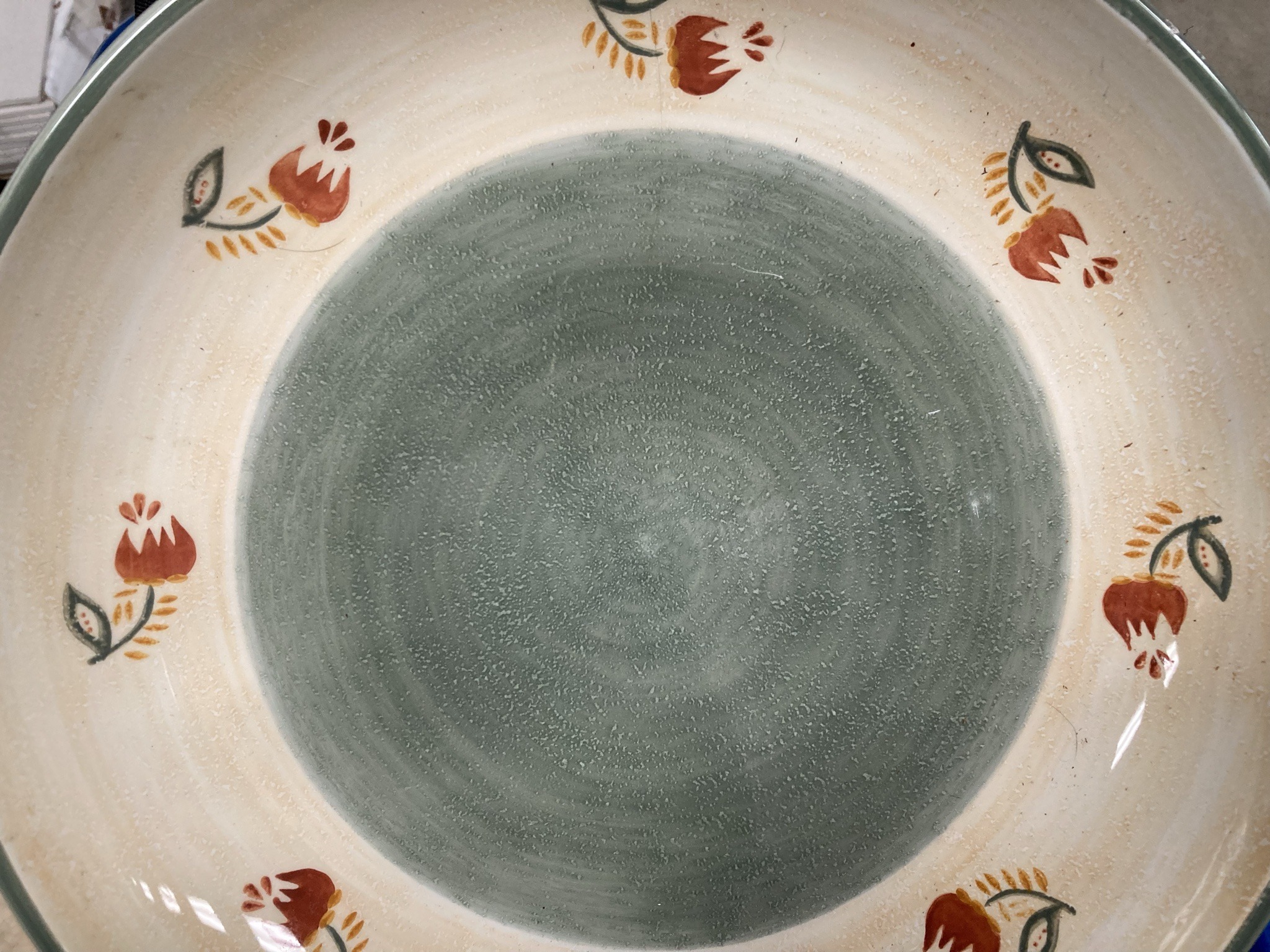
Hand-Painted Folk Art Ceramic Basin

Ceramics and Art Pottery

AI Estimated Value

·Not an official valuation·Verify before acting

$45.00 - $75.00

As of June 8, 2026

AI Item Analysis

·AI can make mistakes·Verify before acting
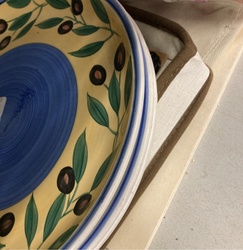
This item is a decorative ceramic low-rimmed basin or large bowl, characterized by its rustic, hand-crafted folk art aesthetic. Physically, the piece features a center medallion finished in a muted sage-green glaze with a textured, speckled finish, possibly achieved through a sponge or stipple application. The surrounding ivory or cream-colored interior wall is decorated with a repeat pattern of hand-painted floral motifs resembling stylized tulips or pomegranates. These motifs are executed in deep terra-cotta or burnt orange tones with olive green stems and yellow-gold hatched accents. The rim is finished with a matching olive-green band that frames the piece. In terms of construction, the ceramic body appears thick and durable, typical of mid-century to late 20th-century artisanal pottery. Visible condition issues include fine surface scratches in the central green glaze, suggesting use as a serving or display vessel. There is a noticeable hairline crack originating from the top edge, running vertically through the cream wall toward the center. Small dark inclusions are visible in the glaze, which are likely firing kiln specks characteristic of handmade stoneware. The style suggests a Mediterranean or Central European influence, likely dating from the 1970s to the 1990s. The brushwork is deliberate but expressive, indicating a skilled artisan rather than mass production.
AI Appraisal Report

·AI can make mistakes·Verify before acting
I have virtually examined this hand-painted ceramic basin, which exhibits a charming folk-art aesthetic consistent with Mediterranean or Central European artisanal production from the late 20th century (circa 1975–1990). The piece displays a sophisticated use of color, featuring a sponged sage-green central medallion and stylized floral motifs. Based on the thick earthenware body and kiln specks, this is a genuine piece of handmade studio pottery rather than a mass-produced industrial item. However, the condition significantly impacts its marketability; the visible hairline crack on the interior wall represents a structural compromise that renders the vessel 'non-functional' for food service, reclining its status to a purely decorative 'as-is' object. This crack, combined with surface abrasions in the center, reduces the value by approximately 50-60% compared to a pristine example. The current market for unsigned, vintage European-style folk pottery is stable but saturated, with similar utilitarian art pieces frequently appearing in local estate auctions and online marketplaces. While the brushwork is skilled, the lack of a visible maker's mark or artist signature limits its collectibility to decorative appeal rather than investment-grade art. Limitations: This appraisal is based solely on digital images. A physical inspection is required to determine the depth of the hairline crack and check for any hidden repairs or restorations. To definitively confirm the origin, I would need to examine the underside for a potter’s mark/incised signature and review any provenance documentation regarding its acquisition. Scientific testing (such as XRF) would be necessary only if one suspected the glaze contained lead, common in older folk-ware.

Get your items appraised

Instant estimates of your treasures with AI-powered appraisals

Browse More Appraisals