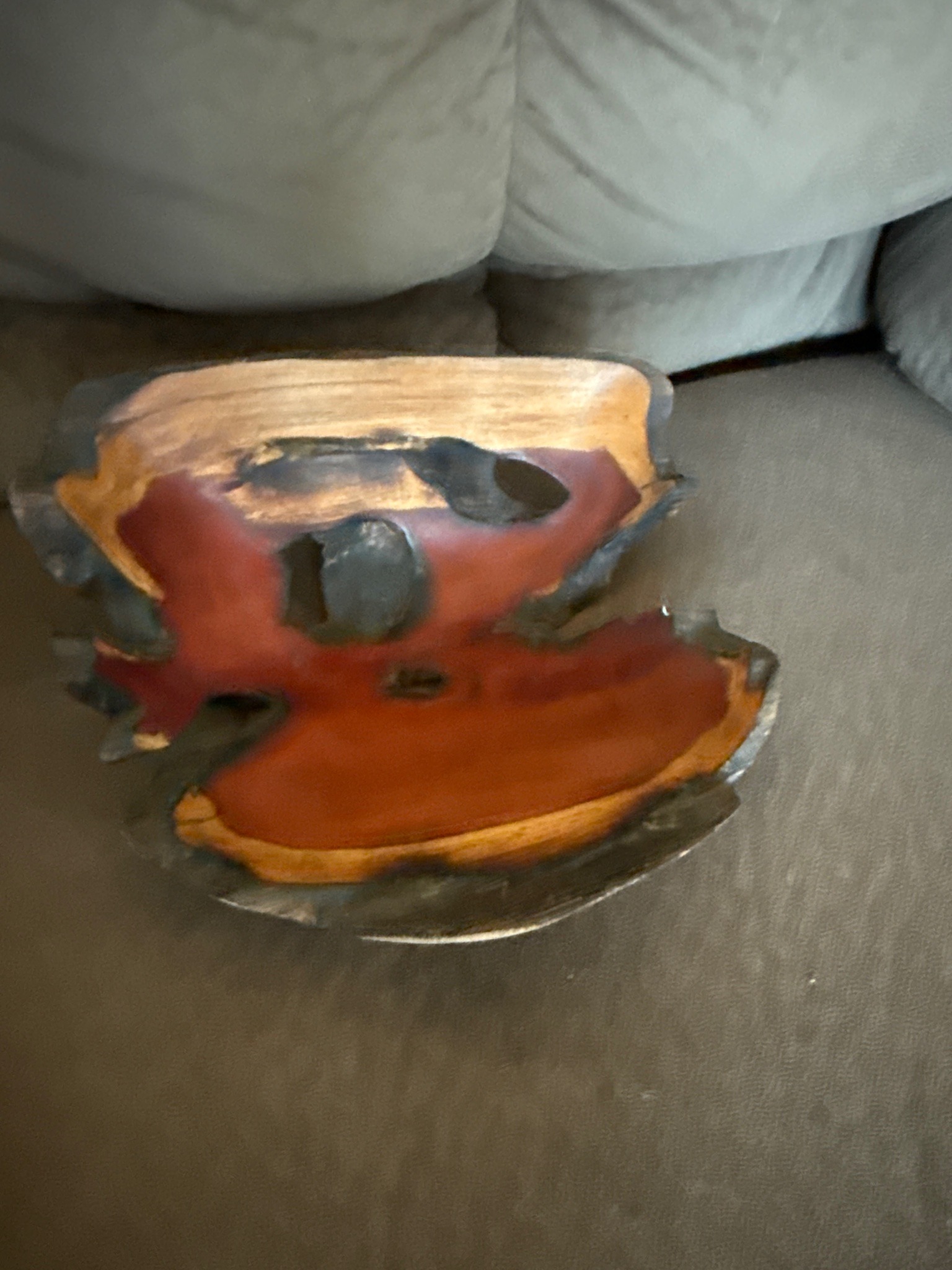
Hand-Carved Live Edge Burl Wood Decorative Bowl
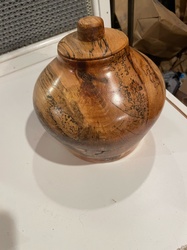
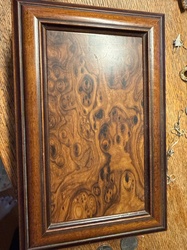
This item is a sculptural decorative bowl hand-carved from a single piece of natural burl wood, likely teak or redwood based on the rich coloration. The piece features a striking 'live edge' aesthetic, retaining the dark, rugged exterior bark which contrasts sharply with the smooth, polished interior. The interior showcases three distinct concentric bands of color: a deep reddish-brown core, a vibrant golden-orange mid-tone, and a lighter sapwood trim near the rim. Notably, the bowl incorporates several organic voids or 'natural inclusions' where the wood grain was naturally hollow, adding to its unique asymmetric character. The craftsmanship suggests a mid-to-late 20th-century artisan execution, characterized by a high-gloss finish that highlights the complex swirling grain patterns. The condition appears fair to good; there is visible cloudiness in the finish on the upper interior wall, suggesting possible oxidation, moisture exposure, or UV damage to the lacquer. The structural integrity remains intact with no apparent stability-threatening cracks outside of the natural wood pores. Its abstract, shell-like form and organic silhouette reflect the organic modernism movement, prioritizing the natural beauty of the raw materials over formal geometric symmetry.
AI-Generated Appraisal Disclaimer
Estimated Value
$450.00 - $650.00
Basic Information
Category
Handcrafted Woodwork / Decorative Arts
Appraised On
April 21, 2026
Estimated Value
$450.00 - $650.00
Item Description
This item is a sculptural decorative bowl hand-carved from a single piece of natural burl wood, likely teak or redwood based on the rich coloration. The piece features a striking 'live edge' aesthetic, retaining the dark, rugged exterior bark which contrasts sharply with the smooth, polished interior. The interior showcases three distinct concentric bands of color: a deep reddish-brown core, a vibrant golden-orange mid-tone, and a lighter sapwood trim near the rim. Notably, the bowl incorporates several organic voids or 'natural inclusions' where the wood grain was naturally hollow, adding to its unique asymmetric character. The craftsmanship suggests a mid-to-late 20th-century artisan execution, characterized by a high-gloss finish that highlights the complex swirling grain patterns. The condition appears fair to good; there is visible cloudiness in the finish on the upper interior wall, suggesting possible oxidation, moisture exposure, or UV damage to the lacquer. The structural integrity remains intact with no apparent stability-threatening cracks outside of the natural wood pores. Its abstract, shell-like form and organic silhouette reflect the organic modernism movement, prioritizing the natural beauty of the raw materials over formal geometric symmetry.
Get Your Items Appraised
Instant estimates of your treasures with AI-powered instant appraisals