AI Appraisal Estimate

AI-generated estimates · not official valuations

From the user

What was submitted

Photo and notes provided by the user — not generated by AI

Submitted item photo
Submitted photo · June 12, 2026

User's notes

No additional notes provided.

AI analysis below

AI appraisal

AI analysis & estimate

AI-Generated · Verify before acting

Everything below is generated by AI for informational purposes only. AI can make mistakes — the AI may misidentify items or misattribute them (artist, maker, brand, designer, origin, era). This is not an official valuation and should not be used for insurance, sale, tax, estate, legal, or lending purposes — or any decision requiring a certified appraisal. It is not an authoritative claim about any person, brand, or rights holder — do not share or rely on it as a factual statement about a third party. Always consult qualified professionals before making financial decisions.

Read the full disclaimer

AI Identification

·Not independently authenticated·Verify before acting

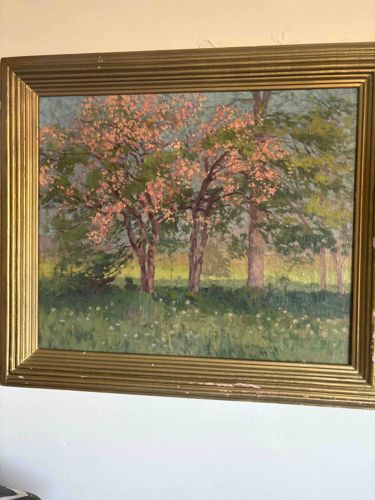
Late 19th/Early 20th Century Impressionist Flowering Landscape Oil Painting

Fine Art / Paintings

AI Estimated Value

·Not an official valuation·Verify before acting

$1,200 - $1,800

As of June 12, 2026

AI Item Analysis

·AI can make mistakes·Verify before acting
This is an original oil painting on canvas, housed in an ornate, multi-tiered gold-gilt fluted frame. The artwork depicts a lush landscape at either dawn or dusk, featuring several trees with vibrant pink and salmon-toned blossoms set against a background of deeper green pines and a hazy, overcast sky. The foreground is a dense meadow of tall grass and white wildflowers, rendered with short, dabbing brushstrokes characteristic of the Impressionist style. The palette is dominated by soft greens, earthy browns, and the warm pink of the blossoms, which create a soft, ethereal atmosphere. The painting appears to be late 19th to early 20th century in origin, likely American or European Impressionist. In terms of condition, the canvas shows a slightly aged texture with stable paint layers, though a professional cleaning might be required to remove surface grime. The substantial wooden frame reveals several areas of visible wear, including chipping of the gold gilding and loss of the plaster substrate along the lower outer edges and top corners. No signature is clearly visible from the front view, but the confident handling of light and color suggests a skilled hand. The frame's fluted ‘reed’ design is typical of the early 1900s aesthetic.


AI Appraisal Report

·AI can make mistakes·Verify before acting
I have conducted a visual examination of this late 19th to early 20th-century impressionist landscape. The work demonstrates a sophisticated application of color theory and light, with the confident use of impasto and dabbing brushwork suggesting a trained artist. The 'broken color' technique in the flowering trees creates a luminosity indicative of American or European regional impressionism. The frame, a fluted 'reed' design typical of the 1900–1920 period, is historically appropriate, though it shows significant losses and chipping that detract from the immediate retail presentation. The absence of a visible signature necessitates a 'School of' or 'Anonymous' attribution, which prevents the piece from reaching the price points associated with known masters like Metcalf or Lawson. The current market for unsigned impressionist works remains stable, with demand driven primarily by decorative appeal and period-correct framing. This estimate reflects realized prices for similar-sized landscapes of this era sold at regional auction. Limitations: This appraisal is based on a visual digital assessment. A definitive valuation is hindered by the lack of provenance and the inability to inspect the verso for artist labels or inscriptions. To verify authenticity and maximize value, an in-person examination is required to check for underlying signatures under UV light, assess canvas age/lining through thread-count analysis, and conduct chemical testing of the pigment binders to confirm a pre-1920 origin. Professional conservation to stabilize the frame and clean the yellowed varnish layer would likely enhance the work's marketability.

Get your items appraised

Instant estimates of your treasures with AI-powered appraisals

Browse More Appraisals