AI estimate as of October 2, 2025 · verify with a professional before acting
AI-Generated · Verify before acting
Everything on this page is generated by AI for informational purposes only. AI can make mistakes — the AI may misidentify items or misattribute them (artist, maker, brand, designer, origin, era). This is not an official valuation and should not be used for insurance, sale, tax, estate, legal, or lending purposes — or any decision requiring a certified appraisal. It is not an authoritative claim about any person, brand, or rights holder — do not share or rely on it as a factual statement about a third party. Always consult qualified professionals before making financial decisions.
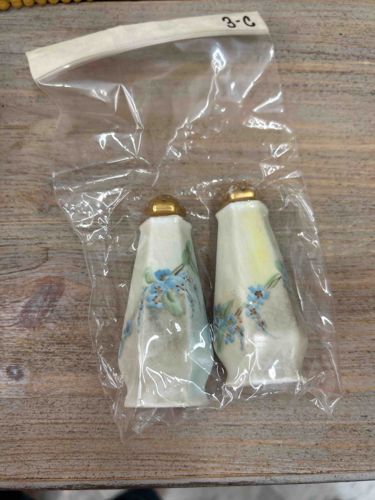
This appears to be a pair of vintage porcelain salt and pepper shakers, likely from the mid-20th century, characterized by their bell-shaped or slightly flaring conical forms. Each shaker features a delicate hand-painted floral motif, primarily depicting blue flowers, possibly forget-me-nots, against a shaded background that transitions from a light, almost iridescent hue at the base to a subtle green or yellow tint towards the upper body. The colors of the floral design appear soft and somewhat muted, suggesting either age or a particular painting style. Both shakers are topped with small, domed metallic caps, appearing to be brass or gold-toned metal, which likely serve as the dispensing mechanism and are removable for refilling. The caps show some signs of patina or light wear consistent with age, but no significant damage is visible. The porcelain body itself is a creamy white, possibly bone china or fine porcelain, indicative of quality craftsmanship. They are currently housed together in a clear plastic zipper-closure bag, which has a label '3-C' on it, possibly for inventory or organization purposes. The shakers appear to be in good overall condition with no visible cracks, chips, or major paint loss, although a closer inspection would be needed to confirm the absence of subtle crazing or minor wear. The craftsmanship suggests they were mass-produced but with hand-finished decorative elements, typical of collectible porcelain wares from their probable era.
AI Appraisal Report
Based on my visual examination of the provided image, this pair of porcelain floral salt and pepper shakers appears to be in very good condition. The porcelain bodies show no visible cracks, chips, or significant paint loss. The hand-painted blue floral motifs, likely forget-me-nots, are soft and consistent with mid-20th-century decorative porcelain. The metallic caps exhibit a light patina, which is expected with age and does not detract from their appeal.
Authenticity, based purely on visual inspection, is consistent with mass-produced but hand-decorated porcelain items from the era. These types of shakers were popular souvenir or gift items. The craftsmanship appears competent, but not of an exceptionally high-end, studio art pottery level, which would command a premium. The general bell-shaped form and floral decoration are common.
In terms of market conditions, vintage salt and pepper shakers, while collectible, generally have a modest value unless they are from a highly sought-after manufacturer (e.g., specific art pottery brands, or unusual figural designs) or are exceptionally rare. Demand for generic floral porcelain shakers is moderate. There are many similar items available online and in antique shops, which keeps prices relatively accessible. The '3-C' label on the bag appears to be an inventory marker and does not impact value.
The primary factors impacting value here are the good condition and the pleasant, classic floral design. However, the lack of a prominent maker's mark (which cannot be seen from the image) prevents identification with a specific, collectible manufacturer, thus limiting the upper end of the valuation. Without physical examination, I cannot confirm the absence of subtle crazing, hairline cracks, or hidden repairs, particularly around the cap fittings. Also, an in-person inspection would allow for examination of any base marks crucial for definitive manufacturer identification and true authentication. Scientific testing is not typically applied to items of this nature for authentication purposes. Without additional provenance or maker's marks, these are decorative vintage collectibles rather than high-value antiques.