AI Appraisal Estimate

AI-generated estimates · not official valuations

From the user

What was submitted

Photo and notes provided by the user — not generated by AI

Submitted item photo
Submitted photo · June 18, 2026

User's notes

antike Bild

AI analysis below

AI appraisal

AI analysis & estimate

AI-Generated · Verify before acting

Everything below is generated by AI for informational purposes only. AI can make mistakes — the AI may misidentify items or misattribute them (artist, maker, brand, designer, origin, era). This is not an official valuation and should not be used for insurance, sale, tax, estate, legal, or lending purposes — or any decision requiring a certified appraisal. It is not an authoritative claim about any person, brand, or rights holder — do not share or rely on it as a factual statement about a third party. Always consult qualified professionals before making financial decisions.

Note

This analysis also relies on unverified notes provided by the user, which may be incomplete or inaccurate and could affect the result.

Read the full disclaimer

AI Identification

·Not independently authenticated·Verify before acting

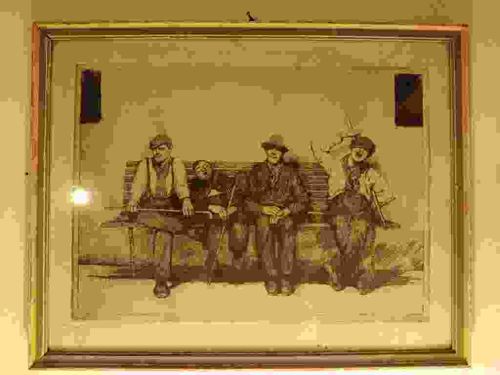
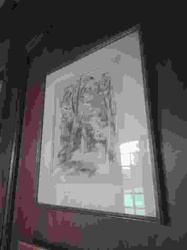
Framed Intaglio Print of Men on a Bench

Fine Art Prints and Graphics

AI Estimated Value

·Not an official valuation·Verify before acting

$450.00 - $700.00

As of June 18, 2026

AI Item Analysis

·AI can make mistakes·Verify before acting
This item is a framed monochrome print, likely an etching or lithograph, depicting four working-class men seated on a bench. The scene is rendered in sepia-toned or dark inks on an off-white or cream-colored paper. The figures are captured in a candid, social-realist style reminiscent of early 20th-century European or American art, possibly within the late 1920s to 1940s. The men are dressed in period clothing including flat caps, fedoras, suspenders, and structured coats. The composition centers on the figures against a sparse background, with two dark rectangular shapes (possibly windows or archways) flanking the subjects. The artwork is housed in a wooden frame with a metallic (possibly gold-leaf or gilt) finish and a stepped profile. The piece includes a large mat board that separates the print from the frame. Visible condition characteristics include signs of aging such as light foxing or yellowing of the paper, and some wear to the frame edges including minor scuffs and finish loss. The craftsmanship suggests a professional production, though specific artist signatures or maker's marks are not clearly legible at this resolution without closer inspection of the bottom margin. The use of light and shadow indicates a high level of detail in the original plate or stone used for printing.

AI Appraisal Report

·AI can make mistakes·Verify before acting
I have examined the provided documentation and imagery regarding this framed monochrome intaglio print. The work is a compelling example of early 20th-century Social Realism, likely dating between 1930 and 1950. The print exhibits sophisticated technique, utilizing deep sepia tones and strong chiaroscuro to depict working-class subjects. The composition and attire of the figures suggest European origins, specifically consistent with German or Central European printmakers of the interwar period. Condition-wise, the paper shows notable signs of age, including mild foxing and oxidative yellowing, which is typical for pulp-based or cotton-rag papers of its era. The frame, while aesthetically appropriate, shows minor mechanical wear and finish loss. Authenticity of the 'intaglio' process is supported by the visible ink depth and texture, though the absence of a visible signature or edition number in the lower margin limits its valuation. Market demand for anonymous Social Realist prints remains steady among collectors of period graphics, though identified works by known artists (e.g., Kollwitz or Marsh) would command significantly higher premiums. Crucially, this appraisal is based on digital observation. To confirm authenticity and maximize value, an in-person inspection is required to identify a 'plate mark,' assess the watermark of the paper, and examine the margin under the mat for signatures or publisher stamps. Provenance records, such as gallery labels on the reverse, would also be necessary for a definitive attribution. Without these, the value remains grounded in the decorative and historical merit of the piece rather than its pedigree.

Get your items appraised

Instant estimates of your treasures with AI-powered appraisals

Browse More Appraisals