AI estimate as of October 15, 2025 · verify with a professional before acting
AI-Generated · Verify before acting
Everything on this page is generated by AI for informational purposes only. AI can make mistakes — the AI may misidentify items or misattribute them (artist, maker, brand, designer, origin, era). This is not an official valuation and should not be used for insurance, sale, tax, estate, legal, or lending purposes — or any decision requiring a certified appraisal. It is not an authoritative claim about any person, brand, or rights holder — do not share or rely on it as a factual statement about a third party. Always consult qualified professionals before making financial decisions.
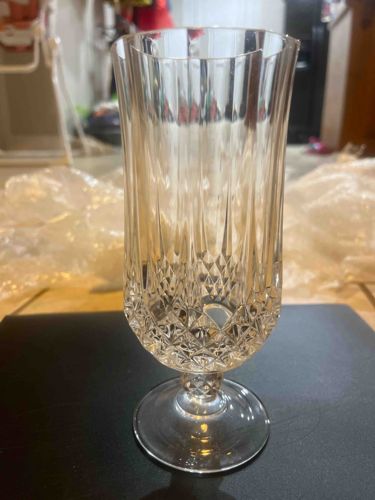
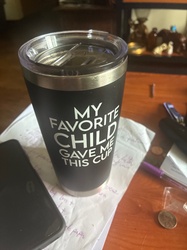
This is a clear, footed crystal glass, likely a champagne flute or a tulip-shaped cordial glass, characterized by its elegant and intricate cut glass design. The glass features a tall, slender bowl that widens slightly towards the rim, with straight vertical fluting adorning the upper half of the bowl. Below the fluting, the lower half of the bowl is masterfully cut with a diamond pattern, creating a brilliant, multifaceted surface that reflects light beautifully. In the center of the diamond cut section, there appears to be a larger, circular cut element, possibly a lens or a puntie mark, adding another layer of decorative detail. The glass sits atop a short, decorative stem that seamlessly transitions to a clear, circular foot, providing stability. The edges of the rim appear clean and smooth, indicative of good craftsmanship. The material is clearly glass, likely lead crystal given the brilliance and sharp cuts, though without a clearer view or maker's mark, 'crystal' is used to denote its high quality. There are no immediately visible chips, cracks, or significant wear, suggesting it is in good, if not excellent, condition. The style is classic and timeless, possibly dating from the mid-20th century to the present, as such cut glass patterns have remained popular. The precision of the cuts and the overall form suggest a machine-assisted or high-quality hand-finished manufacturing process.
AI Appraisal Report
Based on my visual examination of the provided image, this clear, footed crystal glass, likely a champagne flute, appears to be in very good to excellent condition. There are no visible chips, cracks, or significant wear, which is a crucial factor in maintaining value for glass items. The cut glass design, featuring vertical fluting and a diamond pattern with a central circular element, is classic and well-executed, suggesting good craftsmanship. The brilliance implies lead crystal, although this cannot be definitively confirmed without physical inspection. The precision of the cuts suggests either machine-assisted production or high-quality hand finishing.
Authenticity is difficult to ascertain from images alone. While it presents as a high-quality piece, distinguishing between true lead crystal and high-quality glass, or identifying a specific manufacturer, requires tactile examination, a maker's mark (if present), or potentially scientific testing. Without a clear maker's mark or provenance, attributing it to a specific, highly collectible manufacturer is impossible.
Market conditions for such cut crystal stemware are generally moderate. While elegant, individual pieces or small sets of unbranded crystal flutes typically command modest prices. Demand is present but not exceptionally high for single, unmarked pieces. Rarity is low; similar patterns and forms were produced by numerous manufacturers throughout the 20th century. Factors impacting value include the excellent condition, but the lack of a known maker limits its collectible appeal. For a full authentication, I would need to physically inspect the weight, clarity, ring tone (for crystal), and search for any etched or molded maker's marks. Microscopic examination of the cuts could also differentiate hand versus machine finishing. Without such verification, the appraisal remains conservative.