Japanese-Style Studio Pottery Rectangular Teapot
Art Pottery / Ceramics

Japanese-Style Studio Pottery Rectangular Teapot

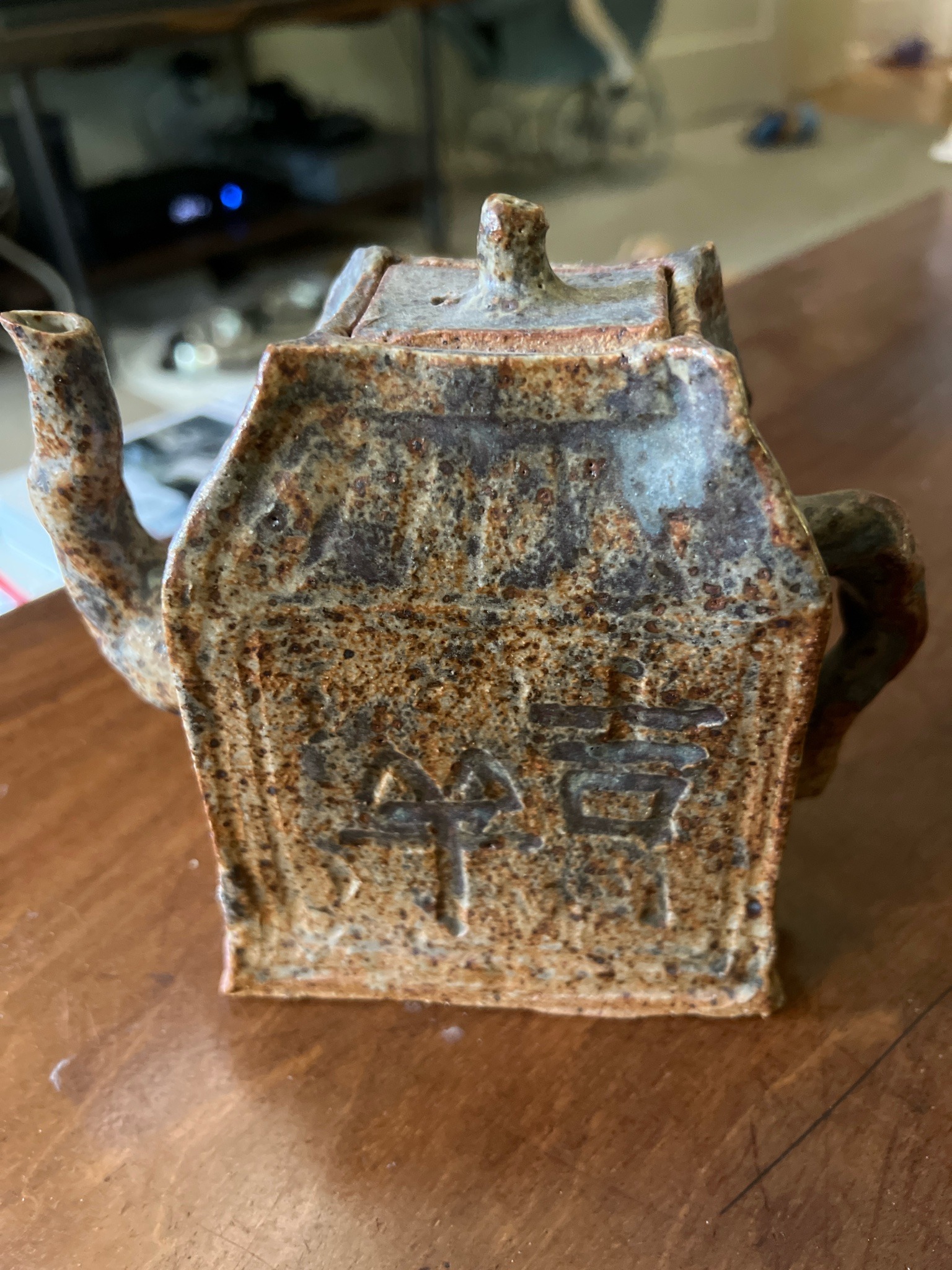
This is a hand-formed studio pottery teapot featuring a distinct rectangular, architectural body with slanted shoulders. The piece is constructed from a heavy stoneware clay body, exhibiting a rustic 'Wabi-sabi' aesthetic. The surface is covered in a textured, wood-fired or salt-glazed finish with a variegated palette of earthy ocher, rust-brown, and grey-blue ash deposits. Notable features include a hand-sculpted, organic spout and handle that resemble tree bark or root wood, and a small square inset lid with a nubbin finial. The front face displays deeply incised or sprigged kanji characters, suggesting an East Asian influence or origin, likely contemporary Japanese studio pottery. The construction is robust and intentional, showing tool marks and a rough granular texture that indicates a high level of artisanal craftsmanship. Condition-wise, the teapot appears intentionally weathered; the surface is pitted and irregular, which is characteristic of high-heat kiln firing rather than damage. There are no obvious cracks or structural repairs visible in the image. The style suggests a late 20th-century to modern production date, designed as a functional piece of art that celebrates natural imperfection.
Estimated Value

$150-250

Basic Information

Category

Art Pottery / Ceramics

Appraised On

April 18, 2026

Estimated Value

$150-250

Item Description

This is a hand-formed studio pottery teapot featuring a distinct rectangular, architectural body with slanted shoulders. The piece is constructed from a heavy stoneware clay body, exhibiting a rustic 'Wabi-sabi' aesthetic. The surface is covered in a textured, wood-fired or salt-glazed finish with a variegated palette of earthy ocher, rust-brown, and grey-blue ash deposits. Notable features include a hand-sculpted, organic spout and handle that resemble tree bark or root wood, and a small square inset lid with a nubbin finial. The front face displays deeply incised or sprigged kanji characters, suggesting an East Asian influence or origin, likely contemporary Japanese studio pottery. The construction is robust and intentional, showing tool marks and a rough granular texture that indicates a high level of artisanal craftsmanship. Condition-wise, the teapot appears intentionally weathered; the surface is pitted and irregular, which is characteristic of high-heat kiln firing rather than damage. There are no obvious cracks or structural repairs visible in the image. The style suggests a late 20th-century to modern production date, designed as a functional piece of art that celebrates natural imperfection.
Get Your Items Appraised

Instant estimates of your treasures with AI-powered instant appraisals

Browse More Appraisals