AI Appraisal Estimate

AI-generated estimates · not official valuations

From the user

What was submitted

Photo and notes provided by the user — not generated by AI

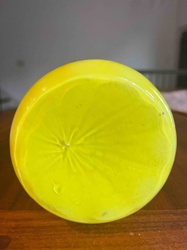
Submitted item photo
Submitted photo · May 22, 2026

User's notes

No additional notes provided.

AI analysis below

AI appraisal

AI analysis & estimate

AI-Generated · Verify before acting

Everything below is generated by AI for informational purposes only. AI can make mistakes — the AI may misidentify items or misattribute them (artist, maker, brand, designer, origin, era). This is not an official valuation and should not be used for insurance, sale, tax, estate, legal, or lending purposes — or any decision requiring a certified appraisal. It is not an authoritative claim about any person, brand, or rights holder — do not share or rely on it as a factual statement about a third party. Always consult qualified professionals before making financial decisions.

Read the full disclaimer

AI Identification

·Not independently authenticated·Verify before acting

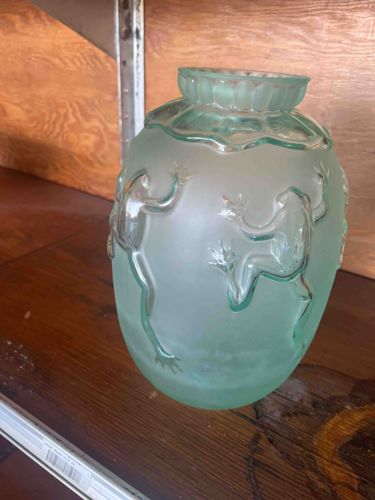
R. Lalique Grenouilles (Frogs) Vase

Art Glass / Art Deco Collectibles

AI Estimated Value

·Not an official valuation·Verify before acting

$15,000 - $18,000

As of May 22, 2026

AI Item Analysis

·AI can make mistakes·Verify before acting
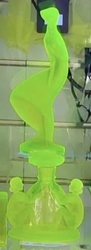
This is a sea-green or aquamarine tinted pressed glass vase, highly reminiscent of the 'Grenouilles' (Frogs) design originally conceived by René Lalique in 1930. The piece features an ovoid or egg-shaped body with a short, wide, scalloped or gadrooned neck. The primary design motif consists of multiple relief-molded frogs climbing or crawling across the exterior surface, executed in a frosted or acid-etched finish that contrasts with the smoother, translucence of the glass body. The color is a soft, muted pastel green characteristic of bohemian or French art glass from the early-to-mid 20th century. The construction displays high-quality molding with significant depth in the animal figures and a continuous, flowing pattern around the circumference. While no specific maker's mark is visible from this angle, the style is deeply Art Deco. Regarding condition, the vase shows some surface soot or dust, and there appears to be a minor scuff or surface abrasion on the lower right curve of the body. The rim appears intact without major chips, though a microscopic examination for 'flea bites' would be necessary for a full appraisal. The frosted finish shows a light patina consistent with age and display on a wooden shelf. This particular frog design is one of the most sought-after whimsical patterns in vintage art glass due to its anatomical detail and rhythmic composition.
AI Appraisal Report

·AI can make mistakes·Verify before acting
Based on my visual examination of this 'Grenouilles' vase, the piece represents one of René Lalique’s most iconic 1930 designs (Model No. 1049). The aquamarine or sea-green tint is particularly desirable, as the colored glass variations of this model typically command a significant premium over the standard clear and frosted versions. The molding displays the characteristic depth and crispness expected of a period casting, with the relief-molded frogs showing the rhythmic, anatomical precision that defines Art Deco glass. The condition appears generally excellent; while I note minor surface soot and a slight abrasion on the lower body, these are consistent with the age of a genuine 20th-century piece. The market for colored R. Lalique vases remains robust, with the 'Grenouilles' motif specifically targeted by high-level collectors of naturalistic Art Deco forms. However, several critical caveats apply to this digital appraisal. Without a physical inspection, I cannot verify the presence of a 'R. LALIQUE FRANCE' wheel-cut or acid-etched signature, which is vital for distinguishing an original from later Lalique Crystal reproductions or mid-century copies. In-person examination under UV light is required to check for 'sick' glass or ground-down rim chips that diminish value. Definitive authentication would require verifying the glass's weight, the presence of specific 'mold-lines' inherent to 1930s production, and ideally, provenance documentation linking the piece to a known collection. If authenticated as a period original in this rare colorway, it stands as a blue-chip investment piece for art glass enthusiasts.

Get your items appraised

Instant estimates of your treasures with AI-powered appraisals

Browse More Appraisals