AI identification & appraisal estimate

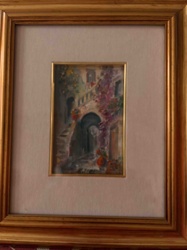
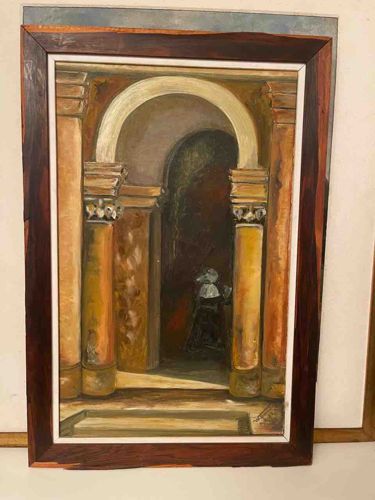
Mid-Century Architectural Oil Painting by W. Tarcat (1969)

Submitted photo of Mid-Century Architectural Oil Painting by W. Tarcat (1969)
Photo submitted by the user — not generated by AI

User's notes

W. Tarcat 1969

These notes were written by the person who submitted this item. Appraiser.AI has not verified them, and the AI's identification and estimate may rely on them.

AI Estimated Value

Not an official valuation

$450 - $650

AI estimate as of February 16, 2026 · verify with a professional before acting

AI-Generated · Verify before acting

Everything on this page is generated by AI for informational purposes only. AI can make mistakes — the AI may misidentify items or misattribute them (artist, maker, brand, designer, origin, era). This is not an official valuation and should not be used for insurance, sale, tax, estate, legal, or lending purposes — or any decision requiring a certified appraisal. It is not an authoritative claim about any person, brand, or rights holder — do not share or rely on it as a factual statement about a third party. Always consult qualified professionals before making financial decisions.

This analysis also relies on unverified notes provided by the user, which may be incomplete or inaccurate and could affect the result.

Read the full disclaimer

AI Item Analysis

This is a vertical oil painting on canvas, housed in a wide, dark-stained wood frame with a white inner liner. The artwork depicts an architectural interior featuring an arched entryway flanked by prominent, textured columns with decorative capitals. In the shadowy background, a small, dark figure wearing what appears to be a white bonnet or headpiece is visible, adding a sense of scale and mystery to the scene. The color palette is dominated by warm earth tones, including varying shades of ochre, sienna, and burnt umber, contrasted by the deep, dark shadows of the corridor. The paint application is heavy and impressionistic, with visible impasto and broad brushwork that gives the architecture a weathered, stone-like texture. Based on the provided context, the work is dated 1969 and attributed to W. Tarcat, which aligns with the mid-century modern aesthetic of the era. The condition appears fair to good: the frame shows some unevenness in the wood grain and possible minor scuffing at the joints, while the inner white liner shows slight discoloration congruent with age. The composition utilizes a strong central perspective to draw the viewer's eye into the dark archway, demonstrating solid grasp of depth and lighting. The craftsmanship is professional, indicating a practiced hand in mid-20th-century representational art.


AI Appraisal Report

I have conducted a visual appraisal of this 1969 architectural oil painting signed by 'W. Tarcat.' The work expertly utilizes a mid-century impasto technique, creating a heavy, tactile surface that effectively mimics weathered masonry. The palette of ochre and burnt siennas is highly characteristic of the late 1960s aesthetic. Based on the provided imagery, the canvas appears original to the frame. The condition and visible aging of the white liner and wood frame are consistent with a work of this vintage. Market-wise, anonymous or lesser-known mid-century architectural works currently occupy a steady niche in the 'decorative arts' market rather than the 'high blue-chip art' market. Values for such pieces are driven by their aesthetic appeal to interior designers and collectors of brutalist or modernist decor. Comparable sales for unsigned or minor-listed artist works of this scale and subject matter typically fall within the $400 to $700 range at regional auctions or specialized vintage galleries. A significant factor impacting value is the atmospheric depth and the inclusion of the 'mystery' figure, which elevates it above a purely technical architectural study. However, W. Tarcat is not currently a major auction-house name, which limits the upper-end investment potential. LIMITATIONS: This appraisal is based on digital images and cannot assess the structural integrity of the stretcher bars, potential relining, or the presence of overpainting/restoration under UV light. Full authentication would require an in-person physical inspection, provenance records (sales receipts/exhibition history), and potentially chemical analysis of pigments to confirm the 1969 date. Without a documented provenance, this value represents a fair market estimate for a decorative period piece.

Keep exploring

More fine art - paintings appraisals

Get your items appraised

Instant AI-powered appraisal estimates from a photo

Browse More Appraisals