AI estimate as of July 13, 2025 · verify with a professional before acting
AI-Generated · Verify before acting
Everything on this page is generated by AI for informational purposes only. AI can make mistakes — the AI may misidentify items or misattribute them (artist, maker, brand, designer, origin, era). This is not an official valuation and should not be used for insurance, sale, tax, estate, legal, or lending purposes — or any decision requiring a certified appraisal. It is not an authoritative claim about any person, brand, or rights holder — do not share or rely on it as a factual statement about a third party. Always consult qualified professionals before making financial decisions.
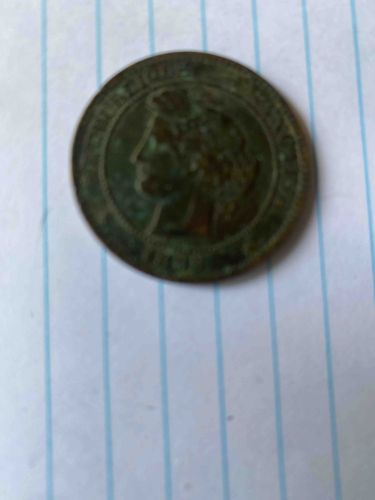
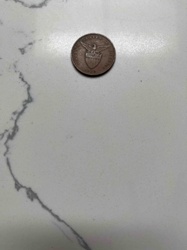
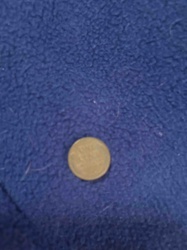
The item appears to be an antique or vintage copper or bronze coin, possibly a British penny or halfpenny, based on the visible profile of what seems to be a monarch. The coin is circular and has a significant amount of dark green and reddish-brown patina covering its surfaces, indicating considerable age and exposure to the elements, or prolonged storage in certain conditions. The green hue suggests copper oxidation (verdigris). Despite the heavy patination, a profile bust facing left is discernible in the center, with what looks like a crown or regal headwear. Around the rim, there are faint impressed letters, though too obscured by wear and patina to be fully read. The overall condition is poor, with significant surface corrosion and loss of fine detail. The edges appear worn and possibly irregular. No specific maker's marks or dates are legible from the image, but the style of the portrait suggests a 19th or early 20th-century European, most likely British, origin. The craftsmanship, though difficult to assess due to condition, would have been consistent with mass-produced coinage of its era. This piece is primarily notable for its historical age and heavily patinated aesthetic, which might appeal to collectors interested in 'dug' or naturally aged artifacts.
AI Appraisal Report
Upon my virtual examination of this heavily patinated coin, what immediately stands out is its significant age and the extensive surface degradation. The dark green verdigris and reddish-brown corrosion obscure much of the detail, but the discernible profile of a monarch, likely British given the typical features, points towards a 19th or early 20th-century origin. While authenticity appears likely for a genuine antique coin based on metallurgical appearance often associated with unearthed artifacts, I must emphasize that definitive authentication is impossible from images alone. The coin's condition is poor, bordering on 'fair' due to heavy wear, corrosion, and illegible inscriptions. This severely impacts its numismatic value.
In terms of market conditions, coins in such heavily compromised states rarely command high prices unless they are exceedingly rare types or have significant historical provenance (e.g., shipwreck finds where conservation efforts might be undertaken). This coin, appearing to be a common copper penny or halfpenny, does not fall into either of those categories. Comparables would include 'dug-up' British copper coins from the Victorian or Edwardian eras, which typically sell for very little, often just a few dollars, sometimes even sold in bulk lots for their curiosity or scrap value. Demand for coins in this condition is low among serious numismatists who prioritize detail and preservation, but it might appeal to collectors interested in 'found' artifacts or those looking for a decorative piece with an antique aesthetic. Rarity is not a factor here; British copper coins of this period were mass-produced. Factors significantly impacting value are primarily the severe corrosion, illegibility, and lack of identifiable features (date, specific monarch). Without these, it's just an aged piece of metal.
For full authentication and a more precise valuation, a physical examination would be crucial. This would involve assessing the edge, weight, diameter, and potentially specific gravity. Metallurgical analysis (e.g., XRF) could confirm the alloy composition. Cleaning might reveal more details, but risks further damage. Provenance documentation (e.g., where it was found, how it was acquired) would also add to its historical, though likely not monetary, value.