AI Appraisal Estimate

AI-generated estimates · not official valuations

From the user

What was submitted

Photo and notes provided by the user — not generated by AI

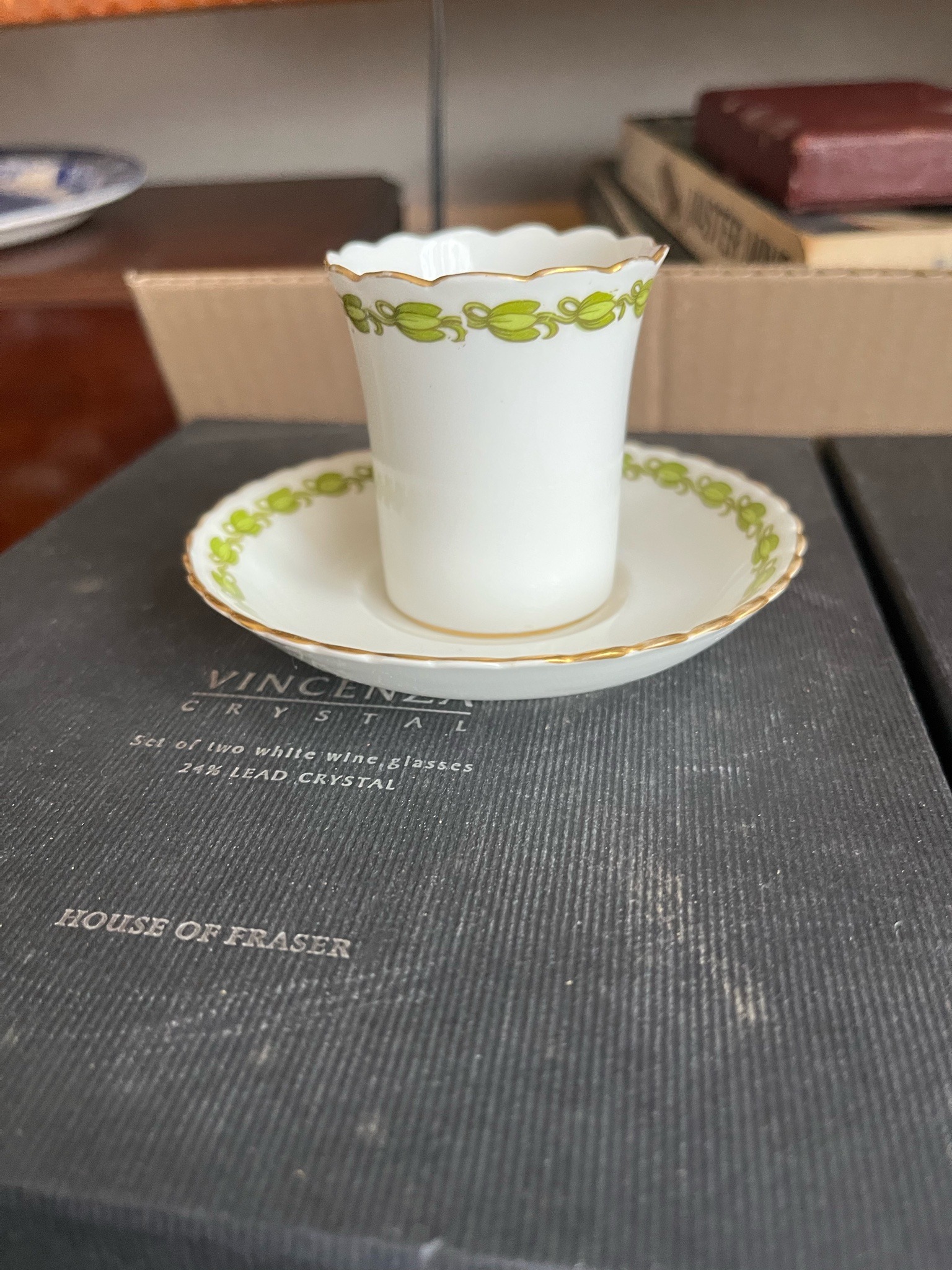
Submitted item photo
Submitted photo · June 1, 2026

User's notes

Crescent and sons cup and saucer

AI analysis below

AI appraisal

AI analysis & estimate

AI-Generated · Verify before acting

Everything below is generated by AI for informational purposes only. AI can make mistakes — the AI may misidentify items or misattribute them (artist, maker, brand, designer, origin, era). This is not an official valuation and should not be used for insurance, sale, tax, estate, legal, or lending purposes — or any decision requiring a certified appraisal. It is not an authoritative claim about any person, brand, or rights holder — do not share or rely on it as a factual statement about a third party. Always consult qualified professionals before making financial decisions.

Note

This analysis also relies on unverified notes provided by the user, which may be incomplete or inaccurate and could affect the result.

Read the full disclaimer

AI Identification

·Not independently authenticated·Verify before acting

Crescent (George Jones & Sons) Bone China Coffee Can and Saucer

Antique Ceramics and Collectibles

AI Estimated Value

·Not an official valuation·Verify before acting

$45.00 - $75.00

As of June 1, 2026

AI Item Analysis

·AI can make mistakes·Verify before acting
This is a fine bone china coffee can (a straight-sided coffee cup) and matching saucer manufactured by George Jones & Sons under the 'Crescent' brand. The set features a crisp white translucent body typical of high-quality English bone china. The design is characterized by a distinctive scalloped or 'wavy' rim on both the cup and the saucer, accented with hand-applied gilding. Just below the rim, a continuous lime-green laurel wreath or scrolling leaf motif encircles both pieces. The cup is tall and cylindrical, tapering slightly toward the flat base, and appears to be handleless in this specific view, which is characteristic of certain early coffee can styles or 'demitasse' variants. The gilding shows light signs of wear consistent with age, particularly on the raised edges of the scallops. There are no immediate visible cracks or deep chips, suggesting the porcelain has been well-maintained. The style of the mark described in the context links this to the late Victorian or early 20th-century Edwardian period (circa 1891-1920), a time when George Jones was renowned for producing delicate tea and coffee wares for high-end retailers. The craftsmanship is evident in the precision of the scalloped ceramic molding and the vibrancy of the green enamel against the gilded gold leaf.
AI Appraisal Report

·AI can make mistakes·Verify before acting
I have virtually examined this George Jones & Sons 'Crescent' bone china coffee can and saucer. Based on the scalloped rim and the laurel wreath motif, the set was likely produced between 1891 and 1920. The translucency of the body and the vibrancy of the green enamel are hallmarks of the high-quality craftsmanship associated with the Stoke-on-Trent region during the Edwardian era. The condition appears to be 'good to very good,' though minor rubbing to the gold leaf on the high points of the scallops is noted, which is commensurate with a piece of this age. Market demand for late Victorian/Edwardian tableware remains steady but niche. While George Jones is highly regarded by collectors of Majolica, their bone china 'tea wares' are currently valued more for their decorative appeal than as high-stakes investment pieces. Comparable single sets in similar patterns typically fetch between $40 and $80 at specialty auctions or through antique dealers. The handleless 'can' shape adds a degree of interest for collectors focusing on early coffee service evolution. Limitations to this appraisal include the inability to physically tactilely inspect for 'pinks' (hairline cracks), internal stress fractures, or professional restoration which can be expertly hidden in photos. A full authentication would require an in-person examination under a UV light to detect overpainting and a physical check of the 'ring' of the china when tapped. Provenance documentation, such as original purchase receipts or family records, would further solidify the value at the higher end of the estimated range.

Get your items appraised

Instant estimates of your treasures with AI-powered appraisals

Browse More Appraisals