AI identification & appraisal estimate

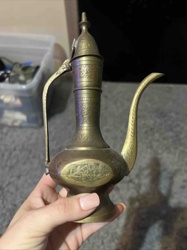
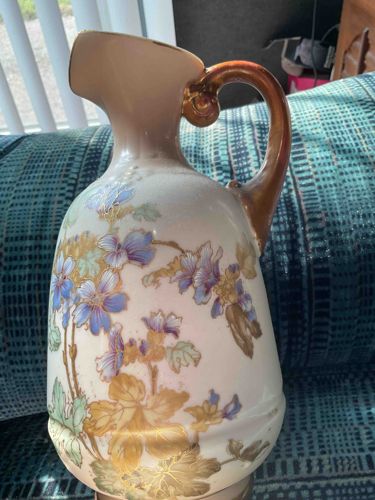
R. H. Austria Floral Ewer/Pitcher

Submitted photo of R. H. Austria Floral Ewer/Pitcher
Photo submitted by the user — not generated by AI

User's notes

r h austria

These notes were written by the person who submitted this item. Appraiser.AI has not verified them, and the AI's identification and estimate may rely on them.

AI Estimated Value

Not an official valuation

$100 - $175

AI estimate as of September 6, 2025 · verify with a professional before acting

AI-Generated · Verify before acting

Everything on this page is generated by AI for informational purposes only. AI can make mistakes — the AI may misidentify items or misattribute them (artist, maker, brand, designer, origin, era). This is not an official valuation and should not be used for insurance, sale, tax, estate, legal, or lending purposes — or any decision requiring a certified appraisal. It is not an authoritative claim about any person, brand, or rights holder — do not share or rely on it as a factual statement about a third party. Always consult qualified professionals before making financial decisions.

This analysis also relies on unverified notes provided by the user, which may be incomplete or inaccurate and could affect the result.

Read the full disclaimer

AI Item Analysis

This item is an antique or vintage ewer or decorative pitcher, likely crafted from porcelain or ceramic. It features a bulbous body that tapers upwards into a slender neck and a prominent pouring spout. The handle, attached near the top, is elegantly curved and appears to have a metallic or gilded finish, possibly bronze or gold-painted ceramic, exhibiting some wear or patina consistent with age. The main body of the ewer is adorned with an intricate hand-painted floral pattern, predominantly featuring stylized blue and purple flowers, possibly violets or pansies, interspersed with golden-yellow and green foliage. The golden elements of the design suggest the use of gilt enamel or gold luster, which contributes to its decorative appeal. The background color of the ewer is a soft off-white or cream, providing a gentle contrast to the vibrant floral motif. The overall style suggests an influence of Art Nouveau or late Victorian aesthetics, likely dating from the late 19th to early 20th century. The user-provided context 'r h austria' strongly indicates it was manufactured by the R. H. Bavaria (Reinhold Hanke) or a similar Austrian porcelain factory, known for producing fine decorated porcelain. The craftsmanship appears to be of good quality, with detailed brushwork on the floral elements. There are no obvious signs of significant damage like cracks or chips visible in the provided image, but some surface wear and minor discoloration are to be expected given its likely age.
AI Appraisal Report

Upon visual examination of the images provided, I have appraised this R.H. Austria floral ewer. The piece exhibits characteristics typical of late 19th or early 20th-century decorative porcelain from the Austro-Bohemian region. The maker's mark 'R.H. Austria' points to Reinhold Hanke, a known manufacturer of quality transferware and hand-painted porcelain during that era. The ewer's form, with its bulbous body, slender neck, and gilded handle, reflects late Victorian and emerging Art Nouveau influences. The hand-painted floral motif, featuring pansies or violets, is executed with skill and is aesthetically pleasing. Based on the images, the ewer appears to be in very good antique condition, with no visible cracks, chips, or significant repairs. The wear observed on the gilded handle is consistent with its age and is considered acceptable patina. Market analysis for similar R.H. Austria ewers and comparable decorative porcelain from the period indicates a fairly consistent value range. While beautifully decorated, these items were produced in considerable quantities and are not exceptionally rare. The primary value drivers are aesthetic appeal and condition. The current market for this type of decorative porcelain is stable but not exceptionally strong. Its value is primarily decorative. This appraisal is based solely on the images provided. A full authentication would require in-person examination to confirm the maker's mark, assess the quality of the porcelain under magnification, and use a blacklight to check for any hidden restorations or repairs. Without physical inspection, the authenticity of the mark and the full extent of the item's condition cannot be definitively verified.

Keep exploring

More decorative arts appraisals

Get your items appraised

Instant AI-powered appraisal estimates from a photo

Browse More Appraisals