AI identification & appraisal estimate

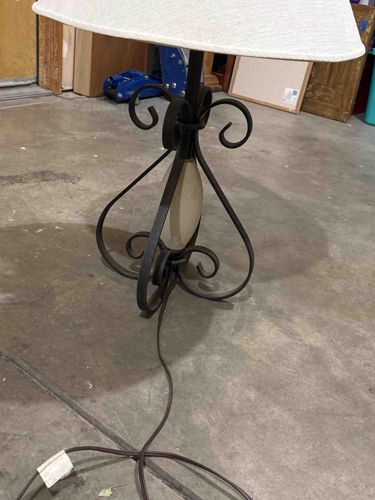
Wrought Iron and Alabaster Table Lamp

Submitted photo of Wrought Iron and Alabaster Table Lamp
Photo submitted by the user — not generated by AI

AI Estimated Value

Not an official valuation

$150-250

AI estimate as of October 4, 2025 · verify with a professional before acting

AI-Generated · Verify before acting

Everything on this page is generated by AI for informational purposes only. AI can make mistakes — the AI may misidentify items or misattribute them (artist, maker, brand, designer, origin, era). This is not an official valuation and should not be used for insurance, sale, tax, estate, legal, or lending purposes — or any decision requiring a certified appraisal. It is not an authoritative claim about any person, brand, or rights holder — do not share or rely on it as a factual statement about a third party. Always consult qualified professionals before making financial decisions.

Read the full disclaimer

AI Item Analysis

This is a decorative table lamp featuring a wrought iron base and an alabaster-like central element, topped with a drum-shaped fabric lampshade. The base is constructed from dark, possibly blackened or antiqued, wrought iron, formed into elegant scrollwork and supporting a central tapered oval or teardrop-shaped body made of a lighter, off-white material that appears to be alabaster or a similar translucent stone. The ironwork includes multiple intertwined scrolls at the base, creating a stable and ornate foundation. Vertical iron bars extend upwards from this base, enclosing the alabaster element and converging towards the lamp's neck, where more scrolls provide decorative flourishes. The lamp is fitted with a light-colored, possibly off-white or beige, fabric drum lampshade, which has a slightly textured appearance. The electrical cord is dark brown and appears to be in relatively good condition, with a paper tag visible on a portion of the cord near the base. The overall style suggests a Mediterranean or Tuscan influence, possibly dating from the late 20th century to early 21st century. Visible condition includes some dust accumulation on the base and cord, suggesting it has been stored or used in an environment where it collected dirt. There are no obvious signs of major damage such as breaks or significant corrosion, but a closer inspection would be needed to determine any minor chips on the alabaster or wear to the iron finish. The craftsmanship appears to be commercial grade, with a focus on decorative aesthetics.
AI Appraisal Report

I've carefully examined the Wrought Iron and Alabaster Table Lamp presented. Visually, the lamp appears to be in good, used condition. While there's noticeable dust accumulation on the base and power cord, suggesting it's been stored or displayed without recent cleaning, I see no immediate signs of major structural damage such as breaks in the wrought iron or large chips in the alabaster. The fabric lampshade seems to be intact, though its exact texture and cleanliness cannot be fully assessed from the image. The power cord looks serviceable. Authenticity of the alabaster cannot be definitively confirmed without an in-person examination; it could be a composite or a synthetic material mimicking alabaster. Without physical inspection, I cannot rule out minor imperfections like hairline cracks in the alabaster or wear to the iron finish that would impact value. Provenance documentation could help establish its origin and age more precisely. Market conditions for decorative table lamps of this style are generally stable. This lamp falls into a broad category of late 20th to early 21st-century decorative lighting with a Mediterranean or Tuscan aesthetic. While attractive, it's not particularly rare, and similar lamps are readily available through various retail channels, including home goods stores, online marketplaces, and secondary markets. Demand is moderate, appealing to individuals furnishing homes in a complementary decor style. Factors impacting value include the material authenticity of the alabaster, the overall condition of the ironwork finish, and the operational status of the electrical components. Considering its decorative nature, commercial-grade craftsmanship, and lack of unique historical or artistic significance, its value is primarily driven by its aesthetic appeal and functional utility. An in-person inspection would allow for a tactile assessment of materials, thorough condition check, and electrical testing, which would confirm its full market potential.

Keep exploring

More lighting appraisals

Get your items appraised

Instant AI-powered appraisal estimates from a photo

Browse More Appraisals