Chert or Flint Mineral Fragment
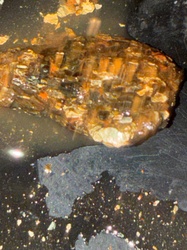
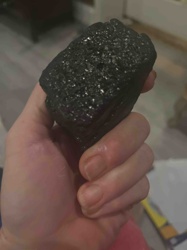
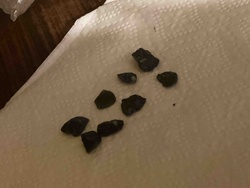
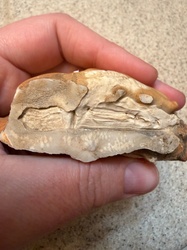
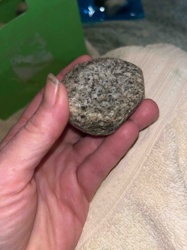
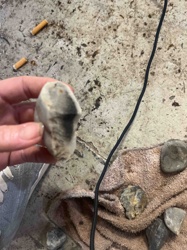
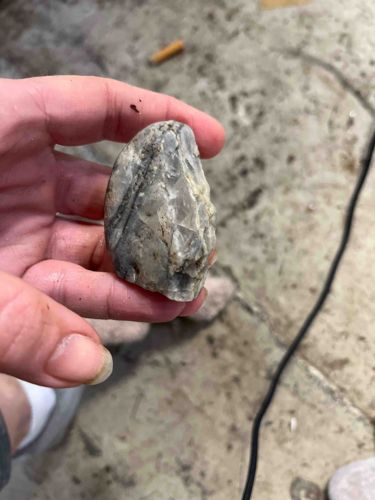
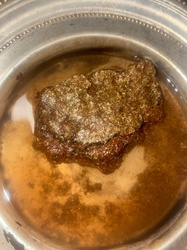
This is a naturally occurring mineral specimen, likely a variety of chert or flint, held in a person's hand for scale. The item measures approximately 2 to 3 inches in length and features a microcrystalline or cryptocrystalline structure. Its color palette consists of a complex mix of variegated greys, ranging from light smoky tones to deep charcoal, with subtle hints of brownish-yellow oxidation appearing as iron staining on some surfaces. The texture is characterized by a waxy to dull luster and conchoidal fracturing patterns, which are typical of high-silica stones. One side appears significantly weathered and rounded, suggesting it may have been tumbled in water or exposed to erosion, while other edges show sharper, more recent chip marks. These fractures expose the internal translucent and opaque bands of the stone. There are no signs of human manipulation such as knapping into a tool (like an arrowhead), making it a natural geologic find rather than an artifact. The surface shows some accumulation of dirt and fine debris consistent with being found in an outdoor environment. As a geological specimen, its age would be millions of years, though it shows no formal maker's marks or craftsmanship.
AI-Generated Appraisal Disclaimer
Estimated Value
$5 - $10
Basic Information
Category
Geological Specimens / Minerals
Appraised On
April 7, 2026
Estimated Value
$5 - $10
Item Description
This is a naturally occurring mineral specimen, likely a variety of chert or flint, held in a person's hand for scale. The item measures approximately 2 to 3 inches in length and features a microcrystalline or cryptocrystalline structure. Its color palette consists of a complex mix of variegated greys, ranging from light smoky tones to deep charcoal, with subtle hints of brownish-yellow oxidation appearing as iron staining on some surfaces. The texture is characterized by a waxy to dull luster and conchoidal fracturing patterns, which are typical of high-silica stones. One side appears significantly weathered and rounded, suggesting it may have been tumbled in water or exposed to erosion, while other edges show sharper, more recent chip marks. These fractures expose the internal translucent and opaque bands of the stone. There are no signs of human manipulation such as knapping into a tool (like an arrowhead), making it a natural geologic find rather than an artifact. The surface shows some accumulation of dirt and fine debris consistent with being found in an outdoor environment. As a geological specimen, its age would be millions of years, though it shows no formal maker's marks or craftsmanship.
Related Tags
Get Your Items Appraised
Instant estimates of your treasures with AI-powered instant appraisals