AI Appraisal Estimate

AI-generated estimates · not official valuations

From the user

What was submitted

Photo and notes provided by the user — not generated by AI

Submitted item photo
Submitted photo · May 27, 2026

User's notes

Antique

AI analysis below

AI appraisal

AI analysis & estimate

AI-Generated · Verify before acting

Everything below is generated by AI for informational purposes only. AI can make mistakes — the AI may misidentify items or misattribute them (artist, maker, brand, designer, origin, era). This is not an official valuation and should not be used for insurance, sale, tax, estate, legal, or lending purposes — or any decision requiring a certified appraisal. It is not an authoritative claim about any person, brand, or rights holder — do not share or rely on it as a factual statement about a third party. Always consult qualified professionals before making financial decisions.

Note

This analysis also relies on unverified notes provided by the user, which may be incomplete or inaccurate and could affect the result.

Read the full disclaimer

AI Identification

·Not independently authenticated·Verify before acting

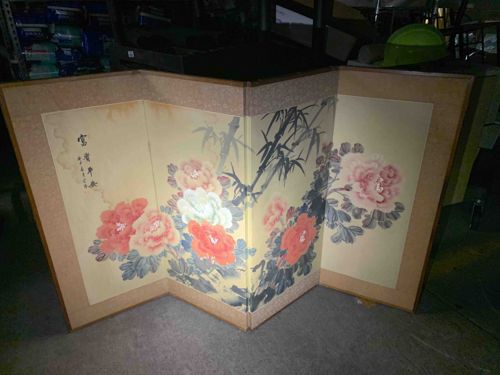
Antique Four-Panel Japanese Byobu Folding Screen

Asian Antiques & Decorative Arts

AI Estimated Value

·Not an official valuation·Verify before acting

$400 - $600

As of May 27, 2026

AI Item Analysis

·AI can make mistakes·Verify before acting
This is a traditional four-panel Japanese Byobu folding screen featuring a hand-painted floral composition of blooming peonies and bamboo. The screen is constructed using ink and pigment on paper, mounted within a wooden frame with a decorative brocaded silk border running along the top and sides. The artwork displays high-quality brushwork characteristic of the Meiji or early Showa period, with vibrant red, pink, and white peonies contrasted against deep green and black ink-wash bamboo leaves. Notable features include a vertical calligraphic inscription and red artist seal on the far left panel, which signifies the artist's signature. The physical condition shows significant age-related wear, specifically heavy foxing and moisture staining visible in the upper sections of the left two panels. There is some edge wear on the lacquer-style frame and slight color fading throughout. Despite these condition issues, the craftsmanship remains evident in the delicate layering of the peony petals and the fluid, confident strokes of the bamboo. The screen serves as both a functional room divider and a significant piece of Japanese decorative art.
AI Appraisal Report

·AI can make mistakes·Verify before acting
Based on my examination of the digital images provided, this appears to be an early 20th-century Japanese four-panel byobu, likely dating to the late Meiji or early Showa period (circa 1910-1940). The subject matter—peonies symbolizing wealth and honor, paired with bamboo representing resilience—is classically executed in sumi ink and mineral pigments. The brushwork demonstrates competency, particularly in the rendering of the bamboo leaves, suggesting a skilled artisan. The vertical calligraphy and red seal are crucial for attribution, though legible identification requires closer inspection than the photos allow. However, the valuation is significantly impacted by condition. I observed heavy foxing and substantial moisture damage, particularly affecting the upper registers of the left panels. This type of paper degradation is difficult and costly to conserve. The mounting silk also shows signs of oxidation. While decorative appeal remains, collectors of high-end Asian art generally avoid pieces with this degree of water damage unless the artist is of major historical significance. Current market trends for Japanese screens favor pieces in excellent condition or those with verified attribution to known masters. Similar unsigned or minor-artist screens in good condition might fetch $800–$1,200, but the restoration costs here would likely exceed the item's restored value. Therefore, I have placed the value in the $400–$600 range, primarily as a decorative object rather than an investment piece. *Note: definitive authentication of the signature and seal requires in-person macro inspection. Furthermore, confirming the specific pigments used and the age of the paper backing would require physical handling to rule out modern reproduction techniques.*

Get your items appraised

Instant estimates of your treasures with AI-powered appraisals

Browse More Appraisals