AI estimate as of August 2, 2025 · verify with a professional before acting
AI-Generated · Verify before acting
Everything on this page is generated by AI for informational purposes only. AI can make mistakes — the AI may misidentify items or misattribute them (artist, maker, brand, designer, origin, era). This is not an official valuation and should not be used for insurance, sale, tax, estate, legal, or lending purposes — or any decision requiring a certified appraisal. It is not an authoritative claim about any person, brand, or rights holder — do not share or rely on it as a factual statement about a third party. Always consult qualified professionals before making financial decisions.
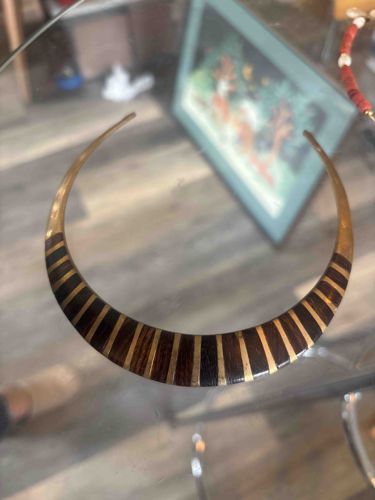
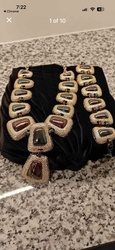
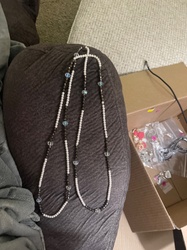
This is a rigid, open-ended collar necklace, commonly known as a torque or choker-style necklace, featuring a distinctive striped design. The primary materials appear to be brass or a similar gold-toned metal and a dark, possibly exotic, wood or a dark resin/plastic. The necklace has a crescent shape, designed to sit high on the neck. Its physical characteristics include a substantial width at the center front (approximately 1.5 to 2 inches) which tapers significantly towards the ends, which are thin and slightly curved inwards, allowing for easy placement and removal without a clasp. The dark material forms the base of the design, with thin, vertical strips of the gold-toned metal inlaid or affixed at regular intervals. These metal strips are uniform in width and create a striking contrast with the dark background. The finish on the metal appears to be a polished gold, showing some natural tarnishing or patina consistent with age and exposure, particularly noticeable as a slight dullness in areas. The dark material exhibits a smooth, possibly lacquered, finish, and its uniform color suggests either a deeply stained wood or a synthetic material. There are no readily visible maker's marks, signatures, or stamps in the provided image. The construction appears to be well-executed, with clean lines between the inlaid materials, indicating good craftsmanship. The style suggests a mid-20th century to contemporary period, possibly leaning towards a Brutalist, tribal, or ethnic-inspired aesthetic, which was popular in the 1960s-1980s. There are no obvious signs of major damage or repairs, though minor surface scratches or slight dullness on the metal are consistent with normal wear.
AI Appraisal Report
Upon examining the image of this Striped Inlaid Collar Necklace (Torque), I assess its condition as very good for its likely age. The visual cues suggest a robust construction with no apparent major damage, cracks, or significant losses to either the dark base material or the metal inlays. Minor surface wear, such as slight dulling of the metal and potential fine scratches, is consistent with normal use and age, particularly if it dates to the mid-20th century. My assessment of authenticity is limited by the visual-only nature of this examination. While the craftsmanship appears competent with clean inlay lines, suggesting a quality piece, without physical inspection, I cannot definitively confirm the materials (e.g., specific wood type vs. synthetic, solid brass vs. plated). There are no visible maker's marks, which is common for many mid-century artisanal or ethnic-inspired pieces, making definitive attribution difficult from an image alone.
From a market perspective, this torque falls into several desirable categories: vintage jewelry, brutalist/ethnic-inspired design, and wearable art. Comparables would include similar collar necklaces from the 1960s-1980s by designers known for material experimentation (e.g., brass and wood/resin pieces by artisans, unmarked studio jewelry). Demand for unique, statement vintage jewelry is steady. Its rarity is moderate; while not a singular, unrepeatable piece, this specific design is not mass-produced, contributing to its appeal. The absence of a recognized maker's mark significantly impacts value, preventing it from commanding prices associated with named designers. Its aesthetic appeal is high, and its wearable nature adds to its marketability. The primary factor impacting value is the lack of a known maker or definitive material identification (e.g., exotic hardwood vs. plastic, solid brass vs. plated base metal).
For full authentication and a more precise valuation, an in-person examination is crucial. This would allow for tactile inspection of materials, testing for metal composition, definitive identification of the dark material (wood grain, density, or synthetic properties), and thorough searching for subtle marks not visible in the image. Provenance documentation (original purchase receipts, exhibition history) would also immensely enhance value. Without these, the appraisal remains based purely on visual assessment and general market trends for such items.