AI identification & appraisal estimate

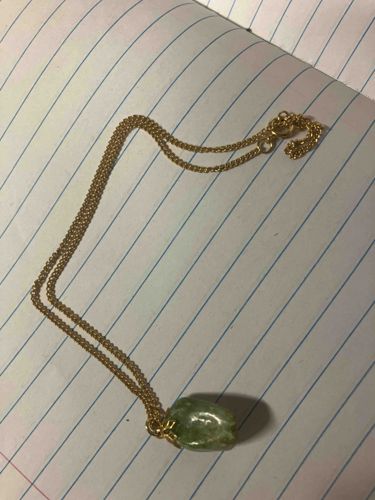
Gold-Toned Chain Necklace with Green Tumbled Stone Pendant

Submitted photo of Gold-Toned Chain Necklace with Green Tumbled Stone Pendant
Photo submitted by the user — not generated by AI

AI Estimated Value

Not an official valuation

$40-75

AI estimate as of July 5, 2025 · verify with a professional before acting

AI-Generated · Verify before acting

Everything on this page is generated by AI for informational purposes only. AI can make mistakes — the AI may misidentify items or misattribute them (artist, maker, brand, designer, origin, era). This is not an official valuation and should not be used for insurance, sale, tax, estate, legal, or lending purposes — or any decision requiring a certified appraisal. It is not an authoritative claim about any person, brand, or rights holder — do not share or rely on it as a factual statement about a third party. Always consult qualified professionals before making financial decisions.

Read the full disclaimer

AI Item Analysis

The item is a gold-toned chain necklace featuring a single, tumbled or polished green stone pendant. The chain appears to be a delicate, possibly curb or cable link, with a bright, reflective gold color, suggesting it could be gold-plated base metal, rolled gold, or low-karat gold. It has a standard lobster clasp closure, common in contemporary jewelry. The total length of the chain is not precisely discernible but appears to be a standard choker or princess length, likely between 16 and 20 inches. The pendant is an organic, irregular shape, consistent with a tumbled stone, measuring approximately 1-1.5 inches in length. Its color is a translucent to semi-translucent light green, with visible lighter and darker veins or inclusions throughout, characteristic of natural gemstone materials such as peridot, aventurine, or possibly a light jade or serpentine. The stone is attached to the chain by a simple gold-toned bale or wire wrapping that encircles the top portion of the stone. There are no visible maker's marks or stamps on the clasp or chain from the image. The overall condition appears good, with no obvious signs of significant damage like breaks or deep scratches. Minor surface wear, consistent with gentle use, may be present but is not clearly visible. The craftsmanship suggests a commercially produced piece, potentially mass-produced jewelry. The style is relatively understated and timeless, fitting for an estimated age from the late 20th to early 21st century.
AI Appraisal Report

Upon visual examination of the provided image, I assess this gold-toned chain necklace with a green tumbled stone pendant to be in good overall condition. There are no obvious signs of significant damage such as breaks or deep scratches, though minor surface wear consistent with gentle use might be present but isn't discernible from the image. From the image alone, authenticity of the metal content (e.g., gold-plated vs. solid gold) cannot be definitively confirmed; the bright, reflective gold color suggests it could be gold-plated base metal or rolled gold rather than high-karat solid gold. The green stone appears to be a natural gemstone, likely aventurine or serpentine, given its translucent quality and visible inclusions, typical of tumbled stones. Market conditions for fashion jewelry of this type are generally stable, with a broad commercial appeal. Comparables include similar gold-toned necklaces with natural stone pendants found in retail settings, often ranging from lower-end costume jewelry to mid-range artisan pieces. Demand for such understated, timeless designs remains consistent. This piece is not rare; it appears to be a commercially produced item, possibly mass-produced, limiting its rarity and therefore intrinsic value. Factors significantly impacting its value include the actual metal content of the chain (gold plating vs. solid gold), the specific identification and quality of the green stone, and any potential brand recognition. Limitations in authenticity verification from images alone are substantial. Without an in-person examination, I cannot confirm the metal type (e.g., conduct acid tests or XRF analysis), nor can I definitively identify the specific gemstone through gemological testing. Verification of maker's marks, if any, also requires physical inspection. Provenance documentation (e.g., purchase receipts) would further aid in establishing value and authenticity.

Keep exploring

More jewelry appraisals

Get your items appraised

Instant AI-powered appraisal estimates from a photo

Browse More Appraisals