Vintage German Relief Pottery Beer Steins
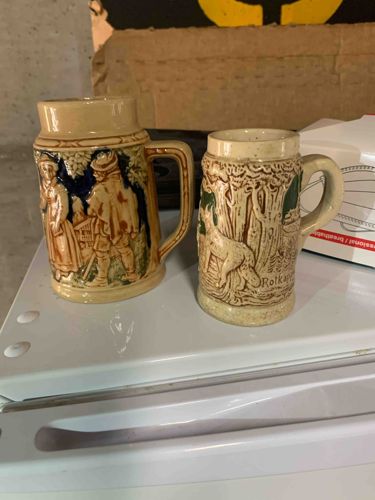
This set consists of two vintage miniature salt-glazed stoneware beer steins, also known as 'humpen'. The larger mug on the left features a relief scene depicting a traditional Bavarian couple in 19th-century folk attire (Tracht) against an indigo blue background. The smaller mug on the right portrays a storybook character, identified by the inscription 'Rotkappchen' (Little Red Riding Hood) at the base, showing the wolf in a forested setting with a dark green background. Both pieces are constructed from heavy ceramic with a cream-colored base glaze and multi-tonal brown highlights that accentuate the sculptural relief. The glaze exhibits a textured finish consistent with salt-glazing techniques. Structurally, both items appear intact with original handles; however, visible surface wear includes minor pitting, some small firing imperfections in the clay, and a layer of dust and surface grime. No major cracks or large chips are immediately apparent on the exterior surfaces. These pieces likely date from the mid-20th century (c. 1950s-1970s), intended as decorative souvenirs or collectibles. The craftsmanship shows typical mass-production quality for the era with hand-painted colored accents on molded relief bodies.

AI-Generated Appraisal Disclaimer
Estimated Value
$40-$65
Basic Information
Category
Collectibles - Ceramics and Pottery
Appraised On
January 21, 2026
Estimated Value
$40-$65
Item Description
This set consists of two vintage miniature salt-glazed stoneware beer steins, also known as 'humpen'. The larger mug on the left features a relief scene depicting a traditional Bavarian couple in 19th-century folk attire (Tracht) against an indigo blue background. The smaller mug on the right portrays a storybook character, identified by the inscription 'Rotkappchen' (Little Red Riding Hood) at the base, showing the wolf in a forested setting with a dark green background. Both pieces are constructed from heavy ceramic with a cream-colored base glaze and multi-tonal brown highlights that accentuate the sculptural relief. The glaze exhibits a textured finish consistent with salt-glazing techniques. Structurally, both items appear intact with original handles; however, visible surface wear includes minor pitting, some small firing imperfections in the clay, and a layer of dust and surface grime. No major cracks or large chips are immediately apparent on the exterior surfaces. These pieces likely date from the mid-20th century (c. 1950s-1970s), intended as decorative souvenirs or collectibles. The craftsmanship shows typical mass-production quality for the era with hand-painted colored accents on molded relief bodies.
Get Your Items Appraised
Instant estimates of your treasures with AI-powered instant appraisals