Vintage Oval Porcelain Serving Platter with Maroon Border and Floral Accents
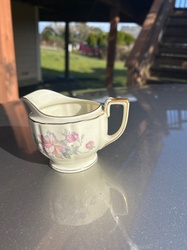
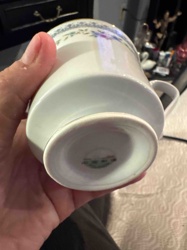
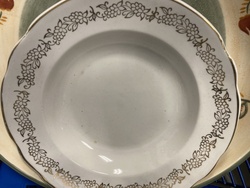
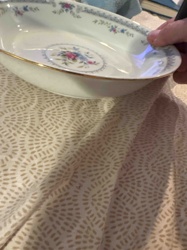
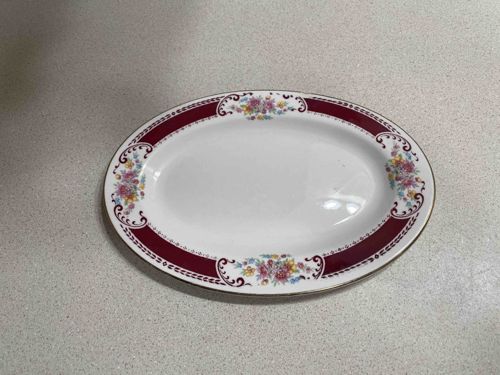
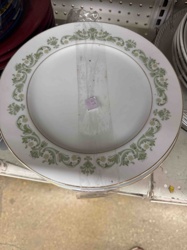
This item is an oval-shaped ceramic serving platter, likely made of fine porcelain or high-quality earthenware, characteristic of mid-20th-century dinnerware. The central well is a clean, glazed white, surrounded by a decorative rim featuring a deep maroon or burgundy band. The border is segmented by four ornate floral spray medallions containing pink, yellow, and blue flowers with green foliage. Intricate gold-tone filigree and scrollwork frame these floral sections, adding a touch of elegance. The very outer edge appears to be finished with a thin gold-gilt rim. Based on the style, this piece likely dates from the 1940s to the 1960s, a period popular for formal floral-rimmed service sets. From the top-down view, the surface reflects light, indicating well-preserved glaze. No significant chips or cracks are immediately visible, though minor shelf wear on the underside and light utensil marks on the surface would be expected given its age. Specifically, the color saturation of the maroon band suggests a high-fired transfer process, a hallmark of reputable manufacturers from the era such as Homer Laughlin, Edwin M. Knowles, or English potters like Johnson Brothers.
AI-Generated Appraisal Disclaimer
Estimated Value
$45.00 - $75.00
Basic Information
Category
Antique and Vintage Kitchenware / Tableware
Appraised On
March 5, 2026
Estimated Value
$45.00 - $75.00
Item Description
This item is an oval-shaped ceramic serving platter, likely made of fine porcelain or high-quality earthenware, characteristic of mid-20th-century dinnerware. The central well is a clean, glazed white, surrounded by a decorative rim featuring a deep maroon or burgundy band. The border is segmented by four ornate floral spray medallions containing pink, yellow, and blue flowers with green foliage. Intricate gold-tone filigree and scrollwork frame these floral sections, adding a touch of elegance. The very outer edge appears to be finished with a thin gold-gilt rim. Based on the style, this piece likely dates from the 1940s to the 1960s, a period popular for formal floral-rimmed service sets. From the top-down view, the surface reflects light, indicating well-preserved glaze. No significant chips or cracks are immediately visible, though minor shelf wear on the underside and light utensil marks on the surface would be expected given its age. Specifically, the color saturation of the maroon band suggests a high-fired transfer process, a hallmark of reputable manufacturers from the era such as Homer Laughlin, Edwin M. Knowles, or English potters like Johnson Brothers.
Get Your Items Appraised
Instant estimates of your treasures with AI-powered instant appraisals