AI Appraisal Estimate

AI-generated estimates · not official valuations

From the user

What was submitted

Photo and notes provided by the user — not generated by AI

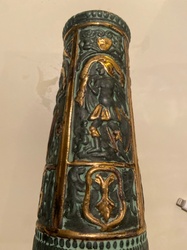
Submitted item photo
Submitted photo · June 3, 2026

User's notes

No additional notes provided.

AI analysis below

AI appraisal

AI analysis & estimate

AI-Generated · Verify before acting

Everything below is generated by AI for informational purposes only. AI can make mistakes — the AI may misidentify items or misattribute them (artist, maker, brand, designer, origin, era). This is not an official valuation and should not be used for insurance, sale, tax, estate, legal, or lending purposes — or any decision requiring a certified appraisal. It is not an authoritative claim about any person, brand, or rights holder — do not share or rely on it as a factual statement about a third party. Always consult qualified professionals before making financial decisions.

Read the full disclaimer

AI Identification

·Not independently authenticated·Verify before acting

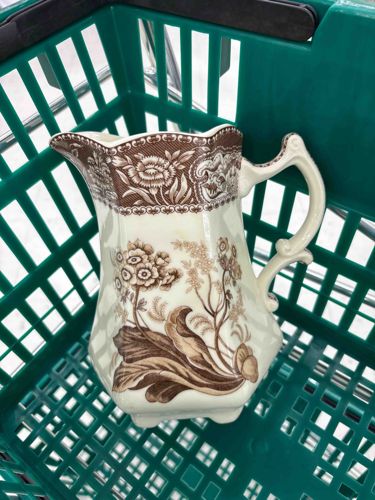
Victorian Brown Transferware Creamer/Milk Jug

Ceramics & Pottery

AI Estimated Value

·Not an official valuation·Verify before acting

$35 - $65

As of June 3, 2026

AI Item Analysis

·AI can make mistakes·Verify before acting
This item is an antique or vintage creamer or milk jug, crafted from ceramic or earthenware, featuring a distinct brown transferware pattern on an off-white or cream-colored base. The physical form is a classic jug shape with a pouring spout, a gracefully curved handle, and a faceted or octagonal body that gently tapers towards the base. The handle is an 'S' curve design with a small ornamental scroll at the top attachment point. The base appears to have small, integrated feet, giving it a slightly elevated stance. The predominant decorative motif is a detailed floral and botanical pattern in shades of brown. A dense, intricate border pattern with floral and scroll elements encircles the rim of the jug. Below this border, the main body features larger, more open floral arrangements with substantial foliage, including a prominent acanthus-like leaf design. The transferware technique results in fine lines and varied shading within the brown pigment, mimicking engraved illustrations. There are no visible chips, cracks, or repairs discernable from the image, suggesting good overall condition for its age. The glaze appears intact and uniform, indicating a well-preserved piece. The style strongly suggests a Victorian era (mid to late 19th century) origin, common for transferware pottery. The craftsmanship, particularly the detailed transfer print and the molded body, points to a mass-produced yet quality household item of that period. No specific maker's marks or signatures are visible in the provided image.
AI Appraisal Report

·AI can make mistakes·Verify before acting
Upon visual examination of the provided image, I have assessed this Victorian-era brown transferware creamer/milk jug. The piece presents in what appears to be excellent condition, with no visible chips, cracks, or crazing. The transfer print is sharp and detailed, and the glaze appears intact. The form, with its faceted body and intricate floral and acanthus leaf pattern, is characteristic of mid-to-late 19th-century English pottery. Authenticity to the period is strongly suggested by these stylistic elements. The market for brown transferware, while steady, is generally more accessible than for other colors like blue or mulberry. Current comparables for similar Victorian-era brown transferware creamers in good condition from unidentified makers typically sell in the $35 to $65 range at auction and in online marketplaces. Demand is consistent among collectors of transferware and those decorating in traditional or farmhouse styles. The primary factor limiting a higher valuation is the absence of a visible maker's mark. Pieces from renowned potteries such as Spode, Minton, or Wedgwood can command significantly higher prices. Without physical inspection, I cannot confirm the maker, verify the absence of hairline cracks or professional repairs under UV light, or assess the weight and feel of the pottery, which are crucial for definitive authentication. Full authentication would require in-person examination to search for impressed or printed marks on the underside and to rule out subtle condition issues. Nevertheless, based on the visual evidence, it is a fine representative example of its type.

Get your items appraised

Instant estimates of your treasures with AI-powered appraisals

Browse More Appraisals