Paleolithic Chert Projectile Point or Scraper
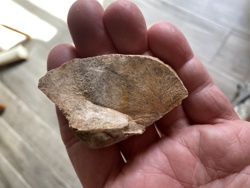
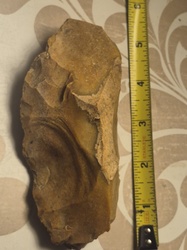
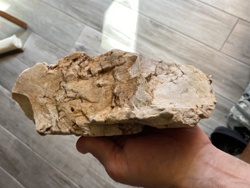
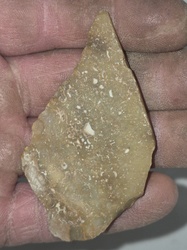
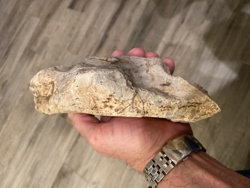
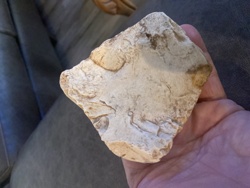
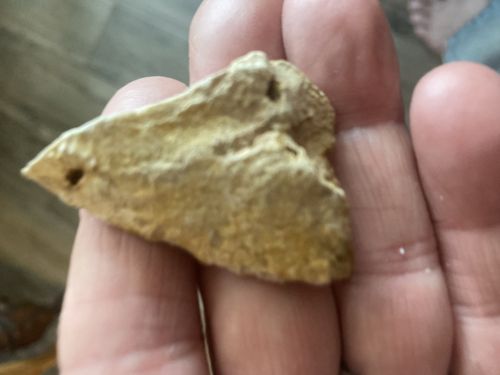
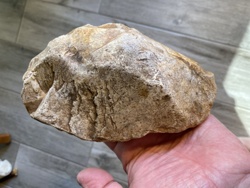
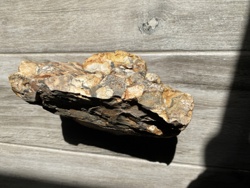
This item is a lithic artifact measuring approximately 2 inches by 1.25 inches, identified as a projectile point or scraper tool crafted from chert. The material exhibits a tan to yellowish-ochre coloration with a matte, finely grained texture characteristic of regional chert found in Oklahoma. Physically, the object displays a triangular to sub-triangular morphology with distinct flaking patterns along the margins, indicating intentional secondary retouch and bifacial reduction techniques. The surface is marked by several bulbous undulations and hinge fractures, with a notable indentation or puncture near the apex which may be a natural inclusion in the stone or a result of post-depositional impact. The edges appear moderately weathered with a visible patina that suggests significant age, likely dating to the Paleolithic or early Archaic period based on the raw material and recovery location in Guthrie, OK. The condition is consistent with an excavated find; there is rounding of the sharp edges due to fluvial or geological wear, but the overall structural integrity remains intact. The craftsmanship demonstrates the skill of the maker in utilizing percussion and pressure flaking to shape the stone into a functional tool. No modern manufacturer stamps or signatures are present, as is expected for prehistoric lithic technology. The piece serves as a significant example of early human tool production and survival strategy in North America.
AI-Generated Appraisal Disclaimer
Estimated Value
$45 - $85
Basic Information
Category
Archeological Artifacts
Appraised On
March 2, 2026
Estimated Value
$45 - $85
Additional Details Provided By Owner
User Provided Information
Paleolithic chert projectile point scraper tool found in Guthrie OK measuring 2" x 1.25
Item Description
This item is a lithic artifact measuring approximately 2 inches by 1.25 inches, identified as a projectile point or scraper tool crafted from chert. The material exhibits a tan to yellowish-ochre coloration with a matte, finely grained texture characteristic of regional chert found in Oklahoma. Physically, the object displays a triangular to sub-triangular morphology with distinct flaking patterns along the margins, indicating intentional secondary retouch and bifacial reduction techniques. The surface is marked by several bulbous undulations and hinge fractures, with a notable indentation or puncture near the apex which may be a natural inclusion in the stone or a result of post-depositional impact. The edges appear moderately weathered with a visible patina that suggests significant age, likely dating to the Paleolithic or early Archaic period based on the raw material and recovery location in Guthrie, OK. The condition is consistent with an excavated find; there is rounding of the sharp edges due to fluvial or geological wear, but the overall structural integrity remains intact. The craftsmanship demonstrates the skill of the maker in utilizing percussion and pressure flaking to shape the stone into a functional tool. No modern manufacturer stamps or signatures are present, as is expected for prehistoric lithic technology. The piece serves as a significant example of early human tool production and survival strategy in North America.
Get Your Items Appraised
Instant estimates of your treasures with AI-powered instant appraisals